


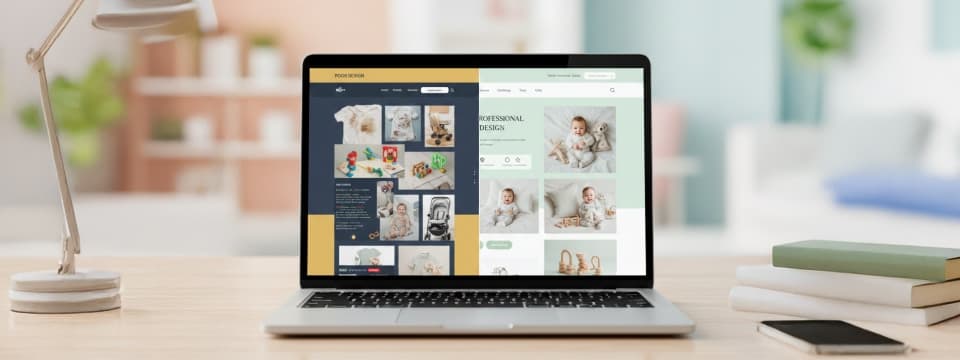
Your store might look adorable — pastel colors, smiling babies, and all the right “aww” moments — yet your sales graph doesn’t agree. Parents visit, browse for a minute or two, and quietly leave. It’s not your product that’s the problem; it’s how your design makes them feel.
When it comes to baby products, parents buy with reassurance, not discounts. Every scroll, click, and visual cue is a trust checkpoint. If anything feels off — a confusing layout, clashing colors, or an unfamiliar font — their instinct is to leave before they even reach checkout. Because in this niche, design isn’t decoration; it’s a promise of safety and credibility.
That’s why a “cute” baby store isn’t always a credible one. What looks good to you might raise red flags for cautious parents who are scanning for subtle signals of reliability — secure checkout icons, authentic reviews, or just a calm, cohesive look that feels trustworthy.
In this blog, we’ll break down three common design mistakes that quietly make baby stores look untrustworthy — and what your brand can do to fix them. Because every click lost to hesitation is a conversion that could’ve been earned with clarity and confidence.
Design Mistake 1: Design Clutter — The Silent Trust Breaker
Parents don’t browse baby stores the way they shop for gadgets — they come with emotion, caution, and care. Yet many baby eCommerce stores drown them in visual noise: oversized banners, animated sliders, and color palettes that clash like toy aisles after a sale. What seems “cute” to you can look confusing to a parent. And confusion never converts. Parents associate calm, breathable visuals with safety, so when the layout feels crowded or inconsistent, they quietly lose confidence and click away.
When Creative Turns into Confusion
Good design directs attention; bad design divides it. Picture a homepage filled with overlapping offers, inconsistent font styles, and flashing graphics. It doesn’t matter how premium your product is — when visitors don’t know where to look, they stop looking. Every extra banner, button, or text block competes for trust. A clean layout with balanced spacing and focus points helps guide parents naturally toward what matters — your products.
How Colors Affect Trust
Color psychology can decide whether your store feels safe or suspicious. Soft tones like peach, mint, or beige evoke warmth and calmness, while harsh contrasts or neon hues trigger unease. For instance, a baby essentials brand using soft neutrals instantly feels nurturing and authentic, whereas bright red sale pop-ups across every corner can make it feel hurried and unreliable. Consistency in your palette builds familiarity — and familiarity builds trust.
Whitespace: The Space That Sells
Whitespace isn’t space; it’s breathing room that signals confidence. It lets your brand speak without shouting. Crowding every inch with graphics or text can look desperate, but using space strategically creates clarity. A design that feels open and structured helps parents navigate smoothly and leaves them reassured that your brand values simplicity and care.
Typography That Builds Comfort
The way you write visually matters as much as the words themselves. Mixing too many font styles or inconsistent sizes distracts the eye and disrupts flow. Consistent, readable typography — two or three fonts at most — communicates order and professionalism. When the text feels easy to read, the experience feels effortless, and effortless design breeds trust.
When your baby’s store feels calm, consistent, and composed, parents stop questioning and start believing. And while clutter breaks trust visually, there’s another silent signal that can cost you just as much credibility — the absence of proof. That’s where many stores fall short, and it’s exactly what we’ll address next.
Design Mistake 2: Ignoring Trust Builders — Reviews, Certifications & Familiar Cues
Trust isn’t built by chance; it’s built by proof. Parents might love how your website looks, but if they can’t see evidence that your brand delivers on safety and reliability, they hesitate. In the baby product industry, hesitation equals abandonment. Reviews, certifications, and familiar trust cues aren’t optional extras — they’re the visual reassurance every parent looks for before clicking “Buy Now.” When those are missing, even the best design struggles to convert.
Why Proof Matters More Than Promotion
Parents are naturally skeptical buyers. They’re not just purchasing a product; they’re making a decision that affects their child’s well-being. If your store lacks visible product reviews, recognizable payment icons, or baby-safe certifications, visitors start second-guessing you. A clean design without these cues might look polished, but it feels empty. Every verified badge, logo, or testimonial tells parents, “You can rely on us.” Without them, silence becomes uncertainty — and uncertainty doesn’t sell.
Reviews: The Modern Word of Mouth
Product reviews are the digital version of a parent-to-parent recommendation. Even a few genuine, well-displayed reviews can make a world of difference. Highlight customer experiences that mention comfort, safety, or reliability — the attributes parents care about most. A row of five-star ratings builds immediate confidence, while verified purchase labels and photos reinforce authenticity. It’s not about showing perfection; it’s about showing real experiences parents can trust.
Certifications That Signal Safety
Badges and certifications might look small, but they carry enormous weight in baby product eCommerce. Logos like “Dermatologically Tested,” “Organic Certified,” or “Made with Safe Materials” instantly communicate responsibility. The same applies to security indicators — SSL locks, trusted payment gateways, and return guarantees. These are subtle but powerful visual trust signals that bridge the gap between curiosity and confidence.
Social Proof That Strengthens Credibility
Parents trust other parents more than they trust brands. Incorporate social proof wherever possible — Instagram testimonials, customer photos, or short review snippets near “Add to Cart” buttons. Familiarity breeds trust, and when your store visually mirrors what real users are saying, new visitors feel safe joining the circle.
Ignoring trust builders doesn’t just cost sales; it costs credibility. A beautifully designed store without proof still feels unproven. And while trust cues reassure parents that your brand delivers, the next design mistake we’ll discuss shows how easily that trust can still break — not visually, but through experience.
Design Mistake 3: Forgetting the Parent Journey — Poor UX That Breaks Confidence
Parents shop under pressure — juggling work, kids, and time. They’re not exploring your store for fun; they’re on a mission to find safe, reliable products quickly. When your baby store design slows them down, they don’t wait; they leave. Poor UX doesn’t just frustrate users — it silently erodes trust. A site that’s slow, cluttered on mobile, or confusing to navigate tells parents one thing: “This brand doesn’t understand me.” And if they feel misunderstood once, they rarely give you a second chance.
Where the Experience Falls Apart
Even the most beautiful design can lose credibility if it’s hard to use. Parents expect an intuitive flow — clear categories, predictable navigation, and a checkout that feels effortless. Yet many baby eCommerce stores make the journey feel like a maze: pop-ups appear before the page loads, CTAs hide below the fold, and load times drag. These friction points aren’t just technical flaws — they’re emotional ones. Every second of confusion chips away at confidence.
Mobile Experience: The Deciding Factor
Most parents shop on mobile — often one-handed, between feedings or bedtime routines. If your store isn’t optimized for smaller screens, buttons are too close, or images load slowly, you lose them instantly. A responsive baby store design that prioritizes speed and readability creates a frictionless shopping experience. Fast-loading pages, thumb-friendly navigation, and simplified forms show parents you respect their time — and respecting their time builds trust faster than any discount banner ever could.
Streamline Checkout to Strengthen Trust
A complicated checkout is one of the biggest deal-breakers in baby eCommerce. Parents don’t want to create accounts or fill out multiple forms just to order a baby lotion. Shorten the process: guest checkout, auto-filled fields, and visible progress bars help them feel in control. Keep the payment page clean and secure, with recognizable payment icons and visible SSL indicators. The more transparent and predictable the process, the safer it feels.
Design That Guides, Not Distracts
Good UX doesn’t demand attention — it earns it quietly. Guide parents with intuitive navigation, consistent placement of key elements, and clear CTAs that remove doubt. Small touches like sticky carts, floating help buttons, or delivery timelines enhance usability and reinforce confidence. When the experience feels smooth, parents focus on your products — not your process.
A parent’s trust isn’t lost in one click; it fades with every unnecessary step. Fixing UX isn’t just about speed or simplicity — it’s about empathy. When your store feels easy, thoughtful, and responsive, it tells parents exactly what they want to hear: you care as much about their experience as they do about their child’s safety. And once that feeling is established, the conversion isn’t forced — it happens naturally.
How These Mistakes Affect Sales And Why Fixing Them Isn’t Optional
Every design decision on your baby store either reassures parents or pushes them away. When the experience feels inconsistent, confusing, or untrustworthy, parents don’t complain — they just disappear. And that silent exit costs you far more than a lost click; it costs long-term credibility. Every small trust leak — a slow page, a cluttered banner, or a missing review — quietly drains conversions before you even notice.
The Real Cost of Broken Trust
- Parents don’t send feedback when they hesitate — they abandon the cart.
- A single confusing layout or slow-loading image can trigger instant drop-offs.
- Even subtle design flaws, like unreadable fonts or missing baby-safe icons, reduce perceived reliability.
- Inconsistent branding makes your store feel risky, no matter how good your products are.
How Design Shapes Buying Decisions
- Parents rely more on instinct than impulse — if a page doesn’t “feel” right, they won’t buy.
- Cart abandonment often stems from emotional hesitation, not product dissatisfaction.
- A frictionless experience signals professionalism and safety, two values parents prioritize most.
- Optimized UX shortens the decision window — from second-guessing to clicking “Buy Now.”
Fixing Design = Protecting Revenue
- Reducing clutter, improving page speed, and simplifying checkout directly lift conversion rates.
- Prominent reviews, recognizable payment icons, and baby-safe certifications build instant trust.
- A mobile-first, intuitive flow keeps multitasking parents engaged until purchase.
- Small, strategic changes — like cleaner product pages or clearer CTAs — can recover thousands in lost sales.
Every trust leak may seem minor, but together they form a pattern that parents sense immediately. Fixing them isn’t about redesigning — it’s about reinforcing reliability at every touchpoint.
How to Design a Baby Store Parents Instantly Trust
A trustworthy baby store isn’t built on aesthetics alone — it’s built on reassurance. Every color, layout, and click should quietly tell parents, You can trust us. When your design feels clear, familiar, and genuine, hesitation fades and conversions rise. The goal isn’t to impress — it’s to make parents feel safe from the moment they land on your homepage.
Here’s how to design a store that earns that confidence:
- Create visual consistency that calms, not confuses
Keep your color palette soft and cohesive. Use consistent typography and imagery that reflects care and comfort. Visual harmony sends a clear message — your brand is thoughtful, organized, and reliable. - Make trust signals impossible to miss
Reviews, ratings, and customer photos prove real parents have already believed in you. Verified purchase tags, security icons, and baby-safe certifications don’t just look good — they lower hesitation at every click. - Guide with structure, not clutter
Give parents visual direction through whitespace, clear hierarchy, and predictable navigation. Place essentials like delivery info, safety notes, and return policies upfront — they reinforce reliability before purchase decisions are made. - Design mobile-first for multitasking parents
Most buyers browse while juggling daily routines. Optimize for speed, thumb-friendly buttons, and smooth scrolling. A fast, responsive layout doesn’t just improve usability — it communicates care for their time. - Simplify checkout to strengthen confidence
Keep payment steps short and transparent. Offer guest checkout, show familiar payment gateways, and display SSL indicators clearly. The more predictable the process, the safer it feels.
Conclusion
Conversions don’t start with clever design — they start with confidence. Parents don’t buy because your baby store looks appealing; they buy because it feels safe. Every visual choice, product image, review, and checkout step quietly shapes that feeling. When trust isn’t built into the experience, even the best marketing can’t make up for it.
Trust is the real differentiator in baby eCommerce. It turns hesitation into action, first-time buyers into loyal customers, and good design into measurable growth. The strongest stores aren’t the flashiest — they’re the most believable.
The eCommerce specialists at ZealousWeb help brands design experiences that earn that belief — turning first clicks into lasting confidence. Because when parents trust your brand, you don’t have to push for conversions; they happen naturally.

FAQs
How do I know if your team understands what parents look for in a baby store?
Our team studies how parents shop, what reassures them, and what makes them hesitate before purchasing. We focus on design psychology specific to baby product eCommerce — from color harmony to product presentation — ensuring every interaction builds emotional comfort and trust.
Can ZealousWeb redesign my existing Shopify baby store without starting from scratch?
Yes. We specialize in optimizing existing Shopify and WooCommerce stores without disrupting ongoing sales. Our process starts with a UX and conversion audit, followed by design refinements that enhance clarity, speed, and credibility. You keep your platform — we make it perform better.
What makes your eCommerce design approach different from other agencies?
We don’t just design for aesthetics — we design for behavior. Our focus is on conversion psychology: how layout, visuals, and micro-interactions influence buying decisions. Every decision we make is backed by data, user testing, and years of experience in building trust-driven digital experiences.
How long does it take to see improvement after design optimization?
Typically, our clients begin noticing improved engagement and lower bounce rates within the first few weeks of implementation. Conversions start lifting as soon as friction points — like confusing layouts or missing trust cues — are fixed. We track measurable results, not assumptions.
Do you handle both design and development for baby eCommerce websites?
Absolutely. Our in-house design and development teams work together to ensure seamless execution — from UX strategy and visual design to custom Shopify or WooCommerce builds. We also handle technical SEO, speed optimization, and structured data for better visibility and performance.
What if my brand sells baby products globally — can you adapt the design for different markets?
Yes. We tailor every design to your audience’s region and behavior. Whether it’s adjusting trust cues for Western markets or optimizing for Indian mobile users, we align visuals, tone, and layout to cultural expectations — ensuring parents everywhere feel safe and connected.
How does your team ensure that trust translates into convefrsions?
We integrate trust signals directly into your conversion flow — reviews near CTAs, transparent shipping info, verified payment icons, and a clean checkout design. Each improvement reduces hesitation and moves visitors smoothly from browsing to buying.


