


You’re running Google Analytics, HubSpot, Notion, Slack, a reporting tool your client insisted on, an AI tool someone on the team swore by last quarter, and three automations that kind of work. You’ve invested in the stack.
You’ve done the research. And somehow, every Monday still feels like you’re starting from scratch — chasing updates, plugging gaps, and making decisions on gut feel because the data is there but the clarity isn’t.
You’ve done the research. And somehow, every Monday still feels like you’re starting from scratch — chasing updates, plugging gaps, and making decisions on gut feel because the data is there but the clarity isn’t.
This isn’t a tool’s problem. You have enough tools. What you don’t have is a system — and that gap is costing you more than any software subscription ever will.
AI Without a System Is Just Expensive Guesswork
Every agency has added AI to something in the last two years. A content tool here, an automation there, maybe a chatbot that handles first responses. It feels like progress. But if your team is still overwhelmed, your reporting still lags, and your decisions still rely on whoever shouts loudest in the meeting — AI hasn’t changed how your business operates. It’s just made certain tasks faster. There’s a significant difference between using AI as a feature and building it as a decision layer. One saves minutes. The other changes how your entire operation thinks.
Why Most Agencies Use AI Tactically and Stay Stuck Operationally
The typical agency AI adoption story goes like this: someone discovers a tool, it gets adopted by one team, it solves one problem, and it stays there. Isolated. Disconnected from everything else. That’s tactical AI — and it’s everywhere. The issue isn’t the tool itself. It’s that tactical AI plugs into a workflow without changing the system beneath it. You end up with faster outputs feeding the same slow, unclear, reactive operation. The chaos doesn’t go away. It just moves faster.
The Three Things an AI Layer Must Do in a Real Growth System
AI earns its place in a growth system only when it does three things consistently. First, it must reduce the time between data and decision — not just surface numbers, but make the next move obvious. Second, it must work across functions, not in silos — a decision layer connects delivery, client reporting, and performance data into one coherent picture. Third, it must get better over time — learning from your operation’s patterns, not just processing inputs in isolation. If your current AI stack isn’t doing all three, you have features. Not a system.
Signal vs Noise: What Good AI Infrastructure Actually Filters
The volume of data an agency handles daily is not the problem. The problem is that most of it doesn’t lead anywhere. Good AI infrastructure draws a hard line between what matters and what doesn’t.
| What most agencies track | What actually drives decisions |
| Vanity metrics — impressions, reach, open rates | Conversion signals tied to client revenue |
| Tool-generated reports nobody reads in full | Anomaly alerts that require immediate action |
| Weekly performance decks compiled manually | Real-time dashboards that surface exceptions |
| Activity logs — hours, tasks, completions | Outcome data — what moved the needle and why |
| All client data is treated equally | Priority signals from high-value, high-risk accounts |
The shift from the left column to the right is not a tool upgrade. It’s a systems decision about what your intelligence layer is actually built to do.
Not every AI tool belongs in a growth system. The ones that earn their place share three qualities — they integrate cleanly with your existing data, they produce outputs that lead to a decision rather than more analysis, and they reduce the cognitive load on your team rather than adding another dashboard to monitor. The ones that don’t make the cut are usually impressive in demos and invisible in practice. Before adding anything new to your stack, the question isn’t “what does this tool do?” It’s “what decision does this tool make faster, clearer, or more reliable?” If you can’t answer that in one sentence, the tool isn’t ready for your system — or your system isn’t ready for the tool.
Data Tools We Trust — and the Logic Behind Each Choice
Most agencies don’t have a data problem. They have a data confidence problem. The numbers exist. The dashboards are live. The reports go out every Friday. But when a client asks why performance dropped last week, or a founder needs to decide whether to hire or hold, the answer is never clean. That’s not a volume issue — it’s a systems issue. The tools you choose to trust, and more importantly, how you connect them, determine whether your data drives decisions or just documents activity.
Data Pipelines: What Breaks at Scale and How to Prevent It
A data pipeline sounds like an infrastructure problem. In practice, it’s a trust problem. When data moves across platforms — from ad accounts to CRMs to reporting layers — every handoff is a place where it can arrive late, arrive wrong, or not arrive at all. For agencies managing multiple clients, this compounds fast. The pipelines that hold at scale share the same characteristics — and the ones that break share the same blind spots.
- Every data source has a designated owner, not just a tool admin
- Sync failures trigger an alert before a client notices, not after
- Data is validated at entry, not assumed to be correct at output
- Pipeline health is reviewed on a cadence, not only when something breaks
- Client data environments are isolated, so one failure doesn’t cascade across accounts
Dashboards Built for Decisions, Not for Reporting
There is a version of a dashboard that exists to prove work happened — rows of metrics, colour-coded cells, charts that look thorough. And there is a version that exists to make the next decision obvious. Most agencies are building the first kind while believing they’ve built the second. A decision-grade dashboard is not about how much it shows. It’s about how quickly it tells someone what to do next.
- It surfaces exceptions and anomalies, not just weekly averages
- Every metric on screen is tied to an outcome, not just an activity
- It can be read and acted on in under sixty seconds without a walkthrough
- It is built for the person making the decision, not the person pulling the data
- It flags what changed and why — not just what the current number is
Attribution at the Agency Level: What Actually Matters
Attribution is the part of agency data work that everyone argues about and nobody fully solves. Last-click, first-click, linear, data-driven — the models multiply while the actual question goes unanswered: what is genuinely moving revenue for this client? Perfect attribution is a distraction at the agency level. What matters is directional confidence — enough clarity to act without waiting for a model that will never be complete.
- Prioritise signals that connect channel activity directly to client revenue movement
- Choose one attribution model per client and stay consistent — shifting models mid-campaign distorts every comparison
- Separate vanity benchmarks from performance benchmarks in every report
- Flag underperforming channels early, before they become uncomfortable client conversations
- Build attribution logic into the system, not into a manual spreadsheet someone updates on Fridays
The Three Criteria for Trusting Any Tool: Reliability, Integration Depth, Signal Quality
Before any tool earns a permanent place in your stack, run it through three questions — and be honest with the answers.
- Reliability — Does it work consistently without babysitting? A tool that requires weekly manual corrections, constant monitoring, or a dedicated person just to keep it functional is not saving you time. It’s redistributing the chaos.
- Integration Depth — Does it connect cleanly with the rest of your system, or does it create a new data silo the moment it goes live? A tool that doesn’t talk to your other tools doesn’t belong in a system. It belongs in a demo call.
- Signal Quality — Does the output lead to a decision, or does it produce more things to look at? More data is not better data. If a tool adds a new dashboard nobody checks, it has failed the only test that matters.
A tool that passes all three belongs in your system. A tool that passes one or two belongs in a trial. A tool that passes none belongs in a cancellation email.
Automation That Reduces Chaos — Not Just Saves Time
Automation has been sold to agencies as a time-saving tool. And it is — when it’s built right. But in most agencies, automation has quietly become another layer of complexity to manage. Zaps that break without warning, sequences that fire at the wrong time, workflows nobody documented and everyone’s afraid to touch. Real automation doesn’t just save hours. It removes the conditions that create chaos in the first place. That’s a different objective — and it requires a different approach to how you build.
The Wrong Kind of Automation: When It Adds Complexity Instead of Removing It
The wrong kind of automation is easy to spot in hindsight and almost impossible to see while you’re building it. It usually starts with good intentions — one workflow to remove a manual step, then another, then a third to patch a gap the first two created. Before long, the automation itself needs managing. The team spends time checking whether the automations ran, fixing the ones that didn’t, and explaining to clients why something that was supposed to be seamless occasionally isn’t. Automation that creates dependency without creating clarity is just technical debt with a better name.
- It was built to solve a one-time problem and never reviewed again
- Only one person on the team understands how it works
- When it breaks, the failure is invisible until a client notices
- It connects tools that were never meant to talk to each other
- It automates a broken process instead of fixing the process first
Where Automation Belongs in a Client Delivery Workflow
Automation earns its place in a delivery workflow at the points where human attention is being spent on tasks that don’t require human judgment. Scheduling, status updates, data transfers, recurring reports, approval nudges — these are the repetitive, low-decision moments where automation removes friction without removing accountability. The mistake most agencies make is automating in the wrong direction — removing human touchpoints that actually matter to clients while leaving the genuinely repetitive work untouched.
- Onboarding sequences that move new clients through setup without manual chasing
- Automated status updates that keep clients informed without requiring a team member to write them
- Data syncs that move performance numbers into reports without manual exports
- Escalation triggers that flag at-risk deliverables before they become missed deadlines
- Recurring task creation tied to campaign cycles so nothing gets missed in a busy week
Trigger-Based Systems vs Scheduled Jobs: How to Choose
Most agencies default to scheduled automation — things that run at a fixed time regardless of what’s happening in the business. Scheduled jobs have their place, but they’re blunt instruments. A report that is sent every Friday, whether the data is ready or not. A follow-up that fires seven days after sign-up whether the client has engaged or not. Trigger-based automation is more precise — it fires when something happens, not just when the clock says to. The choice between the two comes down to one question: is time the relevant variable, or is behaviour?
- Use scheduled jobs for fixed, time-dependent outputs — weekly reports, monthly invoices, recurring check-ins
- Use trigger-based automation for responses to client behaviour — onboarding actions, engagement signals, risk flags
- Never use a scheduled job as a substitute for a trigger you haven’t figured out how to set up yet
- Document every trigger condition so the logic is visible to the whole team, not just the person who built it
- Review scheduled jobs quarterly — most agencies are running automations on cadences that made sense eighteen months ago and haven’t been questioned since
What a Calm Delivery Rhythm Looks Like When Automation Is Built Right
When automation is built into the right places in a delivery system, the most immediate thing you notice is what stops happening. The Monday morning scramble to compile last week’s reports. The Slack message asking whether the client was chased. The task was missed because it lived in someone’s head instead of the system. A calm delivery rhythm isn’t the absence of work — it’s the absence of unnecessary urgency. Things move because the system moves them, not because someone remembered to follow up. That’s the standard automation should be held to. Not whether it saves an hour, but whether it makes the week structurally quieter.
Execution Without a System Is Just Controlled Chaos
Every agency has a version of this story. The team is talented. The clients are good. The work is getting done. But somewhere between briefing and delivery, things are slipping — deadlines nudged, quality inconsistent, communication reactive. Nobody is slacking. Everyone is busy. And that’s exactly the problem. Busy without a system doesn’t scale. It just gets louder. Execution breaks not because agencies hire the wrong people but because they build delivery on top of effort instead of structure. And effort, no matter how genuine, has a ceiling.
Why Delivery Breaks at Scale — and It's Never the Team's Fault
When delivery starts breaking at scale the instinct is to look at people. Who dropped the ball. Which team is behind. Where the bottleneck is sitting this week. But the team is almost never the real answer. Delivery breaks at scale because the system underneath the team was never built to handle more than it was originally designed for. What worked at five clients starts cracking at fifteen. What held together with one delivery team starts unravelling with three. The process that lived in someone’s head made sense when that person touched every project. It stops making sense the moment the business grows past them.
- Processes that were never documented because everyone just knew how things worked
- Briefing standards that vary by account manager rather than sitting in the system
- No single source of truth for project status — updates live in Slack, email, and memory
- Onboarding new team members means shadowing someone, not following a system
- Quality depends on who is assigned to the project, not on a defined standard
The team didn’t fail the system. The system was never built to hold the team in the first place.
The Accountability Gap: When Everyone Is Responsible, No One Is
Accountability in most agency delivery models is diffuse by design. The account manager owns the client relationship. The project manager owns the timeline. The creative lead owns the output. The strategist owns the thinking. And when something goes wrong — when a deliverable misses the mark or a deadline slips — the accountability moves between these roles like a hot potato nobody wants to hold. Diffuse accountability isn’t a culture problem. It’s a systems problem. When ownership isn’t explicitly assigned at every stage of the delivery workflow, the gaps between roles become the places where things fall through.
- Define a single owner for every deliverable — not a team, not a department, one person
- Separate ownership of quality from ownership of timeline — they require different attention
- Build escalation paths into the system so issues surface upward before they surface to clients
- Make handoff points explicit — the moment work moves between roles should be a documented event, not an assumption
- Review accountability structures when the team grows, not only when something breaks
When everyone is responsible, the gap between roles becomes the place where accountability goes to disappear.
Velocity vs Ownership — The Trade-Off Agencies Get Wrong Every Time
Speed is not the enemy of quality. But speed without ownership is. Most agencies, under pressure to deliver faster and take on more, make an implicit trade — they move quickly and assume ownership will sort itself out. It doesn’t. What happens instead is that work gets done, but nobody is truly accountable for whether it was done well. Velocity becomes the metric and ownership becomes the casualty. The agencies that scale without chaos reverse this trade deliberately. They slow down the system design so the execution can move fast without losing the thread of who is responsible for what.
- Never increase delivery velocity without first confirming ownership structures can hold the load
- Speed is a system output — if you want faster delivery, build a cleaner system, don’t just push harder
- Identify the three highest-risk handoff points in your current delivery workflow and assign explicit ownership to each
- Build quality checkpoints into the velocity model — not as a brake, but as a condition for moving forward
- Measure both speed and ownership health as delivery metrics, not just one or the other
Moving fast and owning the outcome are not in conflict — but only when the system is designed to hold both at the same time.
What a High-Performance Delivery System Actually Looks Like
A high-performance delivery system is not complicated. It is clear. Everyone on the team knows what they own, what the standard is, and what happens when something goes off track. Clients experience it as consistency — the feeling that working with this agency is the same quality every time, regardless of which team member they speak to or which project they’re on. That consistency is not a culture outcome. It’s a systems outcome. It’s what happens when the structure underneath the team is solid enough that individual variation doesn’t determine the result.
- Every project enters the system through the same briefing standard, no exceptions
- Ownership is assigned at briefing, not assumed during execution
- Quality benchmarks are defined per deliverable type, not left to individual judgment
- Status is visible to everyone who needs it without anyone having to ask
- When something goes wrong, the system surfaces it — the client doesn’t have to
A high-performance delivery system doesn’t make your team work harder. It makes the work your team does count for more — every time, with every client, regardless of how much the business grows.
The Missing Piece: What a Systems-Led Delivery Partner Actually Brings to the Table
Most agencies that struggle with delivery are not struggling because they lack talent or ambition. They are struggling because they are trying to build, sell, manage, and deliver all at the same time — with the same team, the same bandwidth, and the same hours in the week. At some point, the growth that felt exciting starts feeling like a trap. More clients mean more pressure, not more freedom. More revenue means more complexity, not more control. The missing piece is rarely another hire or another tool. It is a delivery partner that doesn’t just take work off your plate but brings the system to run it properly.
What Agencies Actually Gain When the Right Partner Is in the Room
The conversation around delivery partners has historically been about capacity — more hands, faster turnaround, lower cost per output. That framing misses the real value entirely. A systems-led delivery partner doesn’t just absorb volume. They bring structure, process maturity, and execution clarity that most growing agencies haven’t had the time or the headspace to build internally. The gain isn’t just bandwidth. It’s the ability to grow without rebuilding your delivery model every six months.
- Delivery standards that don’t depend on which team member is having a good week
- Briefing and handoff processes that are already documented, tested, and repeatable
- QA layers that sit inside the workflow rather than being bolted on at the end
- Escalation paths that surface problems early, rather than letting them reach the client
- Reporting visibility that keeps agency leads informed without requiring constant check-ins
- A delivery rhythm that holds even when the agency side is stretched or in a growth sprint
The right partner doesn’t need to be managed like a vendor. They operate like an extension of the system you are building — quietly, consistently, and without adding to your cognitive load.
Where a Systems-Led Partner Creates the Most Visible Difference
The value of a systems-led delivery partner shows up most clearly at the points where agencies typically feel the most friction. The table below maps the most common agency delivery pain points against what changes when the right partner is in place.
| Where agencies feel it | Without a system-led partner | With a system-led partner |
| Client onboarding | Manual, inconsistent, dependent on one person knowing the process | Structured, repeatable, moves without hand-holding |
| Briefing quality | Varies by account manager, gaps filled during execution | Standardised at entry, gaps caught before work begins |
| Delivery consistency | Depends on who is assigned, not what the standard is | Tied to defined quality benchmarks, not individual judgment |
| Escalation and risk | Problems surface when the client notices | Problems surface inside the system before they reach the client |
| Reporting and visibility | Requires chasing updates across Slack, email, and tools | Status is visible, structured, and updated without prompting |
| Scaling capacity | Adding clients means adding headcount and rebuilding process | Capacity scales through the partner’s system, not internal restructuring |
| Team bandwidth | Growth pressure lands on the core team | Delivery pressure is absorbed without disrupting internal focus |
The difference isn’t just operational. It’s the difference between an agency that grows and an agency that scales — and those are not the same thing.
The agencies that scale — not just grow — are the ones that stop treating a delivery partner as a resource tap and start treating it as a structural decision. When the right partner comes with systems and execution standards already in place, the agency doesn’t just get more output. It gets the foundation to take on bigger clients, expand service lines, and say yes to opportunities it would previously have had to pass on.
How We Build Intelligence Systems for Agencies and SaaS Teams
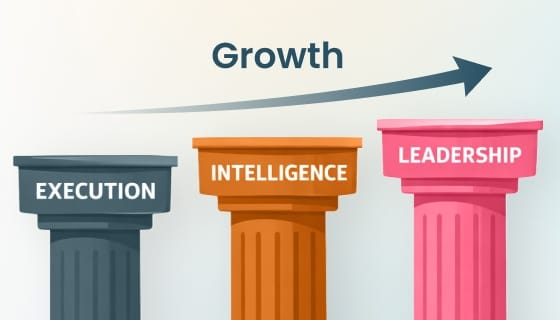
If everything in this blog has felt familiar — the tools without systems, the delivery that breaks under pressure, the data that exists but never quite drives the decision — then you already understand the problem ZealousWeb’s team was built to solve. We work with digital agencies and SaaS teams who are past the early chaos but haven’t yet reached the calm control that scaling actually requires. ZealousWeb’s expertise sits precisely at this intersection — designing and executing the intelligence, execution, and leadership systems that turn that recognition into resolution. Not as a vendor you manage, not as a team you babysit, but as an operating system partner who owns the outcome alongside you. If you’re ready to stop patching and start building, this is where that conversation begins.
Conclusion
The agencies that scale in the next three years are not the ones with the biggest tool budgets or the fastest delivery teams. They are the ones that stop operating on effort and start operating on systems. AI that informs decisions. Data that leads somewhere. Automation that removes chaos instead of adding to it. Execution that holds regardless of who is having a good week. This is exactly the operating model ZealousWeb’s team is built around — and the standard we hold every system we design to. The question is no longer whether you need a system. The question is how long you can afford to grow without one.
Is Your Agency Scaling Output or Scaling Rework Loops?
Bring Clarity with ZealousWeb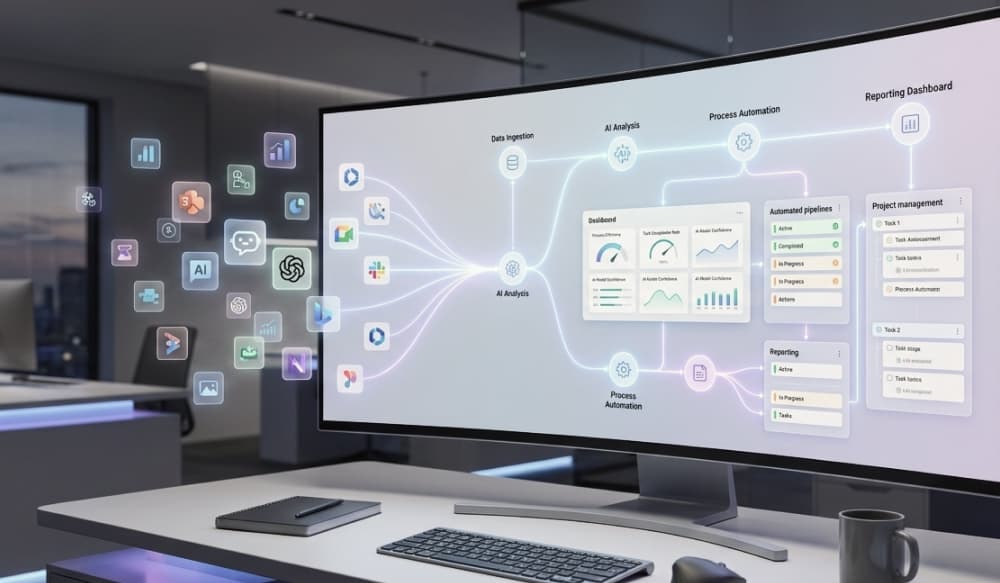
FAQs
What kind of agencies does ZealousWeb work with?
Digital and performance agencies that are past the startup phase, managing multiple clients, and feeling the pressure of growth without the systems to support it.
We have internal teams. Why would we need an external delivery partner?
Internal teams and delivery systems are two different things. We bring the system layer that makes your existing team more effective — without adding to your management load.
How is this different from a typical outsourcing arrangement?
Typical outsourcing gives you capacity. We bring documented processes, quality standards, and delivery accountability — so you're less involved in the day-to-day, not more.
How long before we see results?
Most partners see a difference in delivery consistency and team bandwidth within the first thirty days, with compounding structural benefits through the first quarter.
Do you work with SaaS companies as well?
Yes. We partner with SaaS teams from seed to Series B who need execution and intelligence systems built around their product and growth cycles.