

Look, let’s be honest: “future-proof” is the most overused term in tech, usually deployed by someone trying to sell you a subscription to a shiny new tool that will be obsolete by next Tuesday. But in the current e-commerce climate, building a stack that lasts isn’t about chasing the latest version numbers; it’s about building systems, not collecting tools.
Think of your stack as an operating system for growth rather than a static piece of furniture. If you’re distracted by tool hype, you’re missing the point. A truly resilient e-commerce app development tech stack prioritizes replaceability and interoperability over brand names. If swapping out your CMS feels like performing open-heart surgery with a butter knife, you haven’t future-proofed—you’ve just built a very expensive cage.
The real danger of a clunky architecture isn’t that it’ll blow up overnight. It’s much subtler. It’s the “silent fail”: the way it slowly chokes your ability to make decisions, kills your team’s urge to experiment, and turns a “quick pivot” into a six-month roadmap nightmare. In this game, the winner isn’t the one with the biggest budget, but the one with the lowest cost of change.
Architecture First, Platforms Second: The Blueprint of the Modern Stack
In the world of e-commerce app development tech stack design, we often get caught up in the “which platform is better” debate before we’ve even decided how the pieces should fit together. In today’s climate, your choice of architecture is far more consequential than the name on your commerce engine’s invoice.
If you don’t get the structural philosophy right, you’re just decorating a house built on quicksand. Here is how to anchor your system before you start naming tools.
The Architecture Spectrum: Headless vs. Composable vs. Hybrid
Think of this as your “level of commitment” to flexibility.
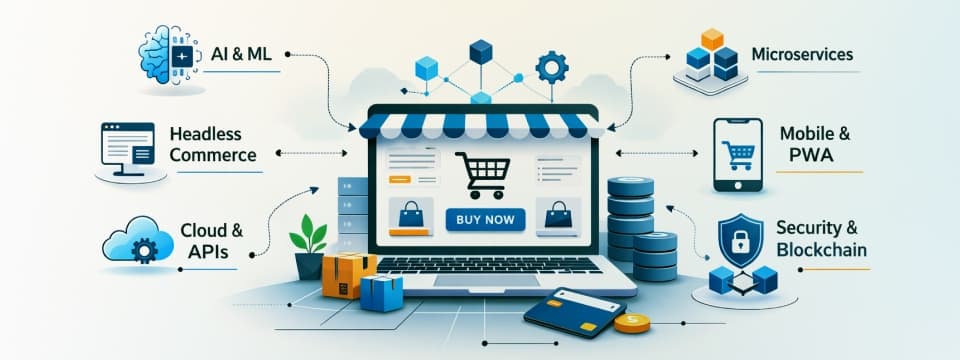
- Headless Commerce: The classic decoupling model. You separate the presentation layer, your mobile app, PWA, or website, from the commerce engine that manages products, pricing, carts, and orders. The frontend communicates with the backend via APIs, giving you full control over user experience, performance optimization, and experimentation. You are no longer restricted by theme constraints or rigid templates. If you want a deeper breakdown of how this model works in practice, explore how headless commerce architecture is enabling the next generation of scalable e-commerce apps.
- Composable Commerce: The “build-your-own-adventure” approach. You don’t just decouple the frontend; you break the backend into independent parts (Microservices). Want a different search engine? Swap it. Need a specialized tax calculator? Plug it in. It’s the ultimate way to stay “un-stuck.”
- Hybrid: A pragmatic middle ground. You use a platform that offers a solid core out-of-the-box but allows you to go headless for specific high-stakes experiences, like your mobile app.
In a modern stack, your API isn’t a “feature”—it’s the product. An API-first approach means you design the communication channels before you write a single line of app code. This ensures that whether a customer is shopping from a foldable phone, a smart fridge, or a TikTok link, the data remains consistent and the experience is seamless.
Event-Driven: Because "Real-Time" is No Longer a Luxury
Traditional systems wait for a user to click a button to do something. An Event-Driven Architecture (EDA) flips the script. When an event happens—say, an item goes out of stock—the system immediately “shouts” that info to every relevant part of the stack. Your mobile app updates, your marketing automation pauses the ad, and your warehouse gets a restock alert—all in milliseconds.
Mobile-First vs. Mobile-Adapted
Stop “porting” your website. A true e-commerce mobile app development platform treats the mobile experience as the primary interface, not a shrunken-down version of a desktop site. This means:
- Biometrics by default (FaceID/Fingerprint vs. typing passwords).
- Zero-latency interactions via edge computing.
- Context-awareness (knowing if the user is in-store or on their couch).
The Vibe Check: If your architecture requires a 400-page manual just to explain how the cart talks to the CMS, you haven’t built a stack—you’ve built a riddle. Simplify the structure, and the tools will take care of themselves.
The Modular Blueprint: Breaking Your Stack into Power Layers
In the old days, you bought a “platform” and prayed it did everything well. In the modern era, that’s a recipe for stagnation. To stay agile, you need to think in functional layers. This allows you to upgrade your “Intelligence” without touching your “Infrastructure,” or swap your “Mobile Frontend” without breaking your “Commerce Engine.”
The Frontend Experience Layer (The Glass)
This is the only part your customer actually touches. In a world of fragmented attention, your frontend needs to be everywhere.
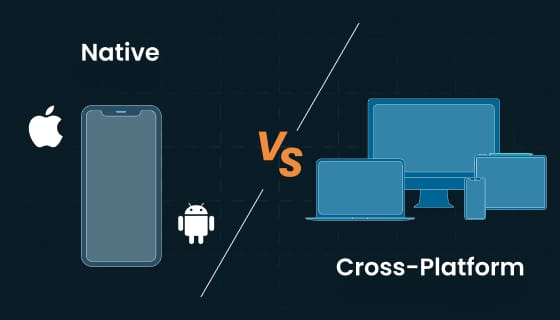
- Mobile Apps (Native vs. Cross-Platform): The debate is cooling down. Unless you need heavy hardware access (like advanced AR), cross-platform frameworks like Flutter or React Native are the gold standard. They allow you to maintain one codebase while delivering high-performance apps that feel native.
- Web (PWA & SSR): Your website should be a Progressive Web App—fast, offline-capable, and installable—backed by Server-Side Rendering to ensure Google’s crawlers don’t get lost in a sea of Javascript.
- Experience Orchestration: Think of this as the “UI Brain” that ensures a customer’s cart on their iPhone looks exactly like their cart on their laptop.
The Commerce Engine Layer (The Transactional Heart)
This is your “Source of Truth” for the boring (but vital) stuff: tax, shipping, and currency.
- Headless Core: Whether you use a heavy-hitter or a nimble startup engine, it must be headless. Its only job is to provide robust APIs for checkout, pricing, and promotions.
- Subscription & Loyalty: In today’s market, if your engine doesn’t handle recurring revenue and complex rewards natively (or via a clean plug-in), you’re already behind.
Content & Experience Management (The Storyteller)
Your e-commerce mobile app development platforms are useless without content.
- Headless CMS: You need a central repository where a marketing manager can update a banner once and have it reflect across the app, the site, and the retail kiosk simultaneously.
- Personalization & Localization: This layer shouldn’t just translate language; it should translate intent—showing winter coats to users in London while pushing swimwear to users in Sydney.
Data & Intelligence Layer (The Nervous System)
This is where the “Future-Proof” label is actually earned.
- CDP & Event Pipelines: A Customer Data Platform acts as your memory. It tracks a user’s journey from a clicked Instagram ad to a completed in-app purchase.
- AI-Driven Forecasting: Stop using AI as a gimmick. Use it here to predict inventory needs and automate “You might also like” sections that actually result in a sale.
Integration & Infrastructure (The Foundation)
The “glue” that keeps the layers from drifting apart.
- iPaaS & API Gateways: You need a central hub (Integration Platform as a Service) to manage the handshake between all these different tools.
- Observability & DevOps: If your app goes down at 2 AM, your monitoring tools should tell you exactly which layer failed—was it the payment gateway or the image server?—before your customers notice.
The Vibe Check: Think of this as a high-end stereo system. If the speakers break, you don’t throw away the turntable. Layering ensures that when one part of your tech becomes obsolete, the rest of your business keeps playing.
The New Mobile Reality: It’s Not a Store, It’s a Relationship
If you’re still treating your mobile app as just another “sales channel” to list products, you’re essentially using a smartphone as a digital flyer. In the current landscape, the most successful brands have realized that an app isn’t where you go to buy—it’s where you go to belong.
Your e-commerce mobile app development platform is no longer a secondary touchpoint; it is the center of your digital gravity. Here’s why the “sales channel” mindset is dead.
The Evolution: From Transaction to Connection
In 2026, the app serves three critical roles that a website simply can’t touch:
- The Retention Engine: A mobile app is the ultimate loyalty hack. Between push notifications that actually matter (thanks to AI timing) and home-screen real estate, the app keeps your brand a thumb-tap away. It’s about increasing LTV (Lifetime Value), not just the next AOVs.
- The First-Party Data Goldmine: With the death of third-party cookies, your app is your private laboratory. You aren’t just seeing what people buy; you’re seeing how they browse, what they “heart,” and where they hesitate. This data is the fuel for every other layer of your stack.
- The Contextual Personalizer: A modern app knows if you’re on your couch (showing “Discovery” content) or standing in a physical aisle (showing “Scan & Go” and in-store inventory). It’s not just personalization; it’s context-awareness.
Architectural Secrets of High-Performance Apps
To turn your app into a revenue lever, you need to peek under the hood at two specific patterns:
- The BFF Pattern (Backend-for-Frontend)
Stop making your app do the heavy lifting. The BFF pattern creates a dedicated “mini-backend” specifically for your mobile app. Instead of the app asking the main server for a massive blob of data and sorting it out locally (which kills battery and speed), the BFF does the sorting and hands the app a “ready-to-wear” packet of data.
The result? Instant load times and a smoother UI that directly correlate to higher conversion rates.
- Offline & Edge Experiences
The best e-commerce app development tech stack in 2026 doesn’t break when the Wi-Fi does. By using edge computing and local “mini-databases,” your app can allow users to browse, add to cart, and manage their profile even in a subway tunnel or a spotty retail basement. The data syncs the moment they’re back online.
Native vs. Cross-Platform: The 2026 Tradeoff
The “Native vs. Cross-Platform” war is over, and it ended in a stalemate of use cases:
- Go Cross-Platform (Flutter/React Native): If you need to ship fast, maintain one codebase, and don’t need deep access to specialized phone sensors. For 90% of e-commerce brands, this is the smart, future-proof play.
- Go Native (Swift/Kotlin): If your app is high-utility and high-frequency. If you’re building advanced AR try-ons, heavy biometric features, or complex background tasks, the “Native” performance ceiling is still higher.
The Vibe Check: Performance is a feature, but context is a strategy. If your app feels like a website in a wrapper, your customers will treat it like one—and delete it to save space.
The Strategist’s Scorecard: How to Judge Your Stack
In the current landscape, a “good” tech stack is subjective. What works for a global enterprise will suffocate a lean startup. To move from information to strategy, you need an evaluation lens that looks past the marketing brochures.
When auditing an e-commerce app development tech stack, use these five criteria to determine if you’re building a bridge to the future or a pier into the middle of nowhere.
Time to Launch vs. Time to Adapt
In the early days, speed is king. But in 2026, speed to market is a trap if it leads to stagnation on arrival.
The Launch Lens: How fast can we get a working checkout and a mobile app in front of users?
The Adaptation Lens: When the market shifts—say, social commerce suddenly becomes our #1 driver—how long will it take to pivot?
The Strategy: Favor tools that allow for an MVP today but provide the APIs to evolve tomorrow. Don’t trade your ability to pivot for a two-week head start.
Cost to Build vs. Cost to Change
Most budgets focus on the “Build” phase (CAPEX). Future-proof teams focus on the “Change” phase (OPEX).
The “Build” Trap: Custom-coding every feature might give you a perfect app today, but the maintenance debt will be staggering.
The “Change” Reality: Modern e-commerce mobile app development platforms should be modular. If changing your loyalty program logic requires rewriting 30% of your app code, your “cost to change” is too high.
The Strategy: Invest in a middleware/orchestration layer. It acts as a buffer, so changing a backend vendor doesn’t require a total frontend overhaul.
Vendor Dependency Risk (The "Lock-in" Audit)
In an era of SaaS consolidation, “Vendor Lock-in” is a silent killer.
The Critical Question: If your primary commerce engine doubled its prices tomorrow, how painful would it be to leave?
The Strategy: Own your “Glue Code” and your data schemas. Use abstraction layers so that your frontend isn’t directly “married” to a single vendor’s proprietary API.
Skill Availability & The Talent Gap
Your stack is only as good as the people who can run it.
The Talent Test: Are you using a niche, “cool” language that only 50 developers in the country understand? Or are you using a standard like React, Node.js, or Flutter?
The Strategy: Align with popular, community-driven ecosystems. You want a stack where you can easily hire, train, and scale your team without paying “specialist” ransoms.
Data Ownership and Portability
In 2026, data is your only real moat.
The Portability Test: Can you extract every single customer interaction, order history, and product attribute in a clean, JSON-ready format? Or is it trapped in a vendor’s “black box”?
The Strategy: Ensure your Data & Intelligence Layer is independent. Your Customer Data Platform (CDP) should be the master record, not a secondary feature inside your commerce platform.
The Vibe Check: Strategy is about trade-offs. If you choose “fast and cheap” now, you are pre-ordering “slow and expensive” for later. Pick the pains you are willing to live with.
Wisdom Over Whim: Avoiding the Common Architectural Pitfalls
Building a tech stack is a series of bets on the future. Even with the best intentions, it’s easy to let excitement override strategy. In our experience, the most resilient teams aren’t those who never make mistakes, but those who avoid the heavy structural errors that become permanent roadblocks.
Here are a few “experienced observations” on where the road typically gets bumpy—and how to keep your journey smooth.
The "Day One" Over-Engineering Trap
It is tempting to build a NASA-grade infrastructure for a mission that hasn’t left the atmosphere yet. We see many teams implementing complex microservices and global multi-region clusters before they’ve even validated their core mobile experience.
- The Reality: Complexity is a tax. Every microservice you add is another “entity” to manage, secure, and debug.
- The Fix: Start with a “Modular Monolith” or a simplified headless setup. Build the interfaces to be pluggable so you can scale into complexity only when the traffic demands it.
Buying "Best-of-Breed" Without the Glue
On paper, picking the #1 rated CMS, the #1 Commerce Engine, and the #1 Analytics tool sounds like a dream. But if you don’t have the integration maturity (the internal talent or the middleware) to make them talk to each other, you’ve just bought a collection of expensive strangers.
- The Reality: A “B+” tool that integrates perfectly with your stack is always more valuable than an “A+” tool that requires a custom-coded bridge you have to maintain forever.
- The Fix: Prioritize the “connective tissue.” Before adding a new tool, ask: How does this feed into our existing event pipeline?
Treating AI as a "Feature" Rather Than a Layer
In the current rush to be “AI-powered,” many brands are bolting on a chatbot or a basic recommendation widget and calling it a day.
- The Reality: AI is most effective when it’s treated as a horizontal layer that sits across your data. If your data is siloed in three different places, your AI will be “smart” in one area and “blind” in the others.
- The Fix: Ensure your e-commerce app development tech stack feeds clean, unified data into a central repository. AI should be the brain analyzing the data, not just a decorative sticker on the frontend.
The "Scale it and Forget it" Monitoring Gap
It’s easy to focus on features and ignore observability until a major sale event crashes the checkout. By then, the cost isn’t just lost revenue—it’s lost customer trust.
- The Reality: Performance is a revenue lever. Every 100ms of latency in your mobile app correlates to a drop in conversion.
- The Perspective: Monitoring isn’t “insurance” you buy for a rainy day; it’s the dashboard you use to drive the car.
- The Fix: Build observability into your CI/CD pipeline from the start. If you can’t see the bottleneck, you can’t widen the pipe.
The Vibe Check: None of these mistakes is fatal, but they are expensive. The goal isn’t to be perfect; it’s to be intentional. Build for where you are today, but leave the door open for where you’ll be tomorrow.
The Right Fit: Knowing When to Build or When to Buy
In the world of tech, “best” is a relative term. A Formula 1 car is technically superior to a delivery van, but it’s a terrible choice for hauling groceries. The same logic applies to your e-commerce app development tech stack. True architectural maturity means knowing when to lean into a complex, composable system and when to embrace the simplicity of an all-in-one platform.
Let’s be honest: future-proofing can sometimes be a fancy word for “over-engineering.” Here is how to tell where you fit.
The Scaling Brand & The Enterprise (The Composable Crowd)
If your business is processing significant volume or operating across multiple regions, the “all-in-one” suite has likely become a bottleneck.
- Signs you need the full stack: You have multiple frontend experiences (mobile app, web, POS), you’re struggling with slow site speeds, or your marketing team is constantly waiting on developers to launch a simple promotion.
- The Goal: Maximum interoperability. You need a stack that lets your mobile app pull data from a different source than your web store without breaking the logic.
- The Investment: You are trading higher upfront complexity for lower long-term cost of change.
The Early-Stage Brand (The Simplicity Seekers)
If you are still validating your product-market fit or have a relatively straightforward catalog, a fully headless, composable architecture is probably overkill.
- The Reality Check: If your annual revenue is under a certain threshold, the overhead of managing five different vendors and a custom middleware layer will drain your resources before you can scale.
- When Simpler is Smarter: Use a “monolith-first” approach. Platforms that offer an integrated storefront, checkout, and admin are highly efficient. You can still use e-commerce mobile app development platforms that plug into these monoliths via API without needing to rebuild your entire backend.
- The Strategy: Build with “clean edges.” Even if you use an all-in-one platform, don’t customize its core code. Use its APIs so that when you are ready to move to a layered stack, the divorce is amicable.
When Future-Proofing Becomes a Distraction
There is a point where planning for the future starts hurting the present.
- Overkill Alert: If you’re spending more time discussing “event-driven architecture” than talking to your customers, you’ve crossed the line.
- The “Future-Proof” Minimum: You don’t need a 10-layer cake. You just need to ensure that your data is portable, your APIs are standard, and your vendor contracts don’t lock you in for a decade.
The Vibe Check: Restraint is a superpower. The best stack isn’t the one with the most bells and whistles; it’s the one that stays out of the way of your next sale.
Conclusion
To evolve an e-commerce stack effectively over a 3–5 year horizon, the focus must shift from rigid builds to modularity. Designing for change allows individual components to be upgraded as AI and data tools advance without requiring a total system overhaul. Because a stack dictates how fast marketing can pivot and how seamlessly data flows, these are organizational decisions, not just technical ones.
Success requires total alignment between product, growth, and tech—where product meets user needs, growth captures market scale, and tech provides the scalable foundation to sustain both. Partnering with a team like ZealousWeb ensures these gaps are bridged, transforming complex technical requirements into streamlined, future-proof engines for growth. Ultimately, future-proof e-commerce apps are built by teams who design for change, not certainty, and having the right expertise ensures technology is always ready for what’s next.
Need Help Implementing Your E-commerce Tech Stack
Get In Touch
FAQs
How do we balance our tight budget with the need for modern features?
We recommend a phased investment strategy. Our team identifies high-impact "core" features first, allowing you to launch and generate ROI before reinvesting in more complex upgrades.
Our data is scattered across multiple platforms. Can you help us unify it?
Absolutely. We specialize in system harmonization, connecting your disparate data sources into a single, intelligent engine that feeds directly into your AI and automation workflows.\
We’re worried about AI becoming obsolete quickly. How do you handle this?
At ZealousWeb, we build with a modular architecture. We design your stack so that individual AI components can be swapped or updated without a full system overhaul, keeping you future-proof.
How does your team ensure that technical updates don't disrupt our daily operations?
Our Operations & Support team uses structured deployment cycles and proactive monitoring. We ensure new integrations are tested in staging environments so your live customer experience remains seamless.
Why should we choose a strategic partner over an in-house build?
We provide a broader Market Watch perspective. Our team brings cross-industry insights and specialized talent—from UI/UX to Full-Stack—that are often too costly to maintain in-house at scale.