

ZealousWeb
mobile-first design for baby ecommerce

Why Is Accessibility and Mobile-First Design Crucial for Baby eCommerce Stores?

December 24, 2025Posted By: Manjiri Bhate
Baby eCommerce UXeCommerce AccessibilityMobile Commerce StrategyMobile-First Design

Having a stunning website that performs well only on desktop screens limits your reach to a narrow audience. Today, most users access the internet via mobile devices and expect inclusive experiences; a desktop-only focus simply won’t stand the test of time.

Consider these facts:

Around 1.3 billion people worldwide live with significant disabilities, making up 16% of the global population, which is roughly one in six individuals. At the same time, nearly 61.5% of global internet traffic comes from mobile devices.

Serving such a large and diverse audience demands a mobile-first approach combined with adherence to WCAG (Web Content Accessibility Guidelines). This ensures that your baby eCommerce store is accessible and user-friendly for everyone, including parents with disabilities and those on the go. This blog explores why accessibility and mobile-first design are non-negotiable for baby eCommerce stores and how implementing these principles can help you reach and engage your customers more effectively.

Why is Accessibility Crucial for Baby eCommerce Stores?

Parents and caregivers come from diverse backgrounds and may face various challenges, including disabilities, that can affect how they interact with your website. Providing an accessible online shopping experience ensures that all parents can easily find and purchase the products they need for their little ones without barriers or frustration.

When we talk about accessibility, there are a few fundamental elements every baby eCommerce store must consider:
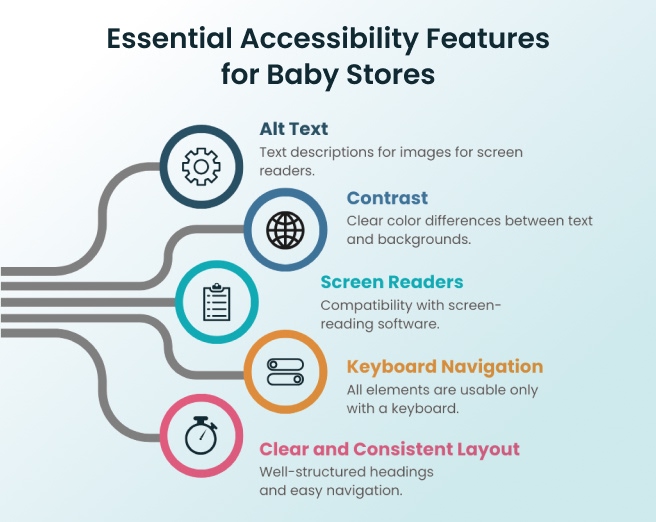
Baby stores

Accessibility and mobile-first design go hand in hand. A mobile-first approach inherently supports accessibility by prioritizing a simple, clean, and easy-to-navigate experience optimized for smaller screens. Mobile design encourages larger buttons, uncluttered layouts, and faster load speeds, all of which benefit accessible user experiences.

Why Is Mobile-First Design Vital for Baby eCommerce?

Mobile-first design means creating your website or app primarily for mobile devices and then scaling it up for desktop. This approach is especially important for baby eCommerce because today’s parents mostly shop, browse, and place orders using their mobile phones.

Parents lead busy lives—they are often on the move with their little ones, so mobile devices offer them ultimate convenience to shop anytime, anywhere. In fact, the majority of baby product shoppers are mobile users, making mobile-first design critical to understanding and meeting their needs.

Mobile Usage Dominates Baby Shopping as:

  • Most parents search for and buy baby products right from their smartphones.
  • Mobile devices have become the preferred choice because they are flexible, accessible, and quick.
  • On-the-go parents demand fast loading times and simple navigation, which a mobile-first design delivers.

Some of the basic yet must-needed key design elements that make mobile-first baby stores successful include:
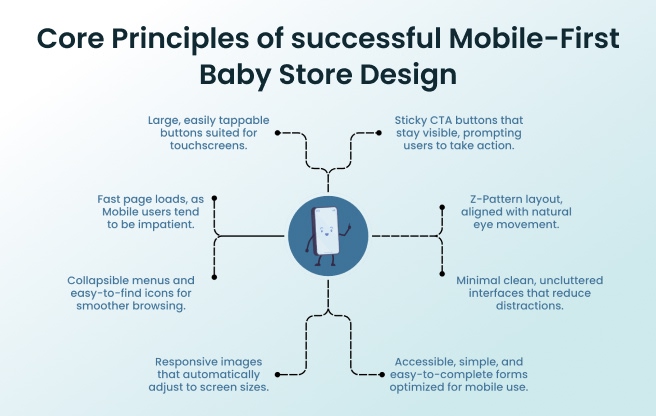
principles of successful baby stores

Adopting these practices not only makes baby eCommerce stores mobile-friendly but also gives parents a seamless, stress-free shopping experience—ultimately boosting sales and customer loyalty.

How to Build an Accessible and Mobile-First Baby eCommerce Store

Accessibility is a necessity. Various organizations and governing bodies, such as the W3C (World Wide Web Consortium), set standards like the Web Content Accessibility Guidelines (WCAG) to regulate how websites should be designed to be accessible to everyone, including people with disabilities. Following these guidelines is crucial, not only to comply with legal requirements in many regions but also to serve a broader audience effectively.

In fact, only about 3% of websites are currently fully accessible for people with disabilities, which highlights how much work remains to be done.

Inclusivity goes beyond disability access. Baby eCommerce stores often serve multicultural families who may speak different languages or have diverse cultural needs. Offering multi-language support on your website can significantly improve the shopping experience for non-native speakers and expand your market reach.

How Do Accessibility and Mobile-First Build Trust with Parents?

Accessibility and mobile-first design go beyond technical features—they show parents that you genuinely care about their needs by creating a thoughtful and inclusive shopping experience. When your baby’s eCommerce store works seamlessly on any device and accommodates different abilities, it sends a strong message of respect and consideration. This kind of attentive design builds trust, which is vital for parents making purchasing decisions for their children.

Trust also comes from what parents see and hear on your website. You can display accessibility badges or certifications from recognized organizations to reassure visitors that your store meets key accessibility standards. These badges act as visible proof of your commitment to creating an inclusive and user-friendly environment.

When parents experience a site that respects their needs and is easy to use, they feel more confident and willing to return. Accessibility and mobile-first design help remove barriers and frustration, making shopping a positive experience. This encourages repeat visits, brand loyalty, higher conversion rates, and enhances your reputation in the baby eCommerce market.

Does Accessibility and Mobile-First Affect SEO Rankings?

Accessibility and mobile-first design have a direct impact on two of the most important factors for any eCommerce business: customer loyalty and conversion rates.

Google and other search engines are continually evolving to prioritize websites that provide an exceptional user experience for all visitors, regardless of their device or abilities. Studies reveal that 73.4% of websites saw increased traffic after implementing accessibility solutions.

Here’s how accessibility and mobile-first design boost your SEO:

  • Higher Search Rankings: Sites that comply with accessibility standards and are optimized for mobile earn preference from search algorithms.
  • Better User Engagement Metrics: An intuitive site keeps visitors longer and reduces bounce rates, encouraging search engines to rank your pages higher.
  • Optimized for Voice and Mobile Search: Structured, accessible content helps your site perform well in emerging search formats, including voice commands on mobile devices.
  • Speed and Performance: Mobile-first strategies improve site speed—a critical ranking factor enhancing both SEO and user satisfaction.
  • Local Search Advantage: Mobile-friendly stores are favored in “near me” local searches, helping attract parents in your community.

On a deeper level, the four pillars of web accessibility, Perceivable, Operable, Understandable, and Robust (P.O.U.R), are naturally aligned with SEO best practices. Proper heading use, semantic HTML, descriptive alt text, and clear navigation not only serve users who rely on assistive tools but also make your website easier for search engines to read and index.

boost seo

Conclusion

So, this blog wraps up with a clear takeaway about why accessibility and mobile-first design are must-haves for any baby eCommerce store that wants to succeed in today’s market. By making your site accessible and mobile-friendly, you’re not only reaching more parents but also building trust, boosting conversions, and improving your SEO.

Now it’s your turn—take a moment to audit your website’s accessibility and check if it truly works well on mobile devices. If you need expert help to make these improvements smoothly and effectively, ZealousWeb is here to support you. Contact us today to schedule your first consultation call with our specialists, and let’s make your baby’s eCommerce store a welcoming, inclusive shopping destination for all parents!

FAQs

What are the legal requirements for baby eCommerce accessibility compliance?

How can physical baby stores complement online accessibility efforts?

Are there specific accessibility features particularly important for baby product websites?

How does accessible design improve mobile user experience beyond legal compliance?

What tools or resources can baby store owners use to test website accessibility?

Related Blog Posts

baby store homepage trust

Why Baby Store Homepages Fail to Build Trust

December 22, 2025
baby eCommerceEcommerce DesigneCommerce UXWebsite Trust
ecommerce checkout optimization

Reducing Cart Abandonment with UI/UX Best Practices

December 18, 2025
Cart AbandonmentEcommerce OptimizationShopify UXUI UX Best Practices
customer complaints UX

What Your Customers’ Complaints Reveal About Your UX and How to Fix It

December 15, 2025
eCommerce UXUsability IssuesUX redesignUX Strategy
poor mobile UX

How Poor Mobile UX Shows It’s Time for a Revamp

December 11, 2025
eCommerce Mobile ExperienceeCommerce UXMobile-First DesignUX Audit
build a profitable baby store

How to Build a Profitable Online Baby Store Without Tech Headaches

December 10, 2025
baby eCommerceeCommerce StrategyShopify Baby Store TipsUI UX for baby stores
baby store UX revamp

Signs Your Baby Store Needs a UI/UX Revamp: The Definitive Guide

December 04, 2025
baby eCommerceeCommerce UXUI/UX auditUX redesign
baby store website design tips

Trust-Building Through Design — How Baby Stores Win Parents’ Confidence

December 02, 2025
baby eCommercedesign psychologyTrust BuildingUI/UX design
UI/UX strategies for baby ecommerce

Proven UI/UX Strategies That Boost Baby Store Revenue

December 01, 2025
baby eCommerceConversion OptimizationeCommerce GrowthUI/UX design
UX/UI design for baby ecommerce

The Role of UX/UI Design in Driving Growth and Customer Loyalty in Baby Ecommerce Stores

November 26, 2025
baby eCommerceeCommerce GrowthUser ExperienceUX/UI Design