

ZealousWeb
Google Maps local SEO for Pathlabs

How to Rank Higher in Google Maps: A Local SEO Guide for PathLabs

February 25, 2026Posted By: Manjiri Bhate
Diagnostic Laboratory MarketingGoogle Business ProfileGoogle Maps SEOLocal SEO Guide

Google Maps has become an everyday tool for people searching for essential services nearby. For healthcare providers and laboratories, it serves as a powerful patient acquisition channel. With coverage in over 220 countries and availability in 40 languages, Google Maps is one of the most widely used platforms to connect people with local businesses in real time. For diagnostic labs, this visibility is critical because patients no longer rely on directories or word of mouth. They now turn to quick searches such as “blood test near me” or “lab in [location],” making it vital for centers to appear prominently in Maps results. Strong Maps visibility not only drives website traffic but also leads to more calls, walk-ins, and appointment bookings.

This blog is written for diagnostic labs and healthcare providers aiming to strengthen their presence on Google Maps. By exploring the insights ahead, you will understand the key factors that influence your ranking, how to optimize your Google Business Profile, and take actionable steps to convert map searches into patients.

What is Google Maps Ranking and Why Does It Matter for Labs?

Google Maps ranking refers to where your laboratory appears when someone searches for healthcare or diagnostic services in a specific area. For example, if someone types “blood test near me,” Google’s algorithm decides which labs will feature in the Maps results at the top of the screen. Appearing in these prime spots directly influences how many patients choose your lab over competitors.

Recent studies highlight the importance of Maps’ visibility. According to studies, 78% of consumers search for local businesses at least once a week, and a significant portion of those searches lead to a purchase within 24 hours. User behavior data underscores this further:

  • 86% of people look up a business location on Google Maps
  • 42% of them click on results that appear in the Map Pack
  • And 25% of business discoveries take place directly within Google Maps

For diagnostic labs, these numbers reaffirm that ranking well on Google Maps strengthens both visibility and trust in a highly competitive healthcare market.

How Google Maps Drives Footfall for Diagnostic Centers

For diagnostic centers, the connection between Google Maps visibility and patient walk-ins is straightforward. When someone searches for “lab near me” or “blood test in [area],” Google Maps immediately displays nearby options, often highlighting the top three results in the Map Pack. These positions act like digital billboards—highly visible, trusted, and convenient for users who need quick decisions.

The impact on footfall comes from the way patients interact with Maps features. A strong profile encourages them to call directly from the listing, request directions, or save the location for later. This seamless user journey moves the patient from intent to action within minutes. Unlike traditional advertising, where outcomes are harder to track, Google Maps provides a direct pathway: a search turns into a click, the click becomes a direction request, and that request results in a physical visit.

Key Factors That Shape Your Google Maps Visibility

Ranking on Google Maps is shaped by a mix of signals that help Google determine which businesses appear at the top and which remain hidden. These signals reflect relevance, trust, and user engagement, all of which are critical for diagnostic labs competing in crowded local markets. To understand what truly impacts rankings, industry insights are essential.

Each year, Whitespark publishes its Local Search Ranking Factors survey, asking leading SEO experts to assess what matters most for local visibility. According to the 2023 survey, the top factors influencing local search results include:
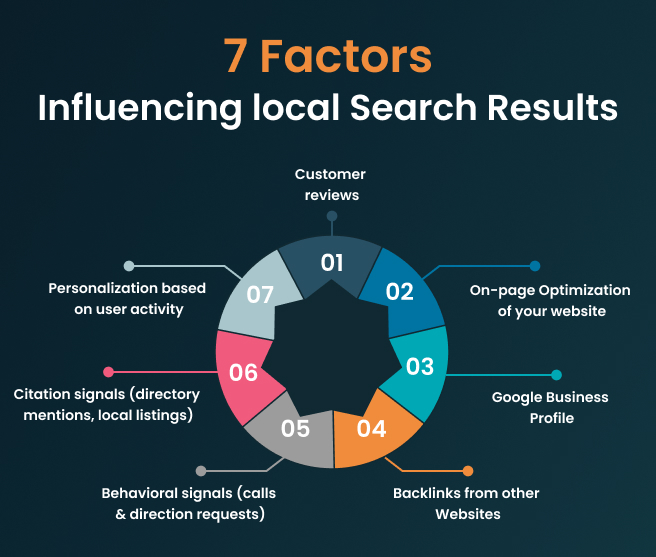
Local search ranking factors

This consolidated view highlights how different elements—from profile strength to user behavior—combine to influence Maps rankings. Building on these broader insights, five key factors have a direct and measurable impact on how well your diagnostic lab performs on Google Maps:

Reviews

Customer reviews are the cornerstone of local trust and credibility. Studies have proven that consumers trust online reviews as much as personal recommendations. Positive reviews influence not only patient decisions but also Google’s ranking algorithms. High-quality, recent reviews signal to Google that your lab is trustworthy and actively engaging with patients, which can contribute to an estimated 15-20% weight in ranking factors.

Photos

Visual content helps potential patients get a better sense of your lab’s professionalism and environment. Profiles with photos receive 42% more requests for directions and 35% more click-throughs to their websites, according to Google data. Consistent, high-quality photos improve user engagement and are considered by Google as a relevancy boost, potentially contributing around 10% to your Maps ranking.

Category and Keywords

Choosing the correct business category and using relevant keywords ensures your lab appears for the correct search queries. Google matches your profile categories and descriptive keywords with user searches to determine relevance. Inaccurate categorization can impact rankings by up to 15%, making it essential to select categories like “Diagnostic Laboratory” or “Medical Testing Center” and include specific test names in your profile.

Proximity

Proximity to the searcher’s location is a vital factor. Google aims to show the closest and most relevant options. Following the December 2021 Vicinity update, distance gained even greater importance, sometimes accounting for nearly 30% of the local ranking algorithm. Therefore, being physically closer to a patient searching nearby significantly increases the chances of appearing in the top Maps results.

Engagement (Clicks and Messages)

User interactions such as clicks to your website, calls from your profile, and message inquiries indicate business activity and relevance. Google tracks this behavior to understand user preference, attributing up to 10-15% ranking weight to engagement signals. Profiles that actively respond to messages and encourage contact tend to rank higher, reinforcing the importance of responsiveness.

Out of all these factors, the most fundamental step is simply being present on Google Maps with complete and accurate information. Without a verified and well-maintained Google Business Profile, none of the other ranking factors can come into play effectively.

Diagnostic lab marketing partner

Strategies to Optimize Your Google Business Profile

A well-optimized profile helps Google understand your business better and match it accurately with relevant local searches. It also offers potential patients key information that influences their decision to choose your diagnostic center over competitors. Since the December 2021 Vicinity update, proximity has become a more heavily weighted factor in Google’s local ranking algorithm. This update shifted the balance, making it crucial for labs to not only maintain comprehensive profiles but also leverage location-based signals more effectively to rank higher.

Here’s a step-by-step guide to optimizing your Google Business Profile for maximum impact:

  • Craft Clear and Relevant Business Titles: Ensure your business name on GBP aligns with your registered lab name. Avoid keyword stuffing; instead, focus on clarity and consistency with branding.
  • Specify Test Names and Services Offered: Include detailed descriptions of the tests and services your lab provides in the profile. This helps Google associate your profile with relevant patient searches.
  • Accurate Timing and Operating Hours: Keep your lab’s operating hours up to date, including special hours for holidays or emergencies. Consistent timing information builds trust and ensures patients know when they can visit.
  • Utilize the Q&A Section Effectively: Proactively add frequently asked questions and answers related to your lab services. This educates patients and reduces barriers to booking or visiting. Monitor this section regularly and respond promptly to new questions.
  • Add High-Quality Photos and Videos: Visual content improves engagement and showcases the professionalism of your lab. Include images of your facility, staff, and equipment, along with patient-friendly signage.
  • Collect and Respond to Reviews: Actively encourage satisfied patients to leave reviews while promptly addressing any concerns raised. Google values engagement in reviews as a ranking factor. Invest wisely in Online Reputation Management Services now.
  • Leverage Service Area and Location Settings: Set your service areas accurately if your lab offers home collection or multiple branches. This informs Google and patients precisely where your services are available.

By following these optimization steps and understanding the increased role of proximity after the Vicinity update, your diagnostic lab can improve its Google Maps ranking, attract more local patients, and stand out in a competitive market. Another critical factor in maintaining and boosting your Google Business Profile performance is consistent posting

Does Consistent Posting Improve Your Performance

Google favors profiles that regularly update fresh content because it signals an engaged and trustworthy business. For labs, posting health tips, special offers, new test information, or updates about your facility can capture patient attention and encourage interaction. Sharing valuable posts boosts your chances of appearing in local search results but also keeps current and potential patients informed about your latest services. Regular updates build ongoing trust and remind users that your lab is dependable and ready to serve their healthcare needs.

How to Get More ‘Directions’ and ‘Calls’ from Maps Visitors?

  • Keep your contact details and address clear and easy to find.
  • Use strong calls to action like “Call now for quick appointments” or “Get directions today.”
  • Pin your exact location on the map and highlight your service area if applicable.
  • Enable messaging and respond promptly to patient inquiries.


By making it effortless for users to connect and visit, you can convert more searches into real-world patient visits and strengthen your lab’s local presence. There are simple, practical ways to encourage this engagement and make your profile even more effective.

8 Practical Tips to Optimize Your Profile

Getting more calls and direction requests from your Google Maps profile can significantly increase patient footfall and grow your diagnostic lab’s business. Small, focused adjustments to your profile and user interactions can make a big difference in how easily patients find and choose your lab.

Here are eight practical tips to help you boost calls and directions from Maps visitors:
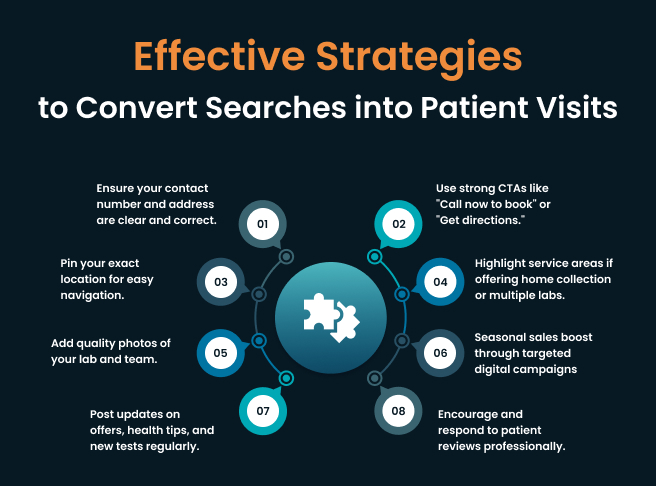
Patient visit conversion strategies

Conclusion

Now it’s time to wrap up. Optimizing your Google Maps presence is an essential step for diagnostic labs aiming to attract more local patients and grow their business. By focusing on key ranking factors, maintaining an accurate and engaging Google Business Profile, and consistently posting valuable content, labs can significantly enhance their visibility and patient engagement. Staying updated with algorithm changes, like the Vicinity update, ensures your strategies remain effective in a competitive market.

To support your digital marketing efforts further, ZealousWeb has created an exclusive e-book covering everything you need to build strong, results-driven marketing strategies. This comprehensive guide will help you elevate your lab’s online presence and achieve lasting growth. Download your free copy of the e-book today.

FAQs

Related Blog Posts

ZealousWeb

WhatsApp Automation for Labs: 3 Ready-to-Use Message Flows You Can Set Up Today

February 25, 2026
Healthcare Communicationlab automationpathology lab marketingWhatsApp automation
ZealousWeb

You Don’t Need Reels to Win: How Labs Can Use Social Media the Smart, Simple Way

February 25, 2026
Healthcare Content StrategyHealthcare Digital PresenceSmart Social Media StrategySocial Media for Labs
ZealousWeb

What Makes Doctors Refer Again: The Follow-Up Strategies That Actually Work

February 25, 2026
doctor engagementhealthcare referralslab marketing strategiespathology marketing
Google Reviews Boost Medical Tie-Ups

How Google Reviews Influence Doctor Referrals and Corporate Tie-Ups

February 25, 2026
Corporate Tie-UpsDoctor ReferralsGoogle ReviewsHealthcare Marketing
Pathlab WhatsApp Message template

3 WhatsApp Message Templates That Convert Inquiries Into Confirmed Bookings

February 24, 2026
Appointment booking automationPathlab marketingPatient EngagementWhatsApp healthcare communication
Digital marketing for pathology labs

The Cost of Waiting: What Labs Lose by Delaying Digital B2B Marketing

February 24, 2026
B2B marketingDigital Marketing StrategiesHealthcare Marketingmarketing for pathology labs
Google reviews for healthcare

Why Google Reviews Matter More Than You Think and How to Earn Them

February 23, 2026
Google ReviewsHealthcare MarketingLocal SEOOnline Reputation
Customer Lifetime Value

How Much Is Each Customer Worth—and How to Make Them Shop More

October 30, 2025
Customer Lifetime ValueeCommerce analyticspredictive analyticsRetention Marketing