


ZealousWeb
Google Reviews Boost Medical Tie-Ups

How Google Reviews Influence Doctor Referrals and Corporate Tie-Ups

February 25, 2026Posted By: Manjiri Bhate
Corporate Tie-UpsDoctor ReferralsGoogle ReviewsHealthcare Marketing

When someone lands on your page, believe it or not, they do scroll straight to the reviews. Reviews are the authentic, unfiltered voices of people who’ve experienced your services. They’re the authentic proof visitors rely on before making any decision.

This rings especially true in the healthcare industry, where B2B partnerships depend heavily on trust and credibility. For labs aiming to win doctor referrals and secure corporate tie-ups, positive Google reviews are essential. Because even if a doctor recommends a lab, the hospital administrators, HR teams, and ultimately the patients themselves will still Google and scrutinize those reviews. Google reviews act as a silent credibility booster. They work quietly in the background, shaping perceptions and building trust, often becoming the deciding factor in who gets referred or partnered with.

In this blog, we’ll explore exactly how Google reviews influence doctor referrals and corporate tie-ups, why they matter so much in B2B healthcare decisions, and how labs can get and showcase reviews that truly build credibility and trust.

Why Google Reviews Matter in B2B Decisions

In the world of B2B, reputation is everything. When hospital administrators and HR teams make decisions about which diagnostic partner to trust, they look for signs that a company is dependable and professional. It’s no surprise, then, that 96% of healthcare consumers consider online reviews essential to their decision-making process.

Google reviews give decision-makers a quick glimpse into three critical areas: Reliability, Responsiveness, and Professionalism.
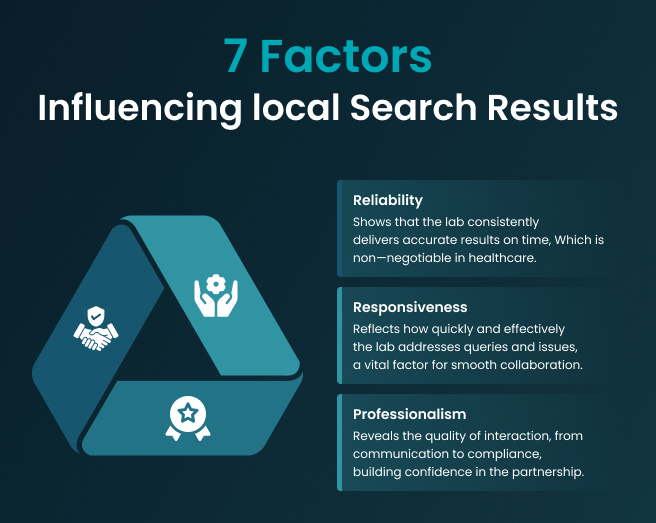
Local search ranking factors infographic

Together, these reviews paint a clear and honest picture that goes beyond any sales pitch, making them a powerful tool in B2B decision-making. However, to truly stand out, there are important considerations to keep in mind to ensure your reviews not only look good but also build genuine trust.

What a Good Review Looks Like for B2B Prospects

When it comes to B2B prospects, not all reviews carry the same weight. A well-written, detailed review can make a significant difference in building trust and convincing decision-makers, whereas vague or generic feedback is often overlooked. Google’s algorithm plays a key role here—it favors business profiles that are complete and regularly updated with authentic, detailed reviews, boosting their visibility in the coveted Google Local Pack. This means labs with strong reviews stand a better chance of being discovered by hospital admins, HR teams, and doctors searching for reliable partners.

With that in mind, here are some key elements that make a review truly valuable for B2B prospects:

  • Turnaround Time and Quality: Decision-makers want to know that the lab consistently delivers accurate, timely results. Mentioning quick turnaround times (TAT) along with the quality of test results shows the lab’s reliability, which is crucial in healthcare.
  • Doctor Mentions: When reviews include the names of referring doctors (where permitted), it adds authenticity and relevance. It signals to other medical professionals that respected peers trust this lab, thereby strengthening their confidence in the services.
  • Local Branch Details: Healthcare networks often operate across various locations. Reviews that specify local branches reassure prospects that the lab maintains high standards and provides exemplary service regardless of the location.
  • Strong vs. Generic Reviews: Detailed reviews that share specific positive experiences, such as “Their support team was quick to resolve our queries during a critical testing period,” carry significantly more influence than generic statements like “Good service.” Specificity helps build trust and paints a clearer picture.

By now, you should be familiar with what good reviews look like and why they matter. But the main task remains: how to effectively request these valuable reviews from reputable doctors and trusted corporate contacts. Successfully doing this is crucial for labs to establish a strong, credible online presence that genuinely influences B2B decision-making.

How to Ask for Reviews From Doctors and Corporate Contacts

Asking for reviews is an essential step in building your lab’s reputation online (whether the feedback is glowing or comes with suggestions for improvement). Reviews are powerful, and the very act of requesting them shows you value honest opinions and are committed to continuous growth. This openness itself can work wonders in strengthening relationships with doctors and corporate contacts.

Here are some tried-and-true ways to approach asking for reviews effectively:

  • Best Timing: Timing is everything. The ideal moment to request a review is right after a positive experience or the successful completion of a partnership. When the good impression is fresh, people are more likely to share authentic and detailed feedback.
  • WhatsApp/Email Templates: Making it easy for your contacts to respond is key. Using clear, polite, and personalized message templates for WhatsApp or email can save time and increase the chances they’ll take a moment to write a review.
  • Link Shorteners and QR Codes: Convenience matters. Shortened review links and QR codes simplify the process, enabling busy doctors or corporate contacts to leave their feedback with just a few taps—no typing of long URLs required.
  • Compliance with Privacy Norms: Respect and trust go hand in hand. Always ensure your review requests comply with local privacy regulations and standards. Transparency about how their information will be used will help maintain goodwill and protect your lab’s reputation.

By following these steps, labs can create a smooth, respectful, and effective review collection process that encourages meaningful feedback from the right people. Now that you know how to collect reviews and the best ways to ensure they look valuable, the next important question is: which platform should you focus on to get the maximum impact?

How to Display Reviews for Maximum Impact

Displaying your Google reviews effectively is just as important as collecting them. When done correctly, showcasing these testimonials can instantly build trust and guide prospects toward choosing your lab as their preferred partner. The key is to integrate reviews seamlessly across your digital touchpoints so they reinforce your credibility at every interaction.

Here are some powerful ways to display reviews for maximum impact:

Embed Reviews on Landing and Service Pages

Placing genuine reviews directly on your website’s landing pages and specific service pages keeps positive feedback front and center exactly where potential clients are making decisions. These embedded reviews act as real-time social proof, reinforcing the quality and reliability of your lab’s offerings. They also help boost search engine visibility by keeping fresh, user-generated content regularly updated on your site.

For labs with multiple branches or locations, using carousel plugins to showcase testimonials specific to each branch personalizes the visitor’s experience, making it more engaging and effective. This localized approach ensures that every branch maintains the same high standards, building confidence regardless of a prospect’s geographic preference. Plus, the dynamic carousel format makes the reviews visually engaging and easy to browse.

Highlight Top Reviews on LinkedIn and Email Campaigns

Don’t limit your reviews to just your website. Sharing your best testimonials on LinkedIn helps build professional credibility across your network, reaching hospital admins, HR teams, and doctors where they already engage. Similarly, including key reviews in email campaigns can reinforce trust and nudge recipients closer to partnership decisions by reminding them of your lab’s proven track record.

By thoughtfully integrating reviews across these channels, labs can amplify their impact far beyond a simple Google listing, turning every interaction into an opportunity to build trust and secure referrals. It’s important to remember that reviews will include both positive feedback and some negative or neutral comments. In either case, addressing all reviews promptly and professionally shows that your lab values transparency, listens to feedback, and is committed to continuous improvement.

Dealing With Negative or Neutral Reviews

No business is immune to negative or neutral reviews—especially in healthcare, where expectations are high and stakes even higher. How labs respond to these critiques can make all the difference between losing a potential partner and turning a challenge into an opportunity. Ignoring or deleting negative feedback not only damages credibility but also misses an opportunity to demonstrate commitment to improvement and customer care.

Here are the top five strategies to effectively handle negative or neutral reviews and turn them into growth moments:

Respond with Empathy and Solutions

When faced with a critical review, it’s essential to respond promptly and with genuine empathy. Acknowledge the reviewer’s concerns without being defensive, and offer clear, actionable solutions. This reassures prospects that your lab listens, cares, and takes responsibility, which helps rebuild trust. According to research, 44% of consumers are more likely to visit a business that responds to negative reviews, demonstrating the significant impact of a thoughtful reply.

Never Delete — Address and Improve

While it might be tempting to remove negative reviews, this can backfire and harm your reputation more than the review itself. Instead, view each critique as constructive feedback. Address the issues raised publicly where appropriate, and privately follow up if needed. This transparency signals accountability and a willingness to improve rather than hide flaws.

Use Feedback to Refine Service

Every review (positive or negative) is a valuable insight into your lab’s performance. Regularly analyze feedback to identify patterns or recurring issues, then implement changes to enhance your services. This proactive approach helps prevent similar complaints and shows current and prospective clients that you’re committed to continuous quality improvement.

Set Clear Response Timeframes

Statistics show that 53% of customers expect a response to their negative review within a week, yet 63% say businesses never respond at all. Meeting or exceeding this expectation by establishing and adhering to a clear response timeframe reflects professionalism and respect for your clients’ voices, reinforcing your lab’s credibility.

Maintain a Professional Tone Always

Regardless of how harsh or unfair a review may seem, always maintain professional and courteous responses. Avoid arguments or defensive language. A calm, respectful tone demonstrates maturity and dedication to service excellence, helping to diffuse tension and maintain a positive public image.

By adopting these strategies, labs can not only mitigate the impact of negative reviews but also turn them into opportunities for relationship-building and growth. Addressing feedback thoughtfully helps foster trust, enhance reputation, and ultimately positively influence B2B decision-making.

Reputation management CTA banner

Conclusion

This blog has covered a wide range of topics, and by now, you have a clear understanding of how reviews can significantly impact doctor referrals and corporate partnerships, as well as practical strategies for collecting, displaying, and managing them.

To help you get started, here are some examples of how you might ask for reviews in different tones depending on the situation:

  • Formal: “Dear Dr. Smith, we truly appreciate your ongoing partnership. We would be grateful if you could share your experience working with us by leaving a review on Google. Your feedback helps us maintain the highest standards.”
  • Semi-formal: “Hi Dr. Patel, it’s always a pleasure working together. If you have a moment, we’d love it if you could leave us a review on Google to help others learn about our services.”
  • Addressing Challenges: “We value your honest feedback, and if there’s anything we can improve, please let us know. Would you consider sharing your experience via a Google review?”

To make this process even easier, you can start by downloading our free e-book. This comprehensive guide offers expert tips for maximizing your review impact and provides actionable insights tailored specifically for labs seeking to establish credibility and foster trusted partnerships through Google reviews. It’s a valuable resource to get you up and running quickly while ensuring your review strategy is effective and compliant.

Remember, when doctors refer and corporations decide, it’s your Google reviews that tell the story they want to hear—clear, credible, and compelling.

FAQs

Related Blog Posts

ZealousWeb

WhatsApp Automation for Labs: 3 Ready-to-Use Message Flows You Can Set Up Today

February 25, 2026
Healthcare Communicationlab automationpathology lab marketingWhatsApp automation
ZealousWeb

You Don’t Need Reels to Win: How Labs Can Use Social Media the Smart, Simple Way

February 25, 2026
Healthcare Content StrategyHealthcare Digital PresenceSmart Social Media StrategySocial Media for Labs
ZealousWeb

What Makes Doctors Refer Again: The Follow-Up Strategies That Actually Work

February 25, 2026
doctor engagementhealthcare referralslab marketing strategiespathology marketing
Google Maps local SEO for Pathlabs

How to Rank Higher in Google Maps: A Local SEO Guide for PathLabs

February 25, 2026
Diagnostic Laboratory MarketingGoogle Business ProfileGoogle Maps SEOLocal SEO Guide
Pathlab WhatsApp Message template

3 WhatsApp Message Templates That Convert Inquiries Into Confirmed Bookings

February 24, 2026
Appointment booking automationPathlab marketingPatient EngagementWhatsApp healthcare communication
Digital marketing for pathology labs

The Cost of Waiting: What Labs Lose by Delaying Digital B2B Marketing

February 24, 2026
B2B marketingDigital Marketing StrategiesHealthcare Marketingmarketing for pathology labs
Google reviews for healthcare

Why Google Reviews Matter More Than You Think and How to Earn Them

February 23, 2026
Google ReviewsHealthcare MarketingLocal SEOOnline Reputation
Customer Lifetime Value

How Much Is Each Customer Worth—and How to Make Them Shop More

October 30, 2025
Customer Lifetime ValueeCommerce analyticspredictive analyticsRetention Marketing