

When you look at the data, the “expectation gap” isn’t just a hunch—it’s a documented industry reality. According to analysis from a business survey site, many organizations struggle with “CX fatigue” and budget volatility because they underestimate the operational discipline required after the build. In fact, industry benchmarks indicate that e-commerce app development maintenance alone typically consumes 15% to 25% of the initial development cost annually to stay competitive and secure. When you first start looking into e-commerce app development services, that initial quote often feels like a finished map, but in reality, it’s usually just the starting line. Most businesses fall into this trap because they focus purely on the “launch,” overlooking the fact that a digital storefront is a living ecosystem.
Between the hidden costs of scaling infrastructure for seasonal spikes and the constant need for security patches, the price tag evolves as quickly as the tech itself. We’ve seen it time and again: an estimate fails not because of bad intentions, but because real-world execution demands integrations, payment compliance, and performance tuning that a simple PDF proposal just can’t predict.
Hidden Costs That Start Before Development Even Begins
It’s a bit of a paradox, but the most expensive mistakes in e-commerce app development services usually happen when no one is actually writing code. We often see projects “blow the budget” before the first line of syntax is even drafted, simply because the foundation was built on assumptions rather than data.
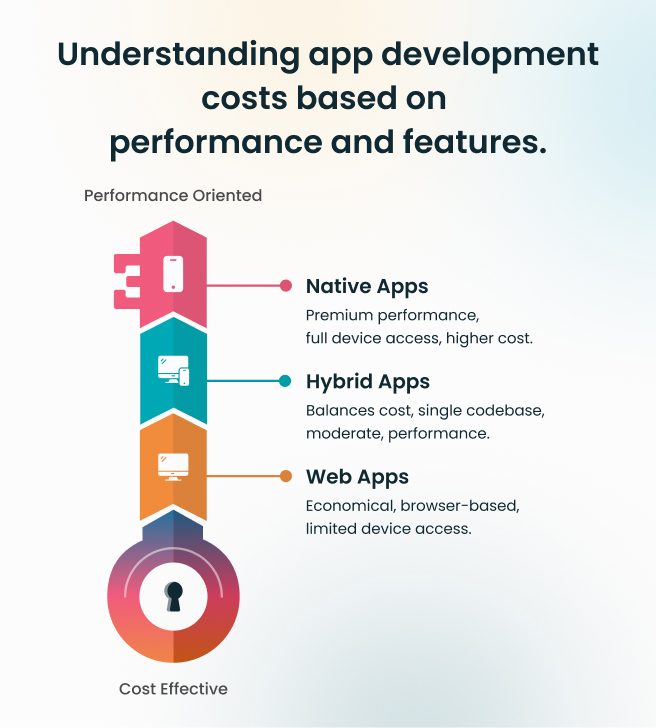
Think of it like building a house: if you tell the architect you want “a kitchen,” but you actually meant a “commercial-grade chef’s kitchen with specialized ventilation,” that initial quote is essentially a work of fiction. This mismatch in expectations sets the stage for hidden overruns—see our image below on understanding app development costs based on performance and features for a clear breakdown of what drives real expenses
It’s a bit of a paradox, but the most expensive mistakes in e-commerce app development services usually happen when no one is actually writing code. We often see projects “blow the budget” before the first line of syntax is even drafted, simply because the foundation was built on assumptions rather than data.
The Pre-Development Money Pit
When we talk about hidden costs at this stage, we aren’t talking about sneaky fees; we’re talking about the “clarity tax.” Here is where the budget starts to leak:
- The Discovery Gap: Most quotes are based on a “High-Level Requirement” list. If the discovery phase is rushed, you miss the granular details—like how your specific inventory management system needs to talk to the app in real-time. Finding this out mid-build can 2x your integration costs instantly.
- The Assumption Trap: Many stakeholders assume “standard features” like a search bar or a checkout flow are simple. However, if that search bar needs AI-driven autocomplete or the checkout requires complex multi-currency tax calculations, an “assumption-based estimate” will fall apart under the weight of reality.
- Vague Roadmaps: Without a crystal-clear product roadmap, development teams often build features that eventually need to be scrapped or refactored to make room for future updates. This “throwaway work” is a silent budget killer.
A project that skips a rigorous discovery phase isn’t saving money; it’s just deferring a massive invoice for “change orders” later in the cycle. This is why e-commerce app development begins conceptually during planning—if you don’t plan for scalability now, you’ll pay for a total rebuild later.
Architecture and Platform Decisions That Lock in Future Costs
Choosing your tech stack is often where a project’s long-term profitability is decided, yet it’s rarely discussed with the gravity it deserves. Many brands get lured into the “cheap and fast” promise of an MVP, only to realize six months later that they’ve built a digital glass ceiling. In the world of e-commerce app development services, the architecture you choose today acts as either a launchpad or a recurring tax on every future update you want to make.
The “hidden” part of hidden costs often boils down to technical debt; if you take shortcuts to hit an aggressive launch date, you aren’t actually saving money—you’re just taking out a high-interest loan. Whether you opt for a rigid monolithic structure or a flexible modular one, that decision becomes the invisible backbone of your budget, dictating whether e-commerce app development maintenance will be a routine tune-up or a total financial drain as you scale.
| Features | Monolithic Architecture | Modular (Microservices/Headless) |
| Initial Quote | Lower: Unified codebase is faster to deploy initially. | Higher: Requires more complex orchestration and API design. |
| Scalability | Difficult: You must scale the entire app, even if only one feature is lagging. | Seamless: Scale-specific components (like checkout) can be independently scaled during peaks. |
| Tech Stack Lock-in | High: Bound to one language/framework for the whole lifecycle. | Low: Mix and match the best tools for different app functions. |
| Maintenance Impact | Risky: A bug in the UI can potentially crash the entire database connection. | Isolated: Updates to one module don’t jeopardize the rest of the ecosystem. |
| Future Cost Trend | Exponential: Becomes harder and pricier to update as it grows. | Linear: Costs remain predictable even as complexity increases. |
The difference between these two paths isn’t just technical; it’s financial. A monolith might get you to market for $30,000, but adding a simple “Buy Now, Pay Later” integration a year later could cost $10,000 in refactoring alone. Conversely, a modular setup might start at $60,000, but that same integration becomes a plug-and-play task costing a fraction of the time.
This architectural foundation leads directly into the next silent budget killer: the third-party ecosystem. Once your “house” is built, you realize that every modern convenience—from processing a credit card to calculating sales tax—comes with a monthly subscription and an integration fee that most initial quotes conveniently leave out.
Feature Creep and Rework: The Silent Budget Killers
Ah, “Feature Creep”—the industry’s polite way of saying, “We’re building a spaceship when we only asked for a bicycle.” It usually starts with a harmless, “While you’re at it, can we just add…” and ends with a budget that looks like it’s been through a paper shredder. In the world of e-commerce app development services, this is where the most disciplined projects go to die.
We’ve all been in those meetings where a “simple” idea to add a loyalty program mid-build suddenly requires a complete overhaul of the database, the checkout logic, and three different third-party APIs. It’s the digital equivalent of deciding you want a basement after the concrete for the foundation has already dried—it’s possible, sure, but you’re going to pay for the jackhammering.
The "Just One More Thing" Tax
The tragedy of feature creep isn’t just the extra work; it’s the domino effect. When you drift from your original roadmap, you aren’t just paying for new code; you’re paying to rewrite the old code that the new code just broke.
- The MVP vs. “Everything Everywhere All At Once” Launch: Everyone says they want a Lean MVP, but by week four, the “must-have” list has grown to include AI-driven styling assistants and AR try-ons. Every “extra” feature adds a layer of complexity that balloons your e-commerce app development maintenance costs before you’ve even made your first dollar.
- The Logic Rework Loop: Change a “simple” shipping rule? That’s not just a UI change. That’s a deep dive into the tax engine, the carrier API, and the checkout validation logic. If it wasn’t in the blueprint, it’s not a “tweak”—it’s a renovation.
- UX/Design Drift: Every time you add a button, the entire user flow needs to be re-tested. What started as a clean, three-click path to purchase quickly becomes a maze that requires more design hours to fix than the original app took to build.
Also read: Why Is Accessibility and Mobile-First Design Crucial for Baby eCommerce Stores?
If your project roadmap is “evolving” every Tuesday, your budget isn’t a fixed number—it’s a suggestion. The most expensive words in app development are: “It shouldn’t be that hard, right?”
This constant shifting of goalposts creates a massive blind spot: the “Launch is the Finish Line” myth. Most brands are so exhausted by the time they hit the app store that they forget the real bills—the ones for keeping the lights on and the hackers out—haven’t even arrived yet.
Post-Launch Costs Most Teams Don’t Budget For
Congratulations, you’ve hit “Publish.” The champagne is poured, the app is in the store, and the development team is high-fiving. But here is the cold, hard truth: the day you launch is the day your app starts decaying. If you treated your initial quote like a one-time purchase—similar to buying a laptop—you’re in for a shock. In reality, e-commerce app development services are more like owning a high-performance car; if you don’t change the oil, rotate the tires, and update the software, it will break down on the highway.
Most teams forget that e-commerce app development maintenance isn’t a “nice-to-have” insurance policy—it’s the cost of staying in business.
The "Hidden" Monthly Statement
Once the app is live, a new set of financial realities kicks in. You aren’t just paying for features anymore; you’re paying for the world around your app to stay compatible with it.
- The OS and Device Tax: Every time Apple or Google drops a new version of iOS or Android, your app risks breaking. What worked on last year’s iPhone might glitch on this year’s model. Budgeting for “Device Compatibility” means you won’t be left scrambling when 20% of your users suddenly can’t click the “Buy” button after an OS update.
- Maintenance vs. Enhancements: There is a massive difference between keeping the lights on (security patches, server monitoring, bug fixes) and adding new stuff. If you don’t separate these in your budget, you’ll find that “fixing bugs” eats up all the capital you intended to use for new features.
- The Security Carousel: E-commerce apps are prime targets for data breaches. Regular security audits and patch deployments aren’t optional extras; they are the baseline cost of not getting sued or blacklisted by payment processors.
The Post-Launch Budget Breakdown
| Expense Type | Frequency | Why It Is Hidden |
| Security Patches | Monthly/Critical | Usually bundled into “maintenance,” but requires immediate, unplanned hours. |
| OS/SDK Updates | 1-2x Per Year | Major updates (like iOS 18) often deprecate old code, requiring forced refactoring |
| Server/API Scaling | Ongoing | As your traffic grows, your infrastructure costs grow—often exponentially if not optimized. |
| Bug Fixing | Weekly (Post-Launch) | The “Stabilization Phase” usually lasts 3 months post-launch and is rarely fully quoted. |
Third-Party Tools, Integrations, and API Usage Costs
If you’ve ever wondered why an e-commerce quote looks so reasonable on paper but spirals in reality, look no further than the “API Tax.” In modern e-commerce app development services, your app is essentially a conductor of an expensive orchestra. You aren’t just building an app; you’re renting the expertise of dozens of other companies to handle payments, calculate taxes, track shipping, and send SMS alerts.
While these integrations make your app powerful, they introduce a “usage-based” financial reality that can catch even the most seasoned CFO off guard. If your app goes viral tomorrow, your development costs might stay the same, but your third-party fees could surge by 500% in a single weekend.
The Integration Ecosystem: Rental vs. Ownership
When we talk about hidden costs in this phase, we’re looking at the difference between the work to connect the tool and the cost to keep it running. It’s easy to budget for the developer’s time, but much harder to budget for the “success tax” that comes with high transaction volumes.
- The “Middleware” and ERP Trap: Connecting your app to an enterprise system like NetSuite or SAP isn’t a one-time setup. These integrations often require specialized middleware that carries its own licensing fees, sometimes ranging from $10,000 to $50,000 annually just to keep the data flowing.
- Usage-Based Scaling: Many marketing and search APIs (like Algolia or Twilio) use tiered pricing. You might start on a “free” or $29/month tier, but the moment you hit a certain number of API calls or users, you’re automatically bumped into an “Enterprise” tier that can cost thousands.
- Payment Gateway Complications: Beyond the standard 2.9% transaction fee, there are often hidden “integration maintenance” costs. If a gateway updates its security protocol or API version, you’ll need to pay for e-commerce app development maintenance just to ensure your checkout doesn’t suddenly stop working.

API & Integration Financial Impact
| Integration Type | Setup Complexity | Hidden Recurring Costs |
| Payment gateways | Moderate | Transaction fees + chargeback penalties + PCI compliance audits. |
| ERP/Inventory | High | Annual connector licenses + data sync error troubleshooting. |
| Search & AI | Low to Moderate | Monthly “per-query” fees that spike with high traffic. |
| Logistics/Shipping | Moderate | Label generation fees + real-time tracking API call limits. |
| Marketing/CRM | Moderate | “Per-subscriber” or “per-email” costs as your database grows. |
Ultimately, scaling isn’t just about adding more servers; it’s about fortifying the digital walls you’ve built to ensure they don’t crumble under the weight of your own growth. When you stop viewing performance and security as “one-time fixes” and start treating them as the essential infrastructure they are, you move from reactive crisis management to proactive business scaling.
This shift in perspective—from a one-off build to a continuous evolution—is the secret to surviving the long game. By understanding that your budget must accommodate the living, breathing nature of a successful platform, you can finally close the gap between that initial quote and the actual cost of staying at the top of the market.
Performance, Security, and Compliance Costs That Surface at Scale
When your app moves from a handful of beta testers to thousands of concurrent users, the “success tax” takes on a whole new form. In the ecosystem of e-commerce app development services, performance and security aren’t just technical checkboxes—they are expensive, ongoing operational realities.
Most initial quotes assume a “fair weather” scenario, but the moment you hit a traffic spike or face a localized data regulation, the budget can quickly tilt. Scaling a database to handle 10,000 transactions per second isn’t as simple as flicking a switch; it requires deep-level optimization and infrastructure tuning that often falls under the radar during the honeymoon phase of development.
The "Scale-Up" Reality Check
The true hidden costs of a successful app often hide in the layers of the tech stack that users never see, but compliance officers and hackers certainly do.
- Performance Optimization and Load Handling: There is a massive cost gap between an app that “works” and an app that stays fast under pressure. As your user base grows, you’ll encounter bottlenecks in your code that only surface at scale. Refactoring these to ensure your app doesn’t crawl during a holiday sale is a significant part of e-commerce app development maintenance that most teams fail to forecast.
- The Security Patch Treadmill: Security isn’t a “set it and forget it” feature. New vulnerabilities are discovered daily, and staying ahead of them requires constant monitoring, regular penetration testing, and rapid patching. If you aren’t budgeting for these security audits, you’re essentially leaving your vault door unlocked and hoping no one notices.
- Data Protection and Compliance: Whether it’s GDPR, CCPA, or PCI-DSS for payment handling, compliance is a moving target. As regulations shift, your app’s data handling logic must evolve too. Failing an audit or suffering a data breach is exponentially more expensive than the proactive cost of maintaining a compliant infrastructure.
It’s easy to build an app that works for 100 people. It’s an entirely different—and significantly more expensive—feat to build one that is secure, compliant, and lightning-fast for 100,000. If your budget doesn’t account for the “weight” of your own success, you’ll find yourself paying for emergency fixes at premium “crisis” rates.
AI, Personalization, and Automation: Advanced Features with Ongoing Costs
In the current landscape of e-commerce app development services, “AI” is the most expensive buzzword you’ll ever encounter. It’s often sold as a magic wand that boosts conversions overnight, but beneath the surface, it’s a high-maintenance engine that requires a constant stream of high-quality data to run. Unlike a static search bar, AI-driven personalization and automation workflows aren’t “set it and forget it” features; they are living algorithms that require continuous tuning, monitoring, and—most importantly—significant ongoing usage fees.
If you’re planning to implement a “Netflix-style” recommendation engine, you need to be prepared for the reality that the initial integration cost is just the tip of the iceberg.
The Cost of Intelligence: Beyond the Hype
The “hidden” part of advanced automation isn’t the code itself, but the operational weight of maintaining its accuracy. Here is where the budget often takes an unexpected turn:
- Continuous Tuning and Monitoring: An AI recommendation engine is only as good as the data it’s fed. If your product catalog changes or consumer trends shift, the model needs to be retrained. This “algorithmic grooming” is a specialized part of e-commerce app development maintenance that requires data science expertise, not just standard dev hours.
- Automation Workflows and Data Pipelines: Automating your marketing or inventory flows sounds like a cost-saver, but building the robust data pipelines required to move information between your CRM, ERP, and app is a complex engineering feat. When these pipelines break (and they will), the cost of manual recovery and data cleanup can be staggering.
- The Hidden Data & API Usage Costs: Most advanced personalization tools charge based on the number of “profiles” or “events” tracked. As your traffic grows, these costs don’t just scale—they compound. You might start paying $500 a month for a personalization tool, but find yourself facing a $5,000 bill after a successful marketing campaign increases your user interactions.
- The Pragmatic View: Automation and AI can provide a massive ROI, but they are not “features”—they are “infrastructure.” If you aren’t prepared to budget for the data scientists or the premium API tiers required to keep these systems accurate, you’re better off sticking to a well-optimized, manual logic until your volume justifies the spend.
Ultimately, the goal isn’t to avoid these advanced features, but to enter into them with your eyes wide open. High-level personalization is a powerful tool for growth, provided you’ve factored in the long-term cost of the data fuel required to keep that engine running.
Pricing Models and Contracts That Hide Cost Risks
Choosing the wrong contract is often how a “fixed” budget becomes a moving target. While a Fixed-Price model feels safe, it frequently leads to the “Change Request Trap”—where every minor adjustment outside the initial, often vague, scope results in premium-priced invoices.
On the other hand, Time and Materials (T&M) offers the flexibility essential for modern e-commerce app development services but requires rigorous oversight to prevent “efficiency bleed.” If your contract doesn’t explicitly define how e-commerce app development maintenance is billed or how “out-of-scope” work is triggered, you’re essentially signing a blank check disguised as a professional agreement.
| Model/Cause | The Promise | The Hidden Risk |
| Fixed-Price | Budget certainty and a clear “finish line.” | The Scope Trap: Any detail missed in discovery becomes an expensive “Change Order.” |
| Time & Materials | Maximum flexibility and “pay for what you use.” | The Efficiency Risk: Without strict project management, development can drift indefinitely. |
| Change Requests | A way to pivot features mid-build. | The Premium Tax: Changes are often billed at a higher hourly rate than the original quote. |
| Maintenance | Post-launch support and security. | The “Ghost” Fee: Monthly retainers that charge for hours even if no work is performed. |
| IP & Exit Rights | You “own” your app and its code. | The Vendor Lock-in: Clauses that make it nearly impossible to switch teams without a total rebuild. |
Understanding these contractual levers is the final piece of the budgeting puzzle. It shifts the conversation from “How much does this cost?” to “How do we manage the financial risk of building this?” By aligning your contract with the technical realities we’ve covered—from architecture to AI—you move from being a passenger in the development process to the one actually holding the map.
How to Spot Hidden Costs Before Choosing a Development Partner
Choosing a partner for e-commerce app development services is a lot like interviewing a pilot; you aren’t just looking for someone who can take off, but someone who has a plan for the turbulence. If a proposal looks too clean, too fast, or too cheap, it usually means the agency is ignoring the technical debt they’re about to hand you.
To avoid the “quote creep” that turns a $50k project into a $150k headache, you need to look past the total at the bottom of the page and scrutinize the assumptions baked into the fine print. True cost transparency isn’t about the lowest number—it’s about the most honest one.
The "Hidden Cost" Detection Checklist
Before you sign on the dotted line, run your potential partner’s proposal through this filter to see if they are planning for your success or just your launch.
- [✅] The Discovery Depth: Did they provide a detailed SRS (Software Requirement Specification), or is the quote based on a 30-minute introductory call?
- [✅] Maintenance Transparency: Is there a dedicated line item for e-commerce app development maintenance, or do they vaguely claim the app “won’t need much” after launch?
- [✅] Third-Party Line Items: Does the estimate include a breakdown of estimated monthly fees for APIs (Payment gateways, SMS, Search, Taxes)?
- [✅] Scaling Milestones: At what user count or transaction volume does the proposed architecture require an upgrade? (If they can’t answer this, they haven’t built for scale.
- [✅] Change Management: Is there a predefined “Change Request” process with a fixed hourly rate, or is it handled on a “case-by-case” basis?
- [✅] Security & Compliance: Does the quote include PCI-DSS compliance and initial security penetration testing, or is that considered an “extra”?
- [✅] Data Migration: If you are moving from an old platform, is the cost of cleaning and migrating your existing customer/product data explicitly included?
Red Flags to Watch For
- The “Everything is Included” Promise: If an agency claims their initial price covers unlimited revisions or “all future updates,” they are either inexperienced or planning to cut corners on the code quality to stay profitable.
- The Absence of DevOps: If there is no mention of server environments (Staging vs. Production) or automated deployment pipelines, you are looking at a project that will be manual, error-prone, and expensive to maintain.
By using this checklist, you shift the power dynamic. You stop being a client who is “buying an app” and start being a partner who is “investing in a platform.”
Conclusion
Most e-commerce app budgets fail not because of poor intentions, but because they are built around launch costs rather than lifecycle reality. This blog breaks down the real expectation gap in e-commerce app development services—where discovery shortcuts, architecture decisions, feature creep, and post-launch obligations quietly reshape costs long after the initial quote is approved.
From pre-development assumptions and tech stack lock-ins to third-party API fees, maintenance cycles, and AI-driven personalization overheads, the article reveals how “hidden costs” emerge at every stage of growth. It highlights why e-commerce app development maintenance often consumes 15–25% of annual spend, and how performance, security, and compliance costs surface only once scale is achieved.
The key takeaway is simple: successful platforms are treated as evolving ecosystems, not one-time builds. Teams that invest early in rigorous discovery, modular architecture, transparent contracts, and proactive maintenance planning avoid costly rebuilds and crisis-driven fixes later.
This is the approach ZealousWeb aligns with—helping brands move from short-term launch thinking to long-term platform resilience by addressing cost risk upfront, not after it becomes a business liability.