


ZealousWeb
parent shopping behavior

3 Things That Change Every Year in Parent Shopping Behavior

February 27, 2026Posted By: Manjiri Bhate
ecommerce trends 2025omnichannel shoppingparent shoppingparent shopping behavior

Parent shopping habits are always changing. Every year, new things influence how parents buy, what they care about, and how they make decisions. These changes happen because of new technology, different values, and how parents think and feel when shopping. Understanding these shifts is really important for brands and stores that want to connect with parents and earn their trust.

By keeping track of how parents shop each year, businesses can better understand what parents need and want. This helps them offer the right products, use the best channels, and create messages that truly matter to parents. Since parenting is busy and ever-changing, parents look for convenience, honesty, and meaningful reasons to choose one brand over another.

In this blog, we’ll explore three important trends that keep changing in parent shopping behavior every year. We’ll look at how parents shop using devices and different channels, what values matter most to them, and the reasons behind their buying choices.

Trend 1: Shifts in Shopping Channels and Technology Usage

In recent years, mobile device use for shopping among parents has surged. Till the year 2024, 72.9% of all e-commerce sales came from mobile devices. Many parents switch between multiple devices like phones, tablets, and laptops, expecting a seamless experience across all screens. This has made omnichannel shopping essential and widespread, where parents engage with brands through a mix of online and offline channels. For example, they might research on mobile, read reviews on desktop, and purchase either in-store or online.

Key reasons why omnichannel is important to parent shoppers:

  • Convenience of switching between devices anytime
  • Ability to compare options across platforms easily
  • A consistent shopping experience builds trust
  • Flexibility in how and when to complete purchases

Now, let’s look at the growth of online marketplaces versus physical retail in how parents shop:

Aspect Online Marketplaces Physical Retail
Product Variety Extensive, wide range of brands and products Limited by store size and stock
Price Comparison Easy, instant price comparison across sellers Price comparison requires visiting multiple stores
Convenience Available 24/7, home delivery options Requires travel and store hours
Instant Gratification Depends on delivery speed Immediate product possession
Trust Factors Dependent on reviews, seller ratings Personal interaction, tangible product experience

Emerging technologies like AI-driven recommendations, voice search, and augmented reality are increasingly shaping parent shopping by personalizing and enhancing interaction. In 2025, brands focusing on these innovations and delivering connected experiences across channels will have an advantage in winning parent shoppers.

Trend 2: Changing Value Drivers in Purchase Decisions

Brand trust and authenticity have become must-haves for parent shoppers. Parents want to feel confident that the products they choose for their families are safe, reliable, and come from brands that truly care. This trust often leads to customer loyalty and repeat purchases, especially when it concerns the health and well-being of their children.

Ethical concerns and sustainability have grown into powerful purchase drivers. Governments around the world are pushing companies to follow Environmental, Social, and Governance (ESG) principles, encouraging responsible business practices. Studies show that over 60% of parents today are willing to pay more for products that are eco-friendly and ethically produced. This reflects a rising awareness that shopping choices impact not just families but the planet as well.

Social proof also heavily influences parents’ buying decisions. Approximately 85% of parents read online reviews before making a purchase, valuing genuine feedback from other customers more than traditional advertising. Positive ratings and testimonials help reduce doubts and increase confidence.

Key value drivers for parent shoppers include:

  • Genuine trust and brand authenticity
  • Commitment to sustainability and ethical practices
  • Influence of real customer reviews and social proof

Brands that focus on these areas can connect more deeply with parents and earn their loyalty in today’s market.

Trend 3: Evolving Psychological Drivers Behind Buying Choices

When it comes to buying, parents don’t rely solely on logic; they are strongly influenced by emotional triggers. Their decision-making combines practical needs with feelings like safety, love, and reassurance. These emotions lead parents to choose products that offer the best care and protection for their children, as well as the peace of mind and confidence in their choices.

Furthermore, convenience and time sensitivity are critical in today’s busy world. Parents prefer shopping experiences that save time and reduce hassle, such as:

  • Fast and reliable delivery options
  • Simple, quick checkout processes
  • Easy returns and customer support

These factors matter because parents often balance multiple responsibilities, and every minute saved counts.

Another key factor is parenting stages, which greatly impact shopping behavior. For example:
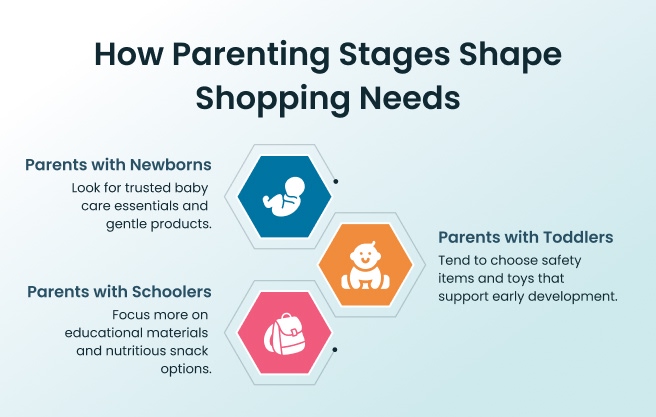
Parenting stages shaping shopping

By recognizing where parents are in their journey, brands can offer products that truly fit their current needs, making shopping more personalized and relevant. Understanding these psychological drivers enables brands to connect authentically with parents by meeting both their practical needs and emotional desires.

Conclusion

To sum up, parent shopping behavior is evolving rapidly across these key trends. These shifts have major implications for brands and retailers aiming to connect meaningfully with parent shoppers. Strategically, businesses should focus on creating seamless omnichannel experiences, building authentic and trustworthy brand relationships, and tailoring marketing efforts to the emotional and practical needs unique to different parenting stages.

Looking ahead, parent shopping behavior will continue to change as new technologies emerge and consumer values evolve. Tracking these changes accurately is essential. With the right web analytics tools, you can gain deep insights into who your customers are, what they want, and how they shop.

If you want expert help to capture and analyze your customer data effectively, get in touch with ZealousWeb. We specialize in delivering actionable insights that help your business stay ahead by understanding and responding to your customers’ true needs.

FAQs

Related Blog Posts

impact of visual consistency on baby brand websites

The Emotional Impact of Visual Consistency on Parents

February 27, 2026
baby brand UXecommerce brandingemotional designvisual consistency
Baby store website UX audit analysis

What Makes Regular UX Audits Non-Negotiable for Baby Store Survival?

February 27, 2026
Baby eCommerce UXDigital MarketingUX AuditWebsite Optimization
ZealousWeb

Why Lifestyle Photos Drive Higher Conversions in Baby eCommerce

February 27, 2026
Baby eCommerce MarketingeCommerce ConversionsLifestyle PhotographyProduct Image Optimization
Checkout redesign conversion

Before vs After — The Checkout Redesign That Reduces Cart Abandonment

February 27, 2026
Cart AbandonmentCheckout RedesignEcommerce OptimizationUX/UI Strategy
Baby Store Design Mistakes

3 Design Mistakes That Make Baby Stores Look Untrustworthy

February 26, 2026
baby eCommerce storesbaby store designeCommerce StrategyeCommerce UX
Typography for baby store UX showing trust

Fonts That Parents Trust: Why Typography Matters in UX

February 26, 2026
baby store website designecommerce conversion designtypography in ecommerceUX for baby brands
Bounce rate in baby eCommerce

Bounce Rate Red Flags — What They Mean for Baby E-commerce

February 26, 2026
baby eCommerceBounce RateConversion OptimizationeCommerce UX
baby store conversions

Optimizing Product Pages for Better Engagement & Conversions

February 24, 2026
baby eCommercebaby product pagesbaby store conversionsproduct page optimization
Baby eCommerce technology

Why Founders Shouldn’t Try to “DIY” Their Baby Store Tech

February 23, 2026
baby eCommerceeCommerce Developmentstartup growth strategytechnology outsourcing