

Retention in pathology labs is like the heartbeat of your business. Without it, your lab struggles to grow; with it, you secure steady business and build a reputation that doctors genuinely trust. When a doctor refers patients repeatedly, they’re sending business your way and also putting their personal credibility on the line. That’s powerful. In pathology, it’s perfectly normal—and expected—that doctors send patients to labs time and again. So, if you find yourself stuck in the frustrating cycle of “one-time-only” referrals, you’re not alone.
This blog is your roadmap to breaking that cycle and turning your lab into the go-to place doctors can’t help but recommend again and again. We’ll explore why follow-ups are polite gestures that turn fleeting referrals into lasting partnerships. By exploring the psychology behind repeat referrals and sharing practical, heart-driven follow-up strategies, you will be equipped with the tools to stop chasing referrals and start earning them by the end of this blog.
The Psychology Behind Repeat Referrals
Understanding the psychology behind why doctors refer patients repeatedly can give your pathology lab a decisive advantage. At its core, referral behavior is driven by deep-rooted human needs—trust, confidence, and the desire to maintain a strong professional reputation. One practical framework to consider in this context is based on the principles of social proof and consistency, as famously explored in Robert Cialdini’s work on influence. Simply put, people prefer to stick with choices that reinforce their identity and values, especially in professional settings.
For doctors, referring a patient to a lab signals their trust that the patient will receive professional, timely, and accurate care. They want absolute confidence that their recommendation reflects well on them, ensuring a seamless and positive patient experience. This is why a referral is directly tied to the doctor’s own credibility in front of their patients and peers. Ultimately, the strength of the relationship between the doctor and the lab far outweighs any monetary incentives. While rewards and perks may open a door, it is the genuine, consistent connection and mutual respect that make doctors stick with one lab over the long haul. Building trust and fostering authentic relationships beats incentives every time.
Fortunately, there are proven best practices that pathology labs can adopt to nurture these relationships and ensure follow-ups become meaningful moments—not just routine check-ins.
Best Practices for Referral Follow-Ups
Effective follow-up isn’t just a courtesy—it’s the bridge between a one-time referral and a trusted long-term partnership. Small, thoughtful gestures at the right moment can make doctors feel valued and respected, assuring them that referring to your lab was the right choice. When follow-ups are warm, timely, and purposeful, they become a key reason why doctors are eager to refer again.
Here are essential practices for referral follow-ups that every pathology lab should adopt:
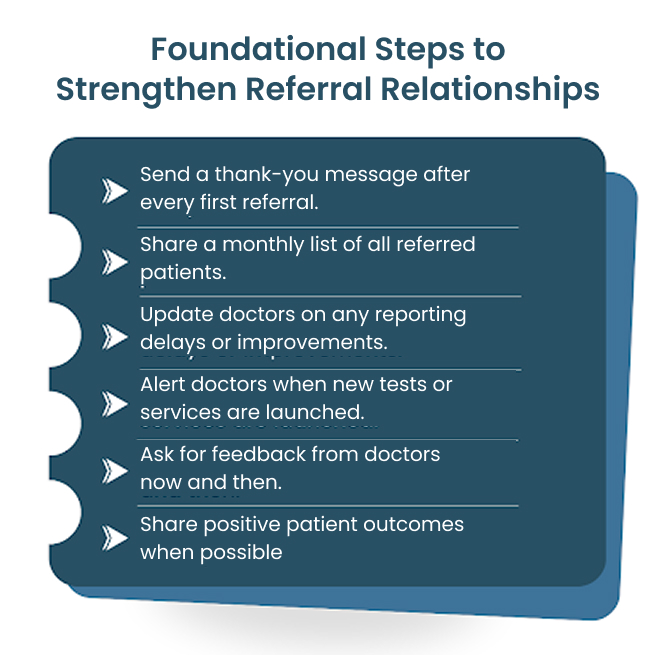
These steps are just the beginning. Using tools like CRM software, WhatsApp Business, and automated messaging can help you stay timely and personal. Research shows that following up at the right time can make all the difference in building strong referral relationships.
What is The Best Timing to Follow Up for Maximum Impact
Timing plays a crucial role in follow-ups—knowing when to reach out can make your message more welcome and effective. Research and industry experience indicate that strategic timing for communication helps you stay relevant without overwhelming your doctor contacts. By focusing your efforts on key moments, you create meaningful touchpoints that strengthen your relationship over time.
There are three primary timings to focus on for maximum impact:
- The day after report delivery: This is the perfect moment to send a quick appreciation message thanking the doctor for their referral. It shows attentiveness and care, reinforcing that you value their trust and confidence.
A simple message like, “Thank you for trusting us with your patient’s tests; we appreciate your partnership,” goes a long way. - Monthly follow-up: Use this time to share updates about services, such as new tests your lab has introduced or process improvements. This keeps the doctor informed and shows your commitment to continuously adding value.
For example, “We’re excited to let you know about the new biomarkers now available at our lab to support more accurate diagnoses.” - Quarterly engagement: Arrange a face-to-face meeting or a casual coffee invitation to catch up in person. These interactions deepen rapport and provide an opportunity to discuss how you can better support their practice.
You might say, “We’d love to catch up over coffee next week to share some recent developments and hear your feedback.”
These three key moments are when your follow-ups can genuinely make a difference—just the right touch without ever feeling like too much. To help you connect more easily, we’ve created Follow-Up Templates that sound personal and genuine, never salesy or pushy. These messages are thoughtfully designed and approved in accordance with trusted industry practices, enabling you to reach out with confidence and build genuine, lasting relationships.
Follow-Up Templates That Feel Personal, Not Salesy
When it comes to follow-ups, the tone matters just as much as the timing. Messages that feel personal and genuine build trust, while anything that sounds salesy can quickly put doctors off. To help you strike the right balance, here’s a list of simple, warm, and effective WhatsApp and email templates you can customize and use.
| Situation | Sample WhatsApp Message | Sample Email Message |
| After the first referral | “Hi Dr. [Name], just wanted to thank you for trusting us with your patient’s tests. We appreciate it!” | “Dear Dr. [Name], thank you for your recent referral. We’re committed to providing the best care for your patients.” |
| Monthly update | “Hello Dr. [Name], here’s a quick update: we now offer [new test]. Let us know if you want more info!” | “Dear Dr. [Name], I wanted to share that we’ve introduced [new test/service]. Please feel free to reach out.” |
| Delay notification | “Hi Dr. [Name], a quick note—there’s a slight delay in report delivery for [patient/test]. We’re on it!” | “Dear Dr. [Name], we are currently experiencing a brief delay in processing [specific test]. We appreciate your patience.” |
| Quarterly catch-up invitation | “Dr. [Name], I would love to catch up over coffee next week if you’re available. Let me know!” | “Dear Dr. [Name], I’d like to invite you for a quick meeting to discuss how we can better support your practice.” |
These have been crafted to feel like natural, thoughtful conversations rather than marketing pitches.
To make your follow-ups even more effective, keep these tips in mind:
- Always use the doctor’s name to create a personalized touch.
- Acknowledge specific referrals or patient cases to show attentiveness.
- Keep messages brief and respectful of the doctor’s time.
- Avoid using overly promotional language or hard-selling tactics.
- Where possible, add a warm closing statement to leave a friendly impression.
With advancements like artificial intelligence and tools such as ChatGPT, creating personalized messages with the right prompting has become easier than ever. Yet, it’s still possible — and essential — to scale your follow-ups without losing the genuine human touch. Let’s explore how to do just that.
How to Scale This Without Losing the Human Touch
Scaling your referral follow-ups doesn’t mean you have to sacrifice the personal touch. While investing in branding and content marketing can definitely help polish your communication, there are also simple, practical hacks that put efficiency and warmth right at your fingertips.
Consider these easy-to-implement strategies:
- Create saved replies for WhatsApp to respond quickly without sounding robotic.
- Use a shared Google Calendar to plan and track your outreach schedule.
- Assign follow-ups to a dedicated relationship manager to maintain consistency.
- Leverage CRM tools to automate reminders while keeping detailed notes.
- Set up standardized templates for standard follow-ups that can be personalized easily.
Now that you have these basics covered, it’s time to start implementing them today. Let’s move toward wrapping up this blog with some final thoughts.
Conclusion
By now, you’ve learned key strategies to turn one-time referrals into lasting partnerships through timely, thoughtful follow-ups. We’ve covered why referral relationships matter, the psychology behind repeat referrals, best practices for follow-ups, perfect timing, and how to keep your messages personal—not salesy.
A robust online reputation management system is also crucial to support these efforts, thereby enhancing trust among doctors and patients alike. To dive deeper into how referrals work and why they’re essential for pathology labs, don’t miss our exclusive e-book. Click here to download it for free and gain even more valuable insights.
Remember, applying these strategies consistently can make a real difference in growing your lab’s referral network. And if you ever feel stuck or need guidance on how to implement these techniques effectively, ZealousWeb is always here to help. Contact us to speak with an expert instantly.
FAQs
How can pathology labs effectively manage patient sample tracking to avoid errors?
Pathology labs can minimize sample misidentification and losses by implementing barcode systems, real-time sample tracking software, and automated label printers. These tools reduce manual errors and ensure patient safety throughout the testing process.
What are the common challenges pathology labs face in handling referrals, and how can they be overcome?
Common challenges include communication gaps, delayed report delivery, and inefficient referral tracking. Using integrated lab software that enables faster reporting, easy sample tracking, and seamless communication with doctors can significantly mitigate these issues.
How does a pathology lab’s online reputation impact the number of doctor referrals?
A strong online presence and reputation build trust among doctors and patients. Positive reviews, professional websites, and active social media profiles enhance credibility, encouraging more physicians to refer patients to the lab.
What role does collaboration with healthcare providers play in growing pathology lab referrals?
Building strong, ongoing relationships with local healthcare providers through networking events, educational workshops, and regular communication can increase referral volumes. Collaborative care improves patient outcomes and enhances referral loyalty.
What are some practical tools or technologies pathology labs can use to streamline referral management?
Pathology labs can leverage CRM systems, lab management software with referral tracking, automated messaging platforms, and secure report delivery portals. These tools help maintain organized workflows, timely communication, and consistent follow-ups with referring doctors.


