


If you built your baby products online store focusing only on cutting costs, you might have saved some money upfront. But what you may not realize is that this “cheap” setup is causing you hidden losses that add up quietly over time. These hidden costs also damage your store’s reputation and, most importantly, the trust parents place in you.
When your website is slow, checkout is confusing, or the mobile view is buggy, parents quickly lose patience and faith. And in eCommerce, trust is everything. Poor development hurts your sales as well as breaks the emotional connection parents have with your brand. That’s why it’s so important to spot these leaks in your store now and fix them before they cause more damage. With the right knowledge and expert help, you can build a strong, reliable baby products store that parents love and trust.
Keep reading this blog till the end to get a practical checklist that will help you secure your store’s future and boost your success.
The True Hidden Costs of Poor Development
The true hidden costs of poor development in a baby products eCommerce store come from many different angles, but they all share the same painful result: lost sales and a damaged reputation.
Let’s break down these hidden costs one by one, along with practical fixes you can implement to stop the leaks and rebuild your store’s strength and credibility.
The Hidden Financial Costs of Poor Development
Finance is the backbone of any business. If your baby products eCommerce website or app is poorly developed, it’s quietly draining your profits even before the money reaches your pocket. Bad development leads to several problems, including:
- Slow loading times that frustrate visitors
- Bugs in UI and UX that create a messy shopping experience
- Unreliable performance that drives parents away
When these issues pile up, parents won’t stick around. Lost sales mean not only lost revenue but also lost customers.
One significant financial drain is the “App Stack.” This happens when too many plugins are installed to add features like reviews, popups, filters, or wishlists. While it may seem like a quick fix, it can cause overlapping functions that slow down your store, conflicts, and bugs from incompatible apps.
In addition, poor development causes frequent bugs requiring constant fixes and heavy developer dependency. This results in unpredictable downtime that hurts your sales and continuous troubleshooting that steals your team’s time and your peace of mind.
To protect your business’s financial health, you need to:
- Optimize your site’s code and speed
- Consolidate app functions to reduce overload and costs
- Build a modular, maintainable store architecture that minimizes bugs and downtime
Taking these steps will stop the hidden leaks and help secure your profits for the long run.
The Emotional Cost of Losing Parent Trust
Parents always shop with emotion when it comes to baby products. They want the best for their little ones, and any emotional disconnect with your store can make them walk away. This happens because parents see their baby’s safety and comfort as non-negotiable, so if your website feels unreliable or frustrating, they won’t trust you enough to buy. If parents visit your store but leave without buying, it could be a sign they don’t feel emotionally connected or confident in your store’s promise.
Here are 10 signs to watch for that indicate lost parent trust:
- Parents add products to their cart but often abandon it
- Customer support receives questions like “Is this site safe?”
- Negative reviews mentioning slow or confusing navigation
- Low repeat purchase rates despite initial interest
- Frequent complaints about broken links or errors
- High bounce rates from your homepage or product pages
- Lack of engagement with trust badges or security icons
- Parents asking about delivery reliability or product authenticity
- Reduced social media mentions or influencer endorsements
To win parents back, focus on creating a smooth, transparent, and caring experience.
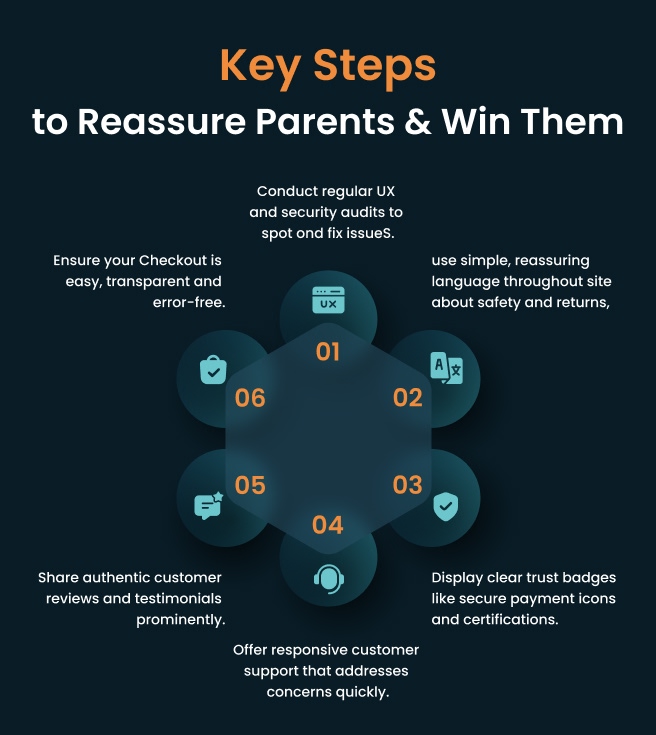
The Brand Cost Related to Erosion of Credibility
Credibility is the foundation of your business’s goodwill. It builds the trust that customers, influencers, and partners place in your brand. When credibility is strong, your baby products store naturally attracts word-of-mouth promotion, influencer support, and valuable partnerships.
However, a poor app or website experience can quickly erode that credibility. Slow loading, bugs, and confusing interfaces not only frustrate parents but also damage your brand’s reputation. When parents feel let down, they hesitate to recommend your store, influencers shy away, and partnership opportunities dry up. This loss limits your growth potential and reduces long-term success.
Here are key ways to restore your brand’s credibility:
- Ensure your website design reflects your brand’s personality and trustworthiness
- Maintain consistent, heartfelt messaging that resonates with parents
- Create smooth, intuitive user journeys that make shopping easy and enjoyable
- Use authentic visuals and stories to connect emotionally with your audience
- Regularly update your site and brand materials to stay relevant and caring
- Foster transparent communication about product safety, returns, and support
By focusing on these areas, you rebuild trust, renew partnerships, and create advocates who champion your brand.

The Opportunity Cost That Limits the Growth
To grow your baby products eCommerce store, you need to be ready to grab every opportunity that comes your way. But a poorly built website or app can silently limit your growth potential.
If you’re not sure whether your store’s structure is holding you back, here are some signs to watch for:
- Your store crashes or becomes unresponsive during flash sales or high traffic
- Integrations with payment gateways, shipping, or marketing tools frequently break
- You can’t easily add new features like subscriptions, loyalty programs, or product bundles
- Performance slows noticeably as your customer base grows
- Your development team struggles to make quick updates or fixes without causing new issues
If you see any of these warning signs, it’s time to rethink your technology foundation. Building a scalable architecture is essential for future growth. A scalable store can handle bursts of traffic, add new capabilities seamlessly, and adapt quickly to changing market needs.
Investing in scalable solutions, such as headless or hybrid eCommerce frameworks, gives you the flexibility, performance, and control you need to capture more opportunities and grow your business without limits.
SEO and Discoverability Costs
SEO (Search Engine Optimization) is the process of optimizing your website so that it ranks higher in search engine results, making it easier for parents to discover your baby products online. Good SEO drives organic traffic, increases visibility, and ultimately boosts sales.
Poor website performance can severely harm your search rankings. Also, it can slow down the page loading time. The missing or incorrect metadata reduces your visibility as well, and broken links and redirects hurt your site’s reputation with search engines.
SEO is always evolving, but with the right strategies, you can recover lost ground and improve your rankings over time.
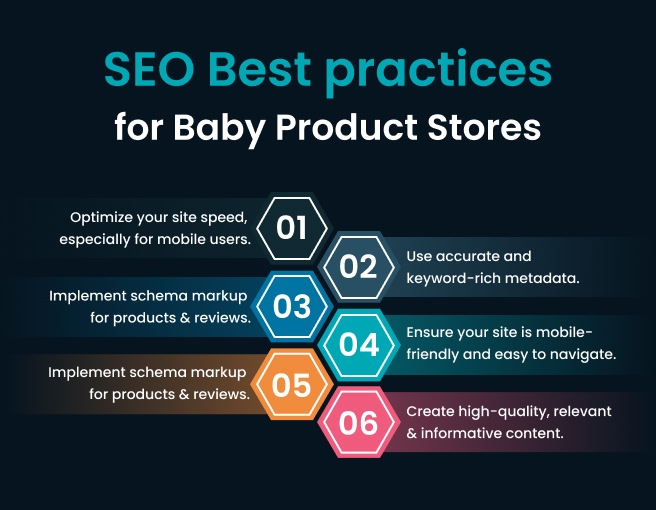
By following these SEO best practices, your baby products store will become more discoverable, attract more motivated shoppers, and increase its online success.
Security Costs to Protect Parent Confidence
Parents shop for baby products with a high level of trust and confidence. Protecting this trust starts with keeping your eCommerce website secure and safe. When parents feel their information and transactions are protected, they stay loyal and keep coming back.
However, eCommerce websites often face common security vulnerabilities that threaten this confidence, including:
- Outdated plugins or scripts
- Lack of SSL enforcement across all pages
- Weak authentication protocols
- Unprotected customer payment data
- Vulnerabilities in third-party app integrations
- Insufficient monitoring and response to suspicious activities
Because of these risks, every website development project must strictly follow industry rules and regulations. Compliance failure can lead to severe fines and penalties. For example, eCommerce businesses must adhere to regulations like PCI-DSS (Payment Card Industry Data Security Standard), GDPR (General Data Protection Regulation), and local consumer protection laws.
To highlight the seriousness, eCommerce companies have paid millions in fines globally in recent years due to security breaches caused by non-compliance or negligence, reflecting the high stakes of protecting customer data and trust.
Operational Costs Leading to Team Burnout
Operational costs refer to the expenses related to keeping your daily business processes running smoothly. But when these costs spiral out of control, they become a prime reason for team burnout. This burnout leads to constant pressure, frequent technical issues, and never-ending troubleshooting.
According to recent studies, burnout costs companies thousands of dollars per employee each year (ranging from $4,000 to over $20,000) due to lost productivity and increased turnover. For a company with 1,000 employees, this can add up to losses of around $5 million annually. This shows how deeply burnout can affect a business’s bottom line.
When your team is burned out, ongoing technical and operational issues worsen:
- Deadlines get missed as staff struggle to keep up
- Morale drops, causing poor collaboration and innovation
- Turnover rises, increasing recruitment and training costs
- Overall productivity declines, slowing growth, and impacting customers
To combat this, process improvements for efficiency are essential. Streamlining workflows, standardizing maintenance routines, and moving updates to safe staging environments can reduce stress and minimize firefighting. Setting regular maintenance sprints and automating routine tasks also frees your team to focus on strategic growth rather than constant problem-solving.
Now that you know the leaks causing losses in your baby products eCommerce store, it’s important to realize these hidden costs add up slowly yet significantly. These ongoing issues drain your revenue and also push your website or app off parents’ visibility lists entirely.
To stop these costly leaks and protect your business, we’ve put together a simple step-by-step audit checklist to follow. Checklist.
How to Audit and Fix a Poorly Developed Baby Products eCommerce Store
Auditing your baby products eCommerce store is a crucial first step to diagnose hidden issues that may be eating into your profits and hurting parent trust. An audit helps you understand exactly where your store’s weaknesses lie.
Getting an audit done by a reputable agency can dive deep into the core problems and provide expert insights on how to fix them effectively. Their experience with similar stores ensures you’re not just patching symptoms but addressing root causes for lasting improvement.

Step 1: Comprehensive Audit
Starting with a comprehensive audit is essential and surprisingly simple once you know what to look for. An audit helps you take a full snapshot of your baby products eCommerce store’s current condition, exposing issues that affect your customers’ experience and your business performance.
Here’s what you need to check during this audit:
- Examine how easy and enjoyable it is for parents to find and buy products. Look at browsing experience, search functionality, product page clarity, checkout flow, and mobile usability.
- Review the quality and cleanliness of your site’s code to ensure it’s fast, stable, and modular, which helps with future updates and reduces bugs.
- Test how quickly your store loads on desktop and mobile because even small delays can make parents leave. Tools like Google PageSpeed Insights are great for this.
- List all installed apps and plugins, then check for overlapping features, performance drains, and security risks.
You should conduct this audit regularly (ideally every quarter or before major sales periods) to catch issues early and keep your store running smoothly. This proactive approach helps you maintain high performance and customer satisfaction throughout the year.
Step 2: Prioritize Critical Fixes
Once you have a clear understanding of the audit, the next important step is to prioritize which fixes to tackle first. Not all problems are equally urgent, so focusing on critical issues ensures you get the biggest impact quickly.
Start by addressing:
- Security flaws
- Performance bottlenecks
- User experience problems
Use real data from your audit results to guide your priorities. Consider factors like the issue’s impact on conversion rates, customer trust, and operational stability. Quick wins that require less effort but offer high impact should be at the top, while bigger tasks that need more resources can be scheduled next.
Step 3: Simplify and Rebuild Smart
After prioritizing the critical fixes, the next step is simplifying and rebuilding your store’s core setup smartly. This means consolidating overlapping apps and plugins, optimizing your code and theme, and removing unnecessary complexity that causes bugs and slows your site down. Simplification makes your store easier to maintain, speeds up performance, and reduces the chances of new issues popping up after updates.
Optimization techniques include:
- Compressing images and minimizing CSS/JavaScript files to speed up loading
- Streamlining navigation, product pages, and checkout flows for clarity.
- Reducing the number of installed apps by choosing multifunctional solutions
- Implementing lazy loading for images and other heavy resources
- Refactoring code for modularity and scalability
This smart rebuild approach not only fixes current problems but sets a strong foundation for future growth and easy maintenance, ensuring your store runs smoothly for parents every day.
Step 4: Enhance UX and Checkout Flow
Improving user experience (UX) and streamlining the checkout process are vital to turning visitors into loyal parents who confidently complete their purchases. A smooth, intuitive UX keeps parents engaged and reduces frustration that might otherwise cause them to abandon carts.
Focus on making every step (from browsing products to the final checkout) clear, fast, and distraction-free. Ensure the design reflects your brand’s warmth and trustworthiness, using high-quality images, easy-to-understand product details, and a mobile-friendly layout.
Key enhancements include:
- Simplified navigation and search to help parents quickly find what they need
- Clear product descriptions highlighting safety, quality, and benefits
- Visible customer reviews and ratings for social proof
- Guest checkout options to speed up purchases without forcing account creation
- Transparent pricing with clear shipping and tax information
- Multiple secure payment options are prominently displayed.
- Progress indicators and minimal form fields during checkout
- Mobile optimization to accommodate busy parents browsing on the go
Together, these improvements build confidence, reduce cart abandonment, and boost conversions, making the shopping experience both pleasant and reliable for every parent.
Step 5: Foster a Culture of Maintenance and Documentation
Maintaining your baby products eCommerce store is an ongoing commitment. Fostering a culture of regular maintenance and thorough documentation is essential to keep your store running smoothly and prevent costly issues over time.
Regular maintenance includes:
- Updating your platform, plugins, and themes to patch security vulnerabilities and improve performance.
- Backing up data regularly, monitoring site uptime, and fixing broken links
- Refreshing content to keep things relevant and engaging for parents.
Documentation plays a crucial role in this process. By clearly recording procedures, configurations, and best practices, your team ensures consistency and makes training new members easier. Building teamwork, clear communication channels, and assigning responsibilities for maintenance tasks creates shared accountability. This proactive approach minimizes downtime, boosts user experience, and supports long-term growth.
The best way to avoid costly development problems from the start is to hire or outsource a skilled developer right away. ZealousWeb specializes in creating robust, high-performance websites and apps tailored specifically for your business needs. With deep eCommerce expertise, they deliver customized solutions that drive growth and trust, without burning a hole in your pocket.

The ROI of Fixing It Right
When you invest time and effort into properly fixing your baby products eCommerce store, you will definitely see a difference in your return on investment (ROI). However, to truly understand the impact, it’s important to track key metrics before and after making improvements.
Here are some essential metrics to track:
- Website traffic (organic, paid, and direct)
- Conversion rate (how many visitors turn into buyers)
- Average order value (AOV) per purchase
- Customer lifetime value (CLV) indicates overall loyalty
- Cart abandonment and checkout abandonment rates
- Customer acquisition cost (CAC)
- Bounce rate and session duration (engagement indicators)
Beyond monetary gains, fixing your store properly boosts sales and builds lasting customer loyalty. Parents feel more confident, repeat purchases increase, and positive word-of-mouth spreads your brand’s goodwill. The investment you make today creates a stronger, more reliable store that drives sustained growth and success.
Conclusion
Fixing your baby products eCommerce store the right way can make a huge difference in sales, customer trust, and overall growth. Partnering with a trusted agency today ensures your store is built strong, secure, and optimized for parents’ needs. This prevents costly issues down the line and saves you time and money. Don’t wait, invest in expert development to create a reliable, user-friendly store that parents will love and keep coming back to. Starting smart today sets you up for long-term success and peace of mind.


