


ZealousWeb
AI in baby ecommerce

The Role of AI & Automation in Baby eCommerce Store Development

February 13, 2026Posted By: Manjiri Bhate
AI in Ecommercebaby eCommerceEcommerce AutomationShopify Baby Store

When parents shop for themselves, convenience, preferences, and personal taste guide their choices. But when it’s about their baby, their mindset totally changes. Their focus shifts to safety, quality, trust, and emotional connection. Every purchase feels like a big responsibility as they want the best for their little one. Plus, parents often juggle shopping with caring for a baby, so time is limited and stress levels can be high.

This unique shopping behavior creates a special challenge as well as an opportunity for baby eCommerce stores. The best way to meet these needs is by investing in AI and automation. These technologies help make the shopping experience easier, more personal, and less stressful. From smart product recommendations to timely reorder reminders and instant support, AI and automation work behind the scenes to keep parents happy and confident.

In this blog, you’ll discover how AI and automation are transforming baby eCommerce. Read on till the end to learn how these innovations can help your store stand out and truly connect with parents.

Understanding Parent Needs and Buying Behavior

Parents buying for their babies have a unique mix of emotional and practical reasons guiding their choices. To put it simply, here’s a quick matrix to understand these factors:

Emotional Factors Practical Factors
  • Desire to provide the best for the baby
  • Trust in brands that care
  • Emotional connection to products
  • Worry about the baby’s health and comfort
  • Product quality and safety standards
  • Convenience and ease of shopping
  • Price and value for money
  • Product availability and delivery speed


While managing these, parents face many challenges:

  • Limited time to browse
  • Confusion due to too many choices
  • Concerns about product authenticity
  • Stress of making sure every purchase is safe and reliable.
  • They also want quick answers and smooth reordering to avoid running out of essentials.

AI-powered personalization understands parents’ unique needs and recommends products based on their baby’s age and preferences. Smart automation handles timely reorder reminders and subscription management. Conversational AI provides instant support, calming worries, and answers questions 24*7. AI also helps in back operations, like it optimizes inventory and logistics to ensure the products parents need are always in stock.

Key AI Innovations Driving Baby eCommerce Success

AI is a broad set of innovations working together to transform eCommerce. It includes generative AI, machine learning, natural language processing, automation, and more. For baby eCommerce stores, these AI technologies help address the unique needs of parents by making shopping easier, safer, and more personalized.

In simple terms, AI helps stores understand what parents want before they even ask, automates routine tasks so the experience is smooth, and offers smart support around the clock. Investing in AI is becoming essential for staying competitive and delivering the kind of caring, intuitive shopping experience that parents expect. In this section, we will explore the top seven key AI innovations that are driving success for baby eCommerce stores today.

Personalization That Builds Trust and Care

Parents shopping for their babies want recommendations that truly feel thoughtful and relevant. One of the best ways to do this is by tailoring product suggestions based on the baby’s growth stage. For instance, when parents sign in, you can ask about their baby’s age or important milestones. Over time, the AI can update recommendations automatically so parents don’t have to constantly filter through irrelevant products.

Another way to offer value is by creating dynamic product bundles. These bundles bring together complementary products that parents often need together—a simple example would be a “Newborn Sleep Kit” that includes a crib mattress, swaddle blankets, and a sound machine. Bundles like these make shopping easier and show parents you understand their needs.

All this personalized selling works best when paired with contextual messaging delivered in a caring, warm tone. Instead of sounding pushy, the messages should feel like gentle reminders or helpful suggestions—like saying, “We see your baby’s growing fast! Here are some next-step diapers that might save you a few midnight runs.”

Automation for Convenience

Predictive reordering uses past purchase data to anticipate when parents will need to restock key items like diapers or wipes. This helps sellers to stay ahead of stock-outs and ensure that must-have essentials are always available without parents having to remember when to reorder. One of the best ways to avoid being stuck in a stockout situation is to offer seamless subscription management. This means parents can set up regular deliveries of baby products on their own schedule, making their lives easier by removing the hassle of reordering every time.

And to make it even simpler, you can send personalized refill reminders via SMS or email. These friendly reminders ensure parents don’t run out of essentials, showing that your store really cares about their convenience while boosting your repeat sales.

Conversational AI for Instant and Empathetic Support

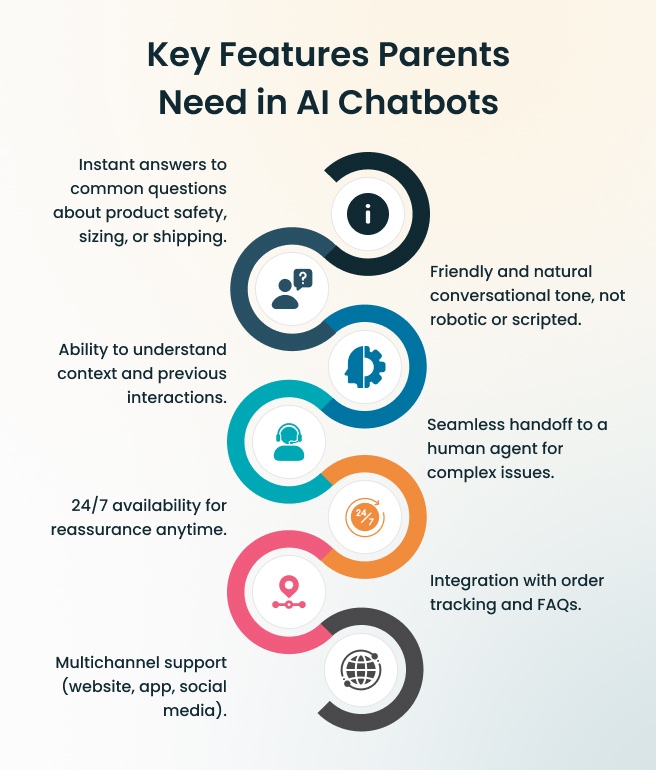
You’ve probably seen AI chatbots (like Rugfus on Amazon) helping answer questions instantly. These chatbots are great because they provide quick, accurate support without making parents wait. But if you want a chatbot for your own website or app, there are some basic features you shouldn’t miss to make it truly helpful.

Key features


It’s also essential to train chatbots to use a warm, human-like tone that feels caring and not cold or mechanical. This makes parents feel supported rather than frustrated. Sometimes, chatbots can get a bit annoying or stuck, so knowing when to escalate to human support is key.
For example, Amazon’s chatbot smoothly escalates issues it can’t solve directly to a live agent, improving customer satisfaction with fast and effective responses.

Smarter Inventory and Logistics Automation

Managing inventory effectively is crucial for baby eCommerce stores to keep parents happy and maintain smooth operations. AI plays a key role by automating low-stock alerts and reorder workflows. Instead of manually tracking stock levels, AI systems notify you just in time to reorder, preventing stockouts and lost sales.

AI also excels at demand forecasting. Analyzing past sales and seasonal patterns helps you prepare for busy times like holidays or festivals, ensuring popular baby products are well-stocked. Another important factor is integrating your inventory with CRM and fulfillment systems. This seamless connection aligns product availability with customer orders and shipping, drastically reducing supply chain errors and out-of-stock situations on essential items.

Benefits of AI-Driven Inventory Automation:

  • Real-time low-stock alerts and timely reordering
  • Accurate demand forecasting for seasonal trends
  • Automated replenishment to save time and effort
  • Smooth syncing across inventory, CRM, and fulfillment platforms
  • Fewer out-of-stock incidents boost customer trust
  • Streamlined operations and faster order fulfillment

By using these AI-powered techniques, your baby store can deliver a reliable shopping experience parents depend on, without interruptions or delays.

Engaging Parents Through Email and SMS Automation

Staying top of mind with parents is crucial for baby eCommerce success. The best way to do this is by reaching them quickly with quirky, friendly SMS and push notifications, while using email to educate and engage with longer, detailed content. It’s all about personalizing communication flows and timing to match parents’ busy lives. Using behavioral automation lets you send the right message at the right time to increase repeat purchases without overwhelming them.

Instead of blasting mass messages, crafting gentle, relevant messaging makes parents feel cared for, not bombarded. For example, a timely refill reminder via SMS feels helpful, while an educational milestone email builds trust.

Here’s a quick look at how different communication types work best:

Communication Type Timing Purpose Best Use Case
SMS & Push Notifications Immediate or timely reminders Quick alerts, refill reminders, flash sales Urgent, short-term engagement
Email Scheduled, segmented flows Educational content, newsletters, promos Building long-term trust and loyalty
Behavioral Automation Triggered by actions Cart abandonment, birthday offers Personalized nudges to improve conversions

AI-Driven Analytics to Decode Parent Preferences

AI-driven analytics can track product interest and search behavior. These advanced systems reveal what parents are truly looking for, how they browse, and which features matter most to them. This kind of data-driven insight helps decode the underlying preferences and needs of parents in real time. With these insights, businesses can optimize product listings and browsing, making it easier for parents to find exactly what they need without frustration.

Key benefits of AI-driven analytics in baby eCommerce include:

  • Monitoring popular product searches and frequently viewed items
  • Identifying patterns in purchase behavior and product preferences
  • Detecting gaps, such as common searches that return no results
  • Refining website navigation and product categories based on parent feedback
  • Personalizing marketing content to align with evolving needs and concerns

Leveraging AI analytics helps to continuously adapt their offerings and user experience, and it creates a customer journey that truly resonates with parents’ unique requirements. Contact ZealousWeb to hire an expert data analyst who specializes in decoding parent buying behavior. They use the latest AI tools to provide you with actionable insights and customized strategies that drive growth and deepen customer relationships.


Baby store

Dynamic Pricing and Offers with Ethical AI Use

The baby product market today is a perfect competition; most stores sell the same or very similar products. So, standing out requires smart pricing and offers. This is where dynamic pricing powered by AI comes into play, helping you stay competitive without compromising integrity.

With AI, you can respectfully test discounts and loyalty rewards tailored to different customer segments. This means offering the right deals to the right parents at the right time, making them feel valued rather than pushed. Importantly, avoid manipulative scarcity tactics like false “Only 1 left!” alerts that create unnecessary fear. Instead, focus on building urgency around convenience. For example, saying “Order today to get it before your baby’s next milestone” motivates parents with helpful, timely reasons rather than pressure.

This ethical approach to AI-driven pricing builds trust, strengthens your brand, and keeps parents coming back—proving you can be competitive and caring at the same time.

AI is here to stay and only going to grow stronger. The best way forward is to embrace it fully and make the most of its power. By partnering with experts and using AI wisely, you can keep your baby eCommerce store competitive, responsive, and truly tuned in to what parents need.

Roadmap to Integrating AI and Automation in Your Store

Integrating AI into your existing baby eCommerce store can seem like a daunting task. It requires expertise, but breaking it down into simple, clear phases makes the process manageable and effective. With the right approach, you can smoothly bring AI and automation into your store without overwhelming your team or your customers.

Phase 1: Establishing a Solid Foundation

Building a strong foundation includes setting up essential features like cart recovery to reduce abandoned carts, automated low-stock alerts to keep inventory in check, and welcome flows to greet new customers warmly. These basics must be reliable and well-tuned because they directly impact your store’s performance and customer experience. For example, a well-crafted welcome email can set a caring tone and encourage early engagement, while timely cart recovery messages help recover lost sales efficiently.

Phase 2: Personalization and Predictive Features

In this phase, you’ll make your store smarter by using AI to offer personalized experiences that really fit each parent’s situation. This means your system should be able to understand different needs (like a baby’s age, shopping habits, and preferences) and predict what parents might want or need next.

Being predictive means the system can suggest things before parents even ask for them, like reminding them to reorder formula before it runs out or recommending new products as their baby grows. This takes the guesswork out of shopping for busy parents and makes their experience smooth and helpful. With simple AI tools working in the background, you can create a store that feels like it knows each parent personally and makes shopping easier than ever.

Phase 3: Investing in Advanced AI Conversational, Predictive Analytics

In this phase, you take a big leap forward by using advanced AI tools like conversational AI and predictive analytics. These technologies allow your store to have real, human-like conversations with parents, understand their needs better, and predict what they might want next. This means guiding parents smoothly through their shopping journey and helping them choose the right products, offering personalized advice, and resolving issues instantly.

Predictive analytics helps you see trends before they happen, like which products will be popular next season, so you can plan stock and promotions. Conversational AI makes shopping feel easier and more personal, whether through chatbots on your website or voice assistants.

To successfully integrate AI and automation into your baby eCommerce store, investing in the right tools and platforms is essential. Some basic tools have already been discussed in earlier phases. Beyond those, there are advanced AI-powered solutions designed specifically to boost personalization, customer engagement, and operational efficiency.

By carefully selecting and combining these recommended platforms, you can accelerate your store’s growth, enhance the shopping experience, and build lasting bonds with your customers, all while streamlining your operations.

AI-Powered Product Recommendation Tools

These tools use AI to understand customer behavior and suggest products they are most likely to buy. They turn your store into a personalized shopping experience by showing “Recommended for You” or “Frequently Bought Together” products. Popular options include platforms like Zoho Zia, Salesforce Einstein, and Nosto, which blend user behavior data with smart algorithms to boost sales and customer satisfaction.

Email & SMS Automation Platforms

Automation platforms help you send personalized messages at the right time, like welcome emails, refill reminders, or special offers. Tools such as Klaviyo, Omnisend, and Mailchimp make it easy to create customized email and SMS campaigns that keep parents engaged and coming back to your store without spamming them.

Chatbots and Support Automation

AI chatbots provide instant support and answer common questions 24/7, making shopping easier and more trustworthy. They reduce workload for your support team and improve customer satisfaction. Well-known platforms include Intercom, Drift, and LivePerson, which integrate smoothly with your website and CRM systems.

Analytics and Heatmaps

Analytics tools help you understand how parents interact with your store, tracking clicks, scrolls, and navigation patterns. Heatmaps visually show which areas of your website get the most attention, helping optimize layout and content. Popular tools like Hotjar, Google Analytics, and Crazy Egg guide you to improve the user experience and increase sales.

Workflow Automation Solutions

These tools automate repetitive tasks like order processing, inventory management, and customer follow-ups, freeing your team to focus on strategy and creativity. Solutions like Zapier, Integromat, and Automate.io connect your various apps and create efficient workflows that save time and reduce errors.

Running all these AI and automation tools smoothly requires expertise. If anything goes down or glitches happen, it can directly impact your store’s performance and customer experience. That’s why having skilled professionals who understand these platforms and can monitor, maintain, and troubleshoot them is crucial.

With the right team in place, you’ll ensure your AI tools work efficiently, stay updated, and deliver the best results without interruptions.

smart ai

Common Pitfalls and How to Avoid Them

In any baby eCommerce store, there are some common pitfalls that you must avoid to keep your customers happy and your business running smoothly. Falling into these traps can lead to loss of trust, lower sales, and frustrated parents.

Here are a few key pitfalls and how to avoid them:

  • Over-Automation and Loss of Empathy: Automating too much can make your store feel cold and distant, losing the personal touch parents want.
  • Popup Fatigue Among Parents: Excessive pop-ups annoy visitors and can drive them away instead of engaging them.
  • Lack of Human Support Fallback: Customers need real human help when AI or automation hits a snag; not providing this frustrates parents.
  • Mobile Optimization Challenges: Many parents shop on mobile, so a poor mobile experience can cost you many customers.

Being aware of these pitfalls helps you create a more balanced, thoughtful eCommerce experience that parents appreciate and trust. If you want, these can be expanded or additional pitfalls added!

Action Plan Checklist for Implementation

This action plan is like a checklist you can use before your hard launch, making sure everything is set up for success.

  • Spot routine tasks and customer patterns to automate and save time.
  • Begin with simple automations and grow gradually based on what works best.
  • Keep the personal touch alive by knowing when to step in with human support.
  • Monitor messages and flows often and tweak the tone for friendliness and relevance.
  • Make sure all AI tools follow privacy laws to protect parents’ data and build trust.
  • Equip your staff with the knowledge to manage AI tools effectively and handle exceptions.
  • Have backup plans ready in case any automated system goes down or behaves unexpectedly.
  • Regularly ask customers and team members for feedback to continuously improve automation.
  • Track performance metrics and ROI to understand the benefits and areas for improvement.

Following this checklist prepares your baby eCommerce store for a successful AI-driven future while keeping customers happy and loyal.

Conclusion

The human side of AI in baby eCommerce is what truly makes the difference. While automation and smart tools handle repetitive tasks and streamline operations, they free up your team to focus on building real loyalty with parents. This balance helps create a shopping experience that feels reliably human—where parents feel cared for, understood, and supported every step of the way.

At the end of the day, AI should enhance human connection, not replace it. By using these technologies thoughtfully, your baby store can grow while keeping the warmth and trust that parents value most.

For expert guidance on integrating AI and automation seamlessly into your baby eCommerce store, partner with ZealousWeb. With years of experience and a dedicated team, ZealousWeb helps you navigate the technology and ensures your store runs smoothly with a personal touch.

FAQs

Related Blog Posts

ZealousWeb

Why Outdated Design Hurts Baby eCommerce Conversions

February 19, 2026
baby eCommerceeCommerce UXShopify Baby StoreWebsite Redesign
ZealousWeb

What Role Does Maintenance Play in Growing Baby eCommerce Stores?

February 12, 2026
baby eCommerceConversion OptimizationEcommerce MaintenanceOnline Store Management
baby ecommerce cart abandonment

The #1 Reason Parents Abandon Baby Stores Online

February 11, 2026
baby eCommerceCart AbandonmentDigital Trust SignalseCommerce UX
baby ecommerce ux mistakes

5 UX Mistakes That Quietly Kill Baby Stores

February 11, 2026
baby eCommerceDigital ExperienceUI UX StrategyUX Design
app overload in baby ecommerce

How App Overload Hurts Your Baby Store — and What to Do About It

January 19, 2026
Baby Ecommerce OptimizationBaby Store GrowthEcommerce PerformanceShopify App Management
poorly built baby ecommerce store

The Real Cost of a Poorly Built Baby eCommerce Store — and How to Fix It

January 13, 2026
Baby eCommerce DevelopmentBaby Store Trust IssueseCommerce SEO IssueseCommerce UX Optimization
baby store trust issues

5 Warning Signs Your Baby Store Is Losing Parents’ Trust

January 08, 2026
Baby Brand Strategybaby eCommerceCustomer TrustTrust & Credibility
color psychology in baby stores

Color Psychology in Baby Stores: Pastels vs Brights

January 08, 2026
Baby eCommerce UXColor PsychologyeCommerce Design StrategyUX/UI Design
baby ecommerce mobile app features

Must-Have Features of a Successful Baby eCommerce Mobile App

December 29, 2025
Baby eCommerce AppseCommerce App DevelopmentMobile App FeaturesMobile Commerce Strategy