

In the world of agencies, growth isn’t just a win—it’s a constant challenge. As your team expands, the noise gets louder: deadlines stretch, resources get scattered, and the tools that once seemed like solutions start to feel more like burdens.
Despite leveraging AI, automation, and scalable teams, the chaos continues. What’s missing? A system—an integrated approach that aligns execution, intelligence, and leadership. Without it, growth is a gamble, not a strategy.
But here’s the truth: the shift from managing tools to mastering systems is the game-changer agencies have been waiting for. Want to know how it works? Keep reading.
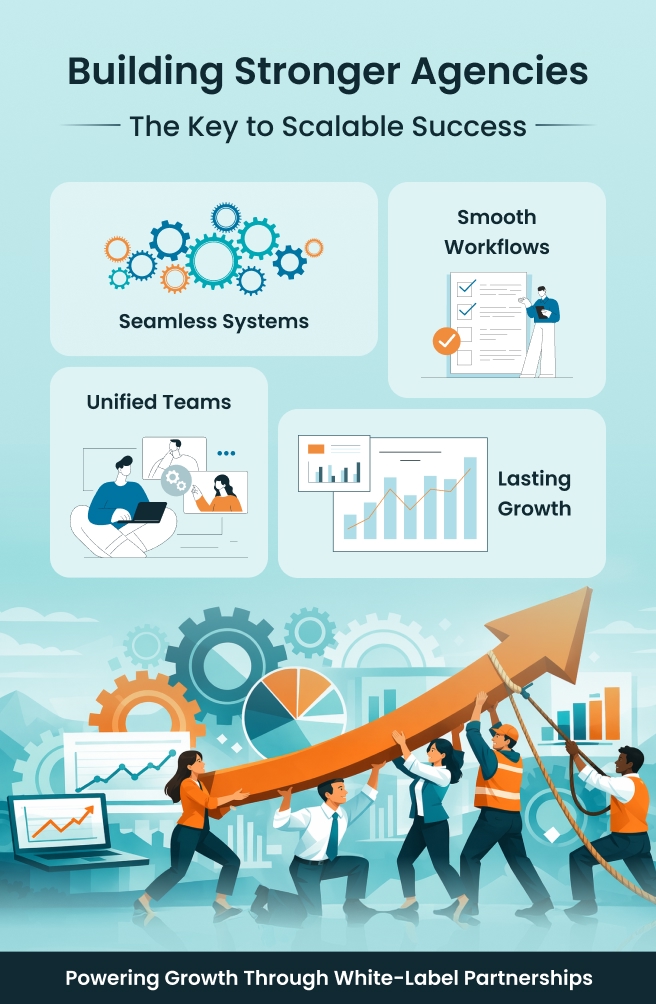
Understanding the Growing Challenges for Agencies at Scale
As agencies scale, they face increasing complexity in managing projects, teams, and timelines. In this section, we’ll explore the key challenges that arise with growth, including overlapping timelines, coordination struggles, and execution gaps. We’ll also discuss why traditional tools and fragmented systems often fail to deliver the sustainable growth agencies need. Understanding these challenges is the first step toward building a system that drives efficiency and clarity, allowing agencies to scale successfully.
Scaling Agencies: Overlapping Timelines, Team Coordination, and Execution Gaps
As agencies scale, the challenges of managing overlapping timelines, coordinating teams, and maintaining smooth execution become more pronounced. Without a solid system in place, these challenges can quickly lead to inefficiencies, missed deadlines, and a reactive workflow. The growth that should be a sign of success can, without the right framework, turn into a roadblock to progress.
- Overlapping Timelines: Multiple projects and client demands result in overlapping deadlines, causing confusion and delays.
- Team Coordination Issues: As teams grow, misalignment between departments or individuals can lead to fragmented efforts and wasted resources.
- Execution Gaps: Without clear processes, even the best teams can miss important steps or fail to meet client expectations consistently.
- Reactive Management: When systems are not integrated, teams find themselves constantly putting out fires instead of proactively managing growth.
Why Tools and Fragmented Systems Fail to Support Growth
Agencies often rely on a mix of tools to handle different functions, but these systems rarely integrate seamlessly. This results in a disconnected approach that impedes true scalability.
- Tool Fragmentation: Tools often work in silos, making it difficult for teams to access and act on unified data.
- Lack of Integration: Without integration, systems don’t align with each other, leading to inefficiencies and missed opportunities for optimization.
- Visibility Challenges: Disconnected systems prevent teams from having a clear, real-time view of progress, hindering decision-making and accountability.
- Delays and Confusion: Fragmented workflows lead to delays, confusion, and reduced quality of work as teams struggle to communicate across platforms.
To overcome these challenges, agencies need more than just tools—they need integrated systems that provide clarity, streamline workflows, and drive consistent, scalable growth. It’s time to move from fragmented solutions to a unified approach for long-term success.
The Hidden Cost of Not Having a System in Place
When agencies lack a cohesive system, the consequences are often invisible but costly. Short-term fixes might seem like solutions, but over time, they lead to inefficiencies, delayed results, and a reactive approach to problems.
- Compounded Costs of Quick Fixes: Relying on temporary solutions results in recurring issues, adding up to significant operational inefficiencies.
- Operational Disarray: A lack of integrated systems leads to miscommunication, lack of clarity, and chaotic workflows that hinder progress.
- Increased Delays and Redundancies: Without standardized processes, tasks are often repeated, and mistakes require rework, slowing down project timelines.
- Ineffective Resource Allocation: Teams are pulled in different directions without a clear strategy, leading to wasted resources and unoptimized performance.
- Loss of Client Trust: Persistent delays and inconsistent results can harm client relationships, reducing satisfaction and long-term loyalty.
These hidden costs can gradually undermine the agency’s growth potential, making it harder to scale effectively.
From Tools to Systems: The Key to Scalable Growth
Agencies often start by relying on individual tools and AI to address specific needs, but these isolated solutions can only take them so far. The real breakthrough comes when agencies shift from scattered tools to a unified system that integrates all aspects of operations, providing a clear, streamlined approach to growth.
- Integrated Systems Drive Efficiency: By connecting AI, tools, and processes into a cohesive framework, agencies can eliminate redundancies and improve workflow efficiency.
- Reduced Chaos and Improved Clarity: A unified system creates clear roles, responsibilities, and processes, reducing confusion and ensuring everyone is on the same page.
- Streamlined Decision-Making: With a well-structured system, decision-makers have real-time access to data and insights, allowing them to make informed, faster decisions.
- Scalable Growth: A systems-based approach enables agencies to scale without adding complexity, creating sustainable growth without sacrificing quality or control.
Making the shift from fragmented tools to integrated systems isn’t just a step forward—it’s the key to unlocking true scalability and operational excellence.
Why Delivery Models Break Without Effective Execution Systems
Without an effective execution system in place, delivery models can quickly become inefficient, leading to missed deadlines, poor-quality work, and unhappy clients. As agencies scale, the need for structured, streamlined processes becomes even more critical. Without clear systems guiding each step of the way, delivery models often break down, resulting in inconsistent outcomes, delayed projects, and reduced client satisfaction. This is where a white-label outsourcing model can step in, offering a reliable framework that ensures quality, consistency, and the ability to scale seamlessly.
To better understand the impact of inefficient delivery models and the role of white-label outsourcing, let’s break it down:
| Challenge | Impact of Client Outcomes | How White-label Outsourcing Helps |
| Inefficient Delivery Models | Slower turnaround times, frequent delays, and inconsistency in project outcomes. | Provides clear processes, ensuring timely and consistent delivery. |
| Lack of Structured Workflow | Missed opportunities for optimization, poor client experiences, and increased risk of errors. | White-label outsourcing introduces standardized systems for better execution. |
| Resource Bottlenecks | Decreased quality as resources are overworked, leading to rushed work. | Outsourcing ensures additional resources are readily available without compromising quality |
| Communication Gaps | Poor communication often leads to misunderstandings, impacting project scope and deliverables. | White-label partners bridge gaps, maintaining consistent communication and alignment. |
This framework highlights how poor execution systems can derail delivery, while white-label outsourcing provides a reliable solution to maintain quality and streamline processes as agencies scale.x`
Intelligence Systems: Turning Data Into Actionable Insights
Agencies need more than just data—they need systems that turn that data into actionable insights that drive smarter decisions. Leveraging intelligence systems, particularly AI and real-time data, enables agencies to optimize their processes, improve client delivery, and scale effectively. The real power of data lies not in its collection, but in its use. In this section, we’ll explore how AI serves as a powerful decision layer and why real-time data combined with automation is essential for enhancing agency operations.
AI as a Decision Layer: Beyond the Hype
AI is often seen as a buzzword, but its true value lies in its ability to function as a decision layer, not just as an add-on tool. Agencies looking to scale need AI to go beyond automation or data analysis. It should integrate with the core decision-making process, providing insights that guide strategy, optimize resources, and drive growth. When AI is leveraged to support human decision-making, it can help agencies identify patterns, predict client needs, and allocate resources more effectively, ultimately improving performance and outcomes. By incorporating AI into the decision layer, agencies can move from reactive problem-solving to proactive, data-driven strategies that support scalable growth.
Real-Time Data and Automation: Key Drivers for Improved Agency Performance
- Faster Decision-Making: Real-time data enables agencies to make informed decisions quickly, responding to changing conditions and client needs without delay.
- Improved Client Delivery: With up-to-the-minute insights, agencies can better predict client expectations, adjust strategies, and ensure timely, high-quality delivery.
- Enhanced Efficiency Through Automation: Automation reduces manual processes, streamlining workflows and eliminating repetitive tasks, allowing teams to focus on high-impact work.
- Scalable Operations: By integrating real-time data and automation, agencies can scale their operations more effectively, maintaining consistency and quality as their business grows.
- Data-Driven Insights: Real-time data analysis helps agencies uncover patterns, identify opportunities, and make proactive adjustments that improve performance and outcomes.
- Reduced Human Error: Automation minimizes the risk of errors caused by manual processes, leading to greater accuracy and reliability in project execution.
Leadership Systems: Scaling Without Sacrificing Control
As agencies scale, maintaining control without micromanaging becomes a critical challenge. Leadership systems provide the frameworks necessary for founders to step back from day-to-day operations while ensuring that high-quality outcomes remain consistent. By defining clear decision-making processes, setting accountability structures, and maintaining oversight, agencies can achieve scalable growth while preserving their core values and performance standards.
How Leadership Frameworks Drive Oversight and Results
Effective leadership frameworks enable founders to retain control over strategic decisions while empowering their teams to execute on the ground. By clearly defining roles, responsibilities, and processes, these frameworks ensure that key decisions are made with consistency and alignment to the company’s vision. As a result, founders can step away from micromanaging, trust their teams, and focus on growth, knowing that their leadership structures will drive the desired results.
Aligning Leadership and Execution for Long-Term Success
A strong leadership system ensures that strategy and execution are aligned, preventing the common pitfalls of disjointed operations. When leadership and execution are out of sync, agencies often find themselves in “firefighting” mode, reacting to issues instead of preventing them. By establishing clear communication channels and decision-making structures, leadership can steer execution towards high-quality outcomes without being overwhelmed by day-to-day problems, creating a foundation for sustainable, long-term success.
Scaling with Confidence: Maintaining Control While Growing
As agencies grow, maintaining control becomes increasingly complex. Leadership systems provide the structure necessary to scale effectively without losing sight of quality or control. With well-defined roles, processes, and performance metrics, leaders can oversee multiple projects and teams without compromising on standards. This structure enables agencies to expand confidently, knowing their leadership framework will continue to deliver results as they scale.
The ZealousWeb Approach: Your White-Label Partner for Seamless Growth
Partnering with ZealousWeb allows agencies to scale without losing control. By streamlining processes and implementing effective leadership systems, ZealousWeb helps agencies run smoothly, avoid common growth bottlenecks, and focus on what matters most.
- Clear Processes: Simplify decision-making and ensure teams stay aligned.
- Scalable Solutions: Easily expand operations without compromising quality.
- Fewer Delays: Get things done on time with less rework and confusion.
- Quality Control: Keep high standards across all projects and teams.
- Trusted Support: Rely on a partner who understands the challenges of scaling.
ZealousWeb helps agencies grow efficiently while keeping things running smoothly, giving you the freedom to focus on your next big step.
Conclusion
Scaling an agency successfully requires more than just growing the team or adding tools. It requires an integrated system that streamlines workflows, optimizes resources, and ensures consistent quality. ZealousWeb’s white-label partnership helps agencies implement these systems, ensuring they can scale efficiently without sacrificing control or compromising standards. By partnering with ZealousWeb, agencies gain the structure and support needed to overcome common growth challenges, allowing them to focus on driving results and long-term success.
Stop Letting Operational Bottlenecks Hold You Back
Make ZealousWeb Your Growth Partner
FAQs
How does ZealousWeb ensure high-quality delivery while acting as a behind-the-scenes partner?
ZealousWeb maintains high-quality delivery by streamlining processes, optimizing workflows, and automating tasks, ensuring consistent results while your operations run smoothly as you scale.
What happens when agencies continue to grow without white-label support?
Without a white-label partner, agencies risk inefficiencies, burnout, and missed opportunities. ZealousWeb helps break this cycle by providing structured systems and support to enable scalable, efficient growth.
How does ZealousWeb adapt to my agency’s specific needs?
ZealousWeb tailors its approach to your unique workflows and challenges, acting as an extension of your team, ensuring efficient growth with minimal disruption.
Is a white-label partner just another outsourced vendor or a true growth partner?
ZealousWeb is a growth partner, not just a vendor. They integrate with your team, offering strategic support and optimized systems to drive sustainable growth.