
It’s 2026, and your Shopify dashboard is gaslighting you.
The “Sessions” graph looks like a rocket ship heading for Mars—traffic is up, your ads are hitting, and your brand is officially “everywhere.” But then you glance at the revenue line, and it’s flatlining like a bored EKG.
It’s the great E-commerce Paradox of our time: Mobile traffic is exploding, yet mobile results are stuck in 2018.
The “Ghost Town” Traffic! You’re doing everything right. Your marketing team is crushing it, your creative is thumb-stopping, and the clicks are pouring in. But somewhere between the “Swipe Up” and the “Thank You” page, your customers are vanishing into a digital abyss.
Founders everywhere are staring at their screens, feeling that nagging itch in the back of their skulls that something is off. It’s not your agency’s fault. It’s not your creation. And no, it’s not because people “just like to window shop on phones.”
The truth is a bitter pill: The mobile web was never built to scale a brand; it was built to browse one.
Ever wondered why your growth is leaking? We’ve hit the ceiling of mobile web e-commerce limitations. You are effectively trying to run a high-speed rail system on wooden tracks. Here is why your traffic growth no longer equals revenue growth:
- The “Tab Cemetery”: Your customer didn’t “leave”; they just got a WhatsApp notification, and your store is now the 47th open tab they’ll never look at again.
- The Friction Tax: Every second your mobile site takes to load, and every “form” a user has to fill with their thumbs, is a direct donation to your competitors.
- The Trust Gap: Mobile browsers feel like temporary hotel rooms. Users visit, but they don’t move in.
We’re calling it: Mobile e-commerce conversion issues aren’t a “optimization” problem anymore—they’re a structural one. If you’re trying to scale a global powerhouse on a mobile browser alone, you’re essentially trying to win a Formula 1 race in a minivan. It’s functional, sure, but it’s not going to get you the trophy.
Let’s stop blaming the marketing spend and start looking at the plumbing. Because in 2026, if you don’t own the device, you’re just renting a very expensive, very temporary space in a browser window.
If Tools Are Better Than Ever, Why Does Execution Still Break on Mobile Web?
Your tech stack is a literal masterpiece of AI-driven, hyper-personalized, “predictive” wizardry. You’ve got more heatmaps than a meteorologist and enough CRO tools to optimize a lemonade stand into a Fortune 500 company. Yet, here you are, staring at mobile web performance issues that refuse to budge. It’s the ultimate “it’s not you, it’s me” situation—except “me” is the mobile browser, and it’s been lying to you for years.
Founders are currently caught in a cycle of desperately stitching together third-party patches, trying to solve e-commerce execution challenges by throwing more JS snippets at a platform that’s already gasping for air.
You’re optimizing for the “click,” but the execution breaks because you’re trying to perform open-heart surgery through a keyhole. You can A/B test the color of your “Buy Now” button until you’re blue in the face, but if the mobile web environment itself is a friction-filled obstacle course, you aren’t scaling—you’re just decorating a sinking ship.
The Illusion of Optimization
- The Chasm Between Tweaking and Owning: We’ve been sold the lie that if we just find the right AI plugin, we can “fix” the mobile web experience. But patching tools onto a mobile browser is like putting a spoiler on a golf cart; it looks “fast” in your analytics report, but it’s never going to win the race. Optimization is just making the best of a bad situation; ownership is changing the situation entirely.
- Why “Band-Aid” Tech Can’t Scale: You don’t have a “conversion” problem; you have an execution problem. Every time you add a new tool to “fix” the web, you add weight to a page that’s already struggling to load behind a Safari or Chrome frame. You’re playing by the browser’s rules, and the browser doesn’t care about your targets. “Good enough” performance is just a fancy way of saying you’re comfortable leaving 40% of your revenue on the table.
The hard truth is that you can’t build a skyscraper on a foundation of quicksand, no matter how much high-tech paint you use to cover the cracks.
The Hidden Structural Limits of Mobile Web Most Brands Ignore
Let’s stop pretending that a 2.5% conversion rate is “industry standard” and start calling it what it actually is: a cry for help. Most brands are operating with a massive systemic blind spot, mistaking mobile website limitations for e-commerce as just “part of the game.” You’ve been conditioned to accept high bounce rates and abandoned carts as unavoidable friction, but the reality is much more sinister. You aren’t just fighting for attention; you’re fighting an architecture that is actively designed to prioritize the browser’s ecosystem over your brand’s growth.
When we talk about e-commerce mobile web scalability, we aren’t just talking about pages loading slowly—we’re talking about a fundamental collapse of the customer relationship at a structural level. Here is the reality check on what happens behind the scenes while you’re busy checking your ROAS:
| The Structural Wall | What Brands Mistakenly Accept | The Harsh 2026 Reality |
| Browser Dependency | “Safari and Chrome are just the windows to my store.” | You are a tenant in a building where the landlord (Google/Apple) can change the locks, hide the entrance, or evict you at any moment. |
| Cookie Decay | “We’ll just retarget them later with a 10% discount.” | Browsers kill cookies faster than a toddler kills a juice box. Your “returning visitor” is effectively a stranger every 7 days, making true personalization a myth. |
| Performance Ceilings | “Our mobile site scores a 90 on PageSpeed Insights.” | Lab scores don’t matter when the real-world execution is throttled by the browser’s limited RAM and the inevitable “Notification Distraction” that ends the session. |
| Retention Walls | “We have an email list and a loyalty program.” | Email and SMS are just more noise in an overflowing inbox. On the mobile web, you don’t have a direct line; you have a megaphone in a crowded stadium. |
We’ve reached a point where what we call “normal e-commerce friction” is actually a ceiling that no amount of marketing spend can break through.
Why Conversion Rate Optimization Alone Stops Working After a Point
At some point, you have to stop rearranging the deck chairs on the Titanic. You’ve A/B tested your button colors from “Electric Lime” to “Subtle Sage,” and you’ve moved your “Free Shipping” banner three pixels to the left more times than you’d like to admit. Yet, your mobile e-commerce conversion rate optimization efforts have hit a plateau. You’re working twice as hard for 0.01% gains, and the needle has officially stopped moving. This is where the law of diminishing returns meets the reality of e-commerce CRO limits: you can’t fix a systemic engine failure with a fresh coat of paint.
The frustration stems from a fundamental misunderstanding of what’s actually broken. Most brands are stuck in a loop of trying to “improve the page,” when the real bottleneck is the system the page lives in. Here is why your 100th A/B test is failing to move the needle:
- The UI Tweak Dead End: Moving a CTA or changing a font is a micro-fix for a macro-problem. If the browser environment is fundamentally distracting and friction-heavy, a prettier button won’t save the sale. You’re optimizing for a “user” who is currently being bombarded by three other app notifications and a low-battery warning.
- The “Local Maxima” Trap: CRO tools are great at finding the best version of a mediocre experience. You might find the “best” version of your mobile web checkout, but that “best” version is still inherently inferior to a native, one-click environment. You’re optimizing for a 2% conversion rate when the potential is 10x higher elsewhere.
- Systems Over Pages: Improving a page is about aesthetics and flow; improving a system is about removing the browser-level barriers that kill intent. When you only focus on CRO, you’re trying to make the “waiting room” more comfortable instead of just opening the door to the store.
If you’re still looking for a “growth hack” in your website’s header, you’re looking in the wrong direction. You don’t need a better page; you need a better vehicle.
When Mobile Web Becomes a Growth Bottleneck, Not a Channel
There comes a moment in every scaling brand’s journey where the very platform that built the business starts to choke it. It’s a subtle shift: one day, the mobile web is your greatest customer acquisition tool; the next, it’s a leaky bucket that’s making your Customer Acquisition Cost (CAC) look like a mortgage payment. Recognizing when to build an e-commerce app isn’t about following a trend; it’s about reading the red flags in your data that scream your brand has outgrown its current container.
If you’re wondering if you’ve reached that ceiling, look for these specific signs e-commerce needs a mobile app:
- The CAC vs. LTV Death Spiral: You’re winning the first sale, but the cost to “buy back” that same customer for their second and third purchase via retargeting ads is eating your margins alive. If you have to pay Meta or Google every time a loyal customer wants to come back, the mobile web isn’t a channel—it’s a tax.
- The “Leaky Bucket” Retention: You have a solid “community,” but your email open rates are tanking and your SMS click-throughs are hitting a wall. When your most loyal fans are struggling to find you amidst the 50 open tabs in their browser, you’ve lost the battle for real estate.
- High-Intent Abandonment: Your “Add to Cart” rates are healthy, but your “Initiate Checkout” is a graveyard. This usually means the intent is there, but the mobile web’s friction—re-entering credit card info, forced logins, and slow-loading scripts—is winning the war of attrition.
- Stagnant Repeat Purchase Frequency: If your product is something people should be buying monthly, but they’re only buying once every six months, it’s often because you’re “out of sight, out of mind.” The mobile web is a destination they have to remember to visit, not a permanent resident on their home screen.
Scaling is about moving from “rented” attention to “owned” attention. If these signals look familiar, you aren’t failing at marketing—you’ve simply successfully scaled to the point where the mobile web can no longer carry the weight of your ambition.
The question isn’t whether the mobile web is “bad,” but whether it has become the invisible ceiling keeping your brand from its next level of growth.
What Mobile Apps Unlock That the Mobile Web Cannot
If the mobile web is a high-traffic highway, a mobile app is a private VIP lounge. Most brands get stuck in the “traffic” mindset, thinking that a mobile app is just a smaller version of their website. In reality, moving from web-only to a native app is a fundamental shift in growth economics. While the mobile web is excellent for being discovered, it’s notoriously bad at being remembered.
An app doesn’t just offer a “better UI”—it changes the math of your entire business. Here is how the mobile app vs. mobile website e-commerce debate looks when you stop focusing on features and start focusing on outcomes:
- Ownership of the Customer Journey: On the web, you are a tenant. You pay the “Rent” (Ad Spend) to Google and Meta just to talk to your own customers. An app turns you into the landlord. With an icon on the home screen and a direct line via push notifications—which see open rates 3–5x higher than email—you own the relationship, not the browser.
- The LTV Power-Up: The math is hard to ignore. App users typically show a 3x higher conversion rate and a Lifetime Value (LTV) that is 2.8 times higher than web-only shoppers. This isn’t just because they “like” the app more; it’s because the app removes the biological friction of mobile shopping.
- Engagement Beyond the “Tab Cemetery”: Web users view your brand as one of 40 open tabs. App users browse 4.2x more products per session. By utilizing native device features like biometric checkout and instant page loads (which are 2-3x faster than the web), you transition from a “transactional” brand to a “habitual” one.
- A Self-Sustaining Growth Engine: When your repeat purchase frequency doubles—as it often does in native apps—your pressure to constantly acquire new customers through expensive CAC channels drops. You aren’t just improving UX; you are building a moat around your most profitable customers.
Ultimately, the mobile web is for your “strangers,” but your app is for your “superfans.” In 2026, the brands that win aren’t the ones with the most traffic; they’re the ones who have successfully moved their best customers into an environment they actually control.
The transition from web-only to app-first isn’t about adding a “new channel”—it’s about upgrading the engine of your entire brand to handle the speed of modern commerce.
E-commerce Mobile App Development Is Not a Trend. It’s a Timing Decision.
The “app debate” usually happens too early or far too late. Launching a mobile app isn’t a vanity project to check off a feature list; it’s a strategic pivot that should only happen when your brand’s physics can support it. If you launch before you have a loyal base, you’re just building an expensive, empty digital room. If you launch after your CAC has already spiraled, you’re playing a desperate game of catch-up.
Framing e-commerce mobile app development strategy as a timing decision means looking for the “sweet spot” where your mobile web traffic is high, but your retention is leaking. Here is how to gauge your e-commerce app readiness without the pressure of a sales pitch:
- The “Rule of Three” Signal: If 20–30% of your revenue is coming from customers who have purchased three or more times, you aren’t just a shop; you’re a habit. At this stage, forcing those “superfans” to log in via a mobile browser every time is effectively a tax on your most valuable assets.
- The Cost of “Too Early”: If your monthly active users (MAU) on the web are still in the low thousands, an app will likely sit dormant on your users’ screens. An app requires a critical mass of “intent” to justify the download. Launching too early turns a growth system into a maintenance burden.
- The Cost of “Too Late”: Delaying your app launch when your competitors already have one is like refusing to accept credit cards in a cashless society. By the time you decide to build, you’ve already lost the “home screen real estate” to a rival, and winning it back costs 5x more in acquisition spend.
- Apps as a Growth System, Not a Checklist: A successful app isn’t just your website in a wrapper. It is a retention engine that utilizes biometrics for 2-second checkouts, push notifications for zero-cost re-engagement, and zero-latency browsing. It changes your business from “hope they come back” to “inviting them back.”
Ultimately, an app is the bridge between a brand that “sells products” and a brand that “owns a category.” When the friction of the mobile web starts costing you more in lost LTV than the cost of development, the timing isn’t just right—it’s urgent.
The Real ROI Question Brands Should Ask Before Building an App
In 2026, building an app because “everyone else has one” is the fastest way to set a pile of cash on fire. The real conversation shouldn’t be about the e-commerce app development cost—which can range from $30k for a lean B2C build to over $200k for enterprise-grade wizardry—but about the systems of return. Authority in this space comes from financial clarity: an app isn’t a “feature” you buy; it’s a yield-bearing asset you invest in to fix your broken margins.
The e-commerce app ROI isn’t found in a flashy launch week; it’s found in the months following, where the “Math of Ownership” begins to outpace the “Tax of the Browser.” Here is how you should actually be calculating the value of a native move:
- The CAC-to-LTV Pivot: On the mobile web, you’re stuck in a cycle of paying for the same customer over and over through retargeting ads. An app effectively “captures” that acquisition cost. By moving a customer from a browser to your app, you’re turning a $150 acquisition into a $0 re-engagement through owned push notifications.
- The Profit Margin Expansion: Apps don’t just increase sales; they protect margins. When you increase your repeat purchase rate by even 5%—a modest benchmark for most native transitions—you can see a 25% to 95% jump in profitability because you’ve removed the “middleman” ad platforms from the equation.
- The Realistic Payback Window: A well-executed app isn’t an overnight miracle. Most brands see a full ROI within 6 to 12 months. This comes from the cumulative effect of higher Average Order Values (AOV) and a conversion rate that typically sits 3x higher than mobile web, because you’ve finally removed the biometric and payment friction.
- Systems Over Downloads: Downloads are a vanity metric. True ROI comes from the system—using deep-linking to turn every email and SMS into a one-tap purchase, and using zero-party data to personalize offers that actually land. You’re investing in a closed-loop ecosystem where the browser can no longer “leak” your traffic to a competitor’s tab.
Ultimately, if your LTV: CAC ratio is hovering below 3:1 on the mobile web, you don’t have a marketing problem—you have a platform problem. An app is the only way to stop “renting” your success and start owning your growth.
Why Most E-commerce Apps Fail to Scale, And It’s Not the Technology
If an app is a Ferrari, most brands are trying to drive it with a lawnmower engine. You can’t just copy-paste a mediocre mobile website into a native wrapper and expect the revenue gods to smile upon you. When brands complain that their app “didn’t work,” the culprit is rarely the code. The real reason for e-commerce app failure usually boils down to execution debt: the bad habits, messy data, and “web-first” thinking that founders carry over into a platform that demands excellence.
Building an app is a commitment to a new way of doing business, not just a new way of browsing products. Here is where the “isolated project” mindset leads to the most common e-commerce app development mistakes:
- The Integration Black Hole: An app that doesn’t talk to your ERP, your loyalty program, or your customer service desk is just a pretty billboard. If a customer changes their address in the app but it doesn’t update in your warehouse, you haven’t built a growth tool—you’ve built a friction machine.
- Ghost-Town Data Strategy: Most brands launch an app and then sit back and wait for the “magic” to happen. Without a data strategy that uses native behaviors—like tracking what users “favorite” or how they navigate—you’re flying blind. If you aren’t using zero-party data to send a “Back in Stock” notification for a specific size and color, you’re missing the entire point of the platform.
- The “Zero Retention” Plan: An app without a push notification strategy is like a phone without a battery. If the only time you talk to your app users is to blast them with a 20% discount on Black Friday, they will delete you. Apps fail when they are treated as a one-way sales channel rather than a two-way relationship.
- The “Wrapper” Trap: If your app is just your website in a fancy frame, the user will feel it. Web-based “lags” and browser-style navigation don’t scale. To win, the experience must feel native—fast, fluid, and intuitive. If it doesn’t feel like it belongs on an iPhone, it doesn’t belong on your customer’s home screen.
Scaling an app requires moving away from “project” thinking and toward “ecosystem” thinking. When an app is built as an isolated island, it stays an island—lonely, quiet, and expensive to maintain.
From Mobile Website to Growth System: What Scaling Brands Do Differently
Successful brands in 2026 have stopped looking at e-commerce mobile app development as a “project” to be completed and started viewing it as a growth system to be mastered. They’ve realized that the mobile web is the top of the funnel—the place where you meet—but the app is the foundation where you stay. The brands currently eating up market share aren’t just “building an app”; they are redesigning their entire business model around the concept of owned, high-velocity commerce.
The difference between a brand that plateaus and one that scales lies in how they integrate their e-commerce app development services into their existing ecosystem. Here is the blueprint for those doing it differently:
- Unified Data, Not Siloed Sessions: Scaling brands don’t treat app users and web users as two separate species. They use the app to bridge the gap, collecting zero-party data that fuels hyper-personalized experiences across every touchpoint. They aren’t guessing what a customer wants; they’re responding to it in real-time.
- Retention-First Execution: While most brands use their app for “sales,” leaders use it for “service.” They integrate loyalty programs, exclusive early access, and “one-tap” customer support directly into the native experience. They’ve turned their app into a VIP club that customers want to belong to, not just shop at.
- The “Zero Friction” Checkout: These brands have moved beyond the mobile web’s “form-filling” nightmare. By utilizing native biometric payments and stored profiles, they’ve reduced the time-to-purchase from minutes to seconds. They know that in a world of 5G and instant gratification, the fastest checkout always wins the most revenue.
The shift toward structured e-commerce mobile app development isn’t just about moving pixels; it’s about moving the needle on your most important metrics—CAC, LTV, and Margin. If you are still trying to scale a global powerhouse on a mobile browser alone, you aren’t just fighting the tech; you’re fighting the future.
The question isn’t whether your brand needs an app—it’s whether you’re ready to stop renting your customers and finally start owning your growth.
What Comes Next: Exploring the Real Decisions Behind Scalable e-commerce Apps
The shift from a mobile website to a native growth system isn’t just about writing code; it’s about making a series of high-stakes financial and architectural decisions that will define your brand for the next five years. Now that you’ve identified the “why” and the “when,” the conversation naturally shifts to the “how.”
In the upcoming chapters of this cluster, we’ll stop talking in abstractions and start looking at the blueprints. If you’re serious about moving beyond the browser, these are the pillars you need to master:
- The Economics of Development: We break down the e-commerce mobile app development cost in 2026, moving past vague ranges to look at how specific features—from AI personalization to ERP sync—impact your initial capital and long-term ROI.
- The 2026 Feature Set: It’s no longer just about a shopping cart. We explore the must-have e-commerce app features like biometric checkout, agentic AI shopping assistants, and zero-party data engines that turn casual browsers into lifelong advocates.
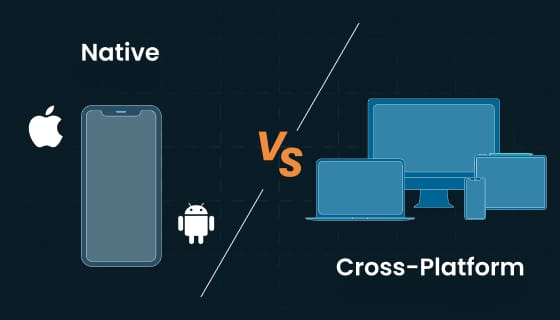
- The Architectural Crossroads: We settle the native vs. cross-platform decisions debate. Should you invest in the performance-heavy world of Swift and Kotlin, or is a unified codebase via Flutter or React Native the smarter move for your specific growth stage?
- The Reality Check on Hidden Costs: Beyond the initial build, we expose the hidden costs and execution risks that catch most founders off guard—from 20% annual maintenance taxes to the high price of poor API integration.
Transitioning to an app is the single most significant “efficiency reset” your brand can undergo. The goal isn’t just to launch on the App Store; it’s to build a system where every notification, every interaction, and every tap is an investment in your own ecosystem rather than a donation to a browser.
Conclusion
By 2026, most e-commerce brands won’t stall because of weak marketing or poor tools. They stall because the mobile web has reached its structural limit.
The mobile browser is built for discovery, not ownership. It can drive traffic, but it cannot sustain retention, repeat purchase velocity, or long-term customer value at scale. No amount of optimization changes that reality.
This is where ZealousWeb steps in — not to “fix” the mobile web, but to help brands move beyond its ceiling. The focus is not on isolated app builds or surface-level improvements, but on creating an execution system where mobile apps, customer data, and retention work together as a single growth engine.
In 2026, scalable e-commerce is no longer about choosing better tools on the web. It is about choosing an architecture that allows brands to own growth rather than rent it through a browser.
Would You Like to Have a Free Ballpark Estimation for Your E-commerce App Development Project?
Consult Our Experts
FAQs
Do I really need a mobile app if my mobile website is already optimized?
Yes, if your growth depends on repeat purchases, retention, and LTV. ZealousWeb typically sees brands hit a ceiling where web optimization stops compounding. At that point, an app is not a UX upgrade but a structural shift toward owned growth and lower re-acquisition costs.
When is the right time to hire an e-commerce app development company?
The right time is when traffic is growing, but repeat purchase frequency, checkout completion, or retention is flattening. ZealousWeb evaluates timing based on CAC-to-LTV ratios, repeat customer contribution, and execution bottlenecks — not trends or peer pressure.
Should I hire a freelancer or an agency for e-commerce app development?
Freelancers handle tasks. E-commerce apps require systems. An app spans architecture, integrations, QA, security, and post-launch execution. Fragmented ownership creates risk and technical debt. ZealousWeb is engaged when brands need a single execution system to scale, not just ship.
How much does e-commerce mobile app development cost in 2026?
Costs vary based on architecture, integrations, and execution depth. ZealousWeb typically sees serious growth-ready builds range from lean MVP systems to fully integrated app ecosystems. The focus is not on upfront cost alone, but on how quickly the app reduces CAC and increases LTV post-launch.
What integrations should an e-commerce app support from day one?
At minimum: inventory, order management, payments, analytics, and customer data. ZealousWeb prioritizes integrations that remove operational friction and enable real-time decision-making, rather than feature-heavy builds that look impressive but underperform.
What timeline should I expect when hiring an e-commerce app development company?
Timelines depend on complexity, integrations, and execution depth. ZealousWeb typically structures delivery in phases — discovery, system design, core build, and rollout — allowing brands to launch meaningful functionality early while scaling iteratively. The emphasis is on predictable execution rather than rushed launches that create future rework.
How involved does my internal team need to be during app development?
Strategic involvement is essential, but not operational overload. ZealousWeb designs engagement models where leadership contributes to decision clarity while execution remains system-driven, reducing dependency on internal firefighting.