
A logo used to be the finish line. Now it’s the starting point.
Branding used to mean picking a font and defending it for a decade. That world is gone. Between AI-driven personalization, automated production, and buyers who expect consistency across a dozen touchpoints before they’ve even spoken to sales, branding services have quietly become something closer to infrastructure than art. The brands winning right now aren’t the ones with the best-looking logo – they’re the ones whose identity holds together everywhere it shows up, updates in real time, and still feels unmistakably human.
The data backs this shift up. In the SAS and Coleman Parkes study, 93% of CMOs using generative AI reported measurable ROI, and 94% cited improved personalization as the biggest gain – branding decisions are no longer built on instinct alone; they’re built on evidence.
This guide covers what that shift actually looks like, what it costs, and what to look for – for businesses building a brand and agencies extending one.
What Do Modern Branding Services Include?
Ask five agencies what branding services mean, and you’ll get five different answers – some will say logos, others will say strategy decks. Neither is wrong, exactly. Both are just incomplete.
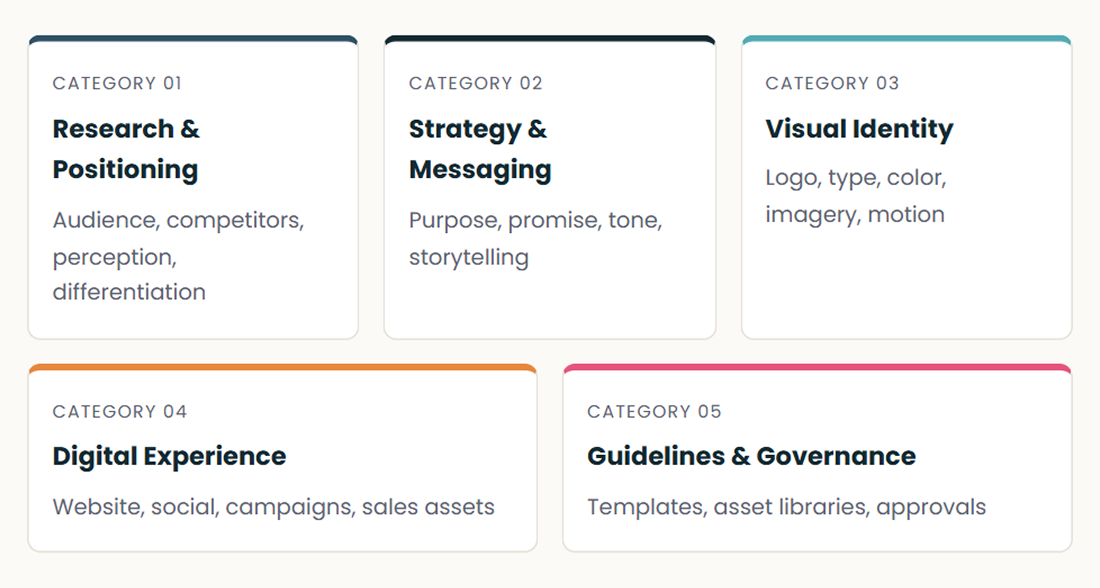
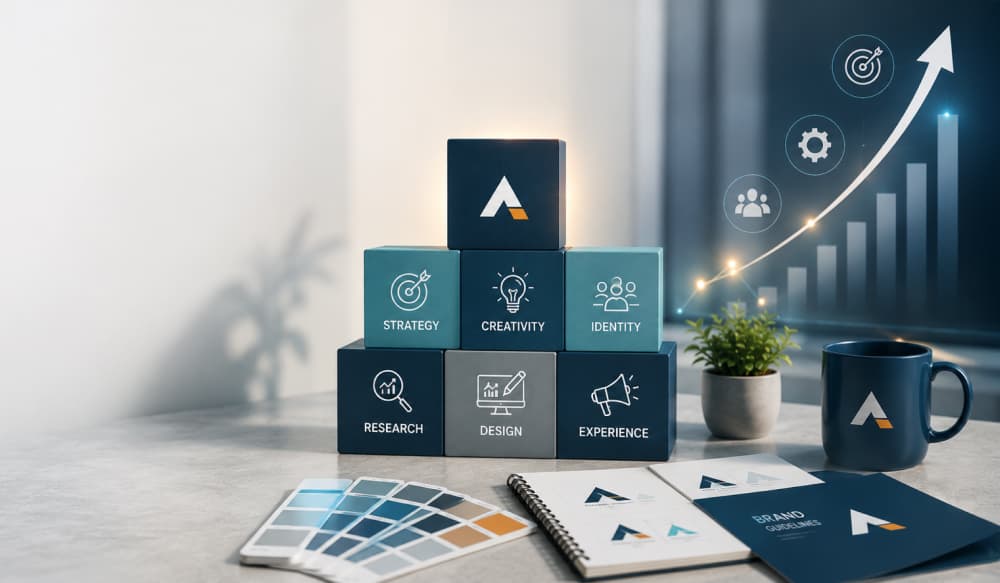
Modern branding services include five connected categories: brand research and market positioning, brand strategy and messaging, visual identity, digital brand experience, and brand guidelines with governance. Together, these form one working system – not five separate line items on an invoice.
Here’s the part most businesses miss: it’s rarely the individual piece that fails. A brand doesn’t collapse because the logo was wrong. It drifts quietly, one inconsistent post and one off-brand sales deck at a time, until nobody on the team can quite explain what the company stands for anymore. That’s what happens when one of these five categories gets skipped, treated as optional, or handed to a different vendor than the rest.
The agencies still winning in 2026 don’t sell branding as a deliverable. They build it as infrastructure – something a growing team, a new market, or an AI content pipeline can plug into without breaking what the brand already means.
Brand Research and Market Positioning
Brand research and market positioning is the process of understanding an audience, the competitive landscape, and market perception well enough to identify where a brand can genuinely differentiate itself. Every credible engagement starts here: audience research, competitor analysis, market perception, and the gaps that show where a brand can genuinely differentiate – not just where it wants to.
Brand Strategy and Messaging
Brand strategy and messaging define a company’s purpose, promise, positioning, and tone of voice so every future piece of content has a consistent foundation to draw from. Purpose, promise, positioning, and messaging architecture. This is where a company’s tone of voice and brand storytelling get defined once, so every future piece of content has somewhere to draw from instead of being reinvented each time.
Visual Brand Identity
Visual brand identity is the system of logo, typography, color, imagery, and motion that makes a brand instantly recognizable across every format it appears in. Logo systems, typography, color, imagery, iconography, and increasingly, motion and digital identity – built to hold up across formats no one had invented five years ago.
Digital Brand Experience
Digital brand experience covers every customer-facing touchpoint – website, UI, social identity, campaigns, and sales materials – where a brand is actually seen and judged. Website and UI branding, social identity, campaign assets, sales materials – the touchpoints customers actually encounter, which is where most brand inconsistency becomes visible first.
Brand Guidelines and Governance
Brand guidelines and governance are the usage standards, templates, and approval workflows that keep a brand consistent once more than one person is producing content. Usage standards, templates, asset libraries, and approval workflows. Without this layer, everything above it degrades the moment more than one person starts producing content.
The shift to notice: these five categories used to be handed over as static documents. Now they’re expected to function as a living system – one that a growing team, a new market, or an AI content pipeline can plug into without breaking brand consistency.
Explore What a Full Branding Engagement Looks Like
View our Branding Services
Why Traditional Branding Models Are No Longer Enough
Static brand guidelines made sense when a brand had four channels and one release cycle a year. Neither of those is true anymore.
Traditional branding models are no longer enough because they were built for a slower, smaller market – a single guideline document, reviewed once a year, managed by one team. Today’s brands operate across dozens of channels, publish content daily, and increasingly rely on AI tools that need clear, consistent rules to follow. A PDF sitting in a shared drive can’t keep up with any of that.
The cracks show up in predictable places. A style guide written for four channels can’t govern a brand now living across fifteen. A review scheduled once a year can’t catch a positioning shift that happens in a single news cycle. And a brand built by one team rarely survives contact with three more teams producing content in parallel, each interpreting “on-brand” slightly differently.
This is the real difference between a brand that scales and one that quietly falls apart: it’s rarely a bad decision that breaks a brand. It’s a hundred small, disconnected ones, made without a system in place to catch them.
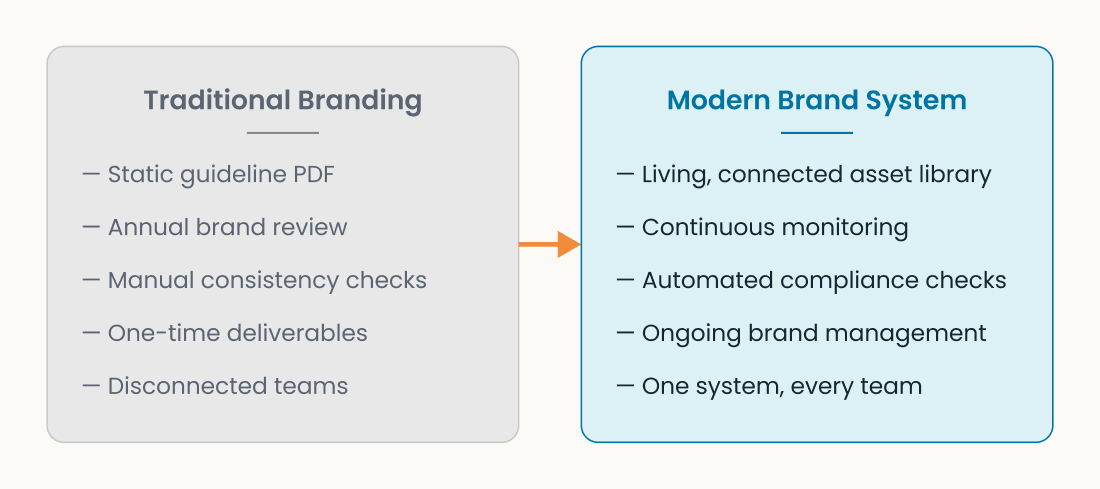
- Static brand guidelines can’t manage every channel a brand now touches
- Annual brand reviews can’t keep pace with market change that now happens weekly
- Disconnected teams create inconsistent brand experiences by default, not by mistake
- Rising content demand increases brand drift faster than anyone can manually catch it
- One-time deliverables don’t support growth that never really stops
How Is AI Changing Branding Services?
AI in branding isn’t about replacing a creative director – it’s about giving one better raw material to work with, faster.
AI is changing branding services by speeding up research, personalization, and creative exploration while leaving positioning, ethics, and final creative decisions to human strategists. It compresses weeks of manual work – audience analysis, competitor tracking, mood-boarding, tone checking – into hours, so brand teams spend less time producing options and more time choosing the right one.
The shift isn’t really about speed, though speed is what gets noticed first. It’s about what becomes possible once speed stops being the bottleneck. A brand can now test a dozen messaging directions before committing to one, catch a tone inconsistency across five hundred pieces of content instead of five, or spot a reputation risk the same day it starts trending instead of a month later in a quarterly report.
What hasn’t changed is who’s accountable for the outcome. AI can generate the options. It can’t decide which one is actually true to the brand, or read a cultural moment correctly, or take responsibility when a campaign misses. That part still belongs to a person – which is exactly why the agencies getting the most out of AI right now are the ones using it to free up strategists, not replace them.
AI-Powered Audience and Market Research
Consumer behavior analysis, competitor monitoring, sentiment tracking, and audience segmentation now run continuously instead of once per quarter.
Predictive Brand Insights
AI can flag a shift in customer expectations or a reputation risk before it shows up in a sales conversation – anticipation instead of reaction.
AI-Assisted Brand Strategy
Positioning exploration, messaging comparisons, and audience scenario testing happen in hours, not weeks – giving strategists more options to choose from, not fewer decisions to make.
AI-Assisted Creative Development
Mood boards, concept exploration, visual variations, and rapid prototyping speed up the first 80% of creative work, so human designers spend their time on the last 20% that actually matters.
AI-Powered Brand Voice Management
Tone consistency checks, terminology governance, and messaging alignment catch drift across hundreds of pieces of content that no single person could review manually.
Real-Time Brand Monitoring
Mentions, reviews, social conversation, and sentiment shifts get tracked as they happen – not discovered a month later in a report.
Why Human Strategy Still Matters
Originality, emotional intelligence, cultural understanding, and ethical judgment don’t come from a model. AI narrows the options and speeds up the work; a strategist still has to decide what the brand actually stands for.
Put together, these six shifts point to the same conclusion: AI hasn’t changed what good branding requires; it’s changed how fast a team can get there. The businesses seeing the biggest gains aren’t the ones handing branding over to AI – they’re the ones using it to clear the repetitive work off a strategist’s plate, so more of the day goes toward the judgment calls a machine still can’t make. That balance, not the technology itself, is what separates branding that feels intelligent from branding that just feels automated.
How Is Automation Used in Branding?
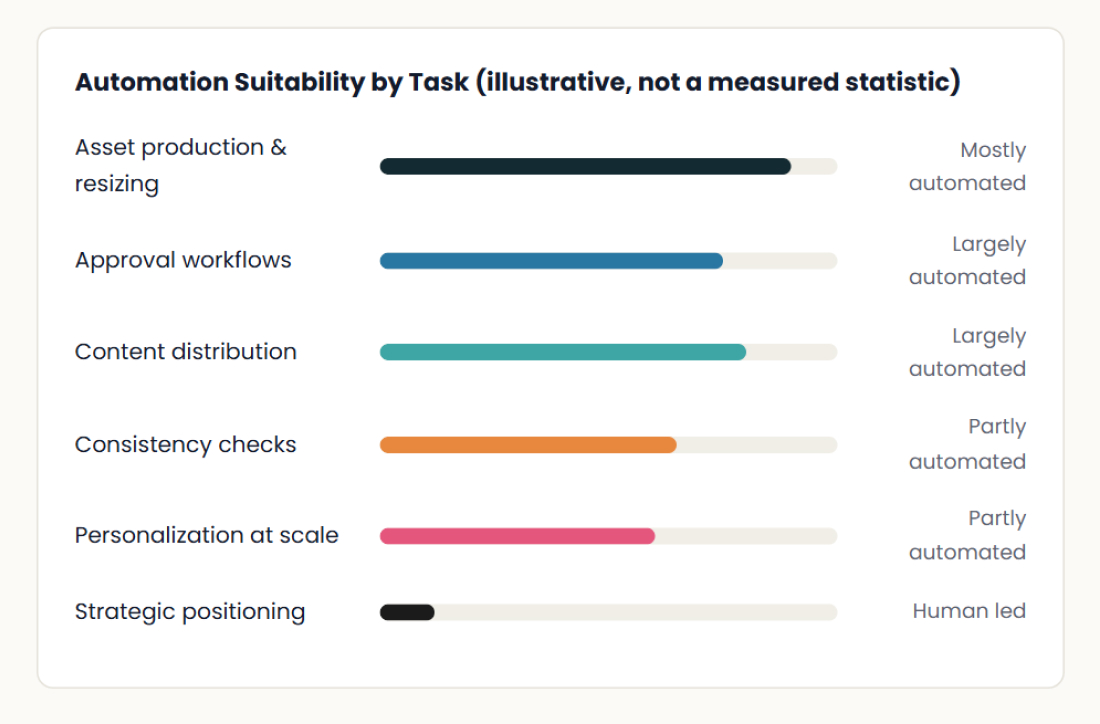
Branding automation handles the repeatable parts of production so teams can spend their attention on the parts that require judgment. Some tasks are safe to hand almost entirely to a machine; others should barely be touched by one.
Branding automation is the use of AI-driven tools to handle repetitive production tasks – asset creation, approvals, distribution, and consistency checks – so human teams can focus on strategy and judgment instead of manual execution. It’s the difference between a brand system that scales and one that quietly buckles the moment more than one person starts producing content.
The bottleneck was never the strategy – it was the production queue sitting behind it. A logo needs resizing for forty different placements. A campaign needs the same message adapted across ten channels. A style check needs running on every asset before it ships. None of that requires judgment. All of it requires time. Automation is what gives that time back.
What automation doesn’t do is decide anything that matters. It can’t set brand purpose, navigate a sensitive announcement, read a cultural moment correctly, or make the final call on a creative direction. The moment a task involves nuance or reputation risk, the savings disappear – because that’s not a speed problem anymore; it’s a decision problem, and decisions still need a person behind them.
Automated Creative Production
Asset resizing, format conversion, template-based production, and campaign variations – high volume, low judgment, ideal for automation.
Automated Brand Workflow
Review routing, stakeholder approvals, version control, and asset management keep production moving without manual chasing.
Automated Content Distribution
Social scheduling, email workflows, multi-channel publishing, and regional deployment run on rules a person only has to set once.
Automated Brand Consistency Checks
Logo usage, color and typography compliance, and tone-of-voice monitoring catch drift long before it reaches a customer.
Personalization at Scale
Dynamic website experiences, audience-specific messaging, and journey-based communication adjust automatically without a person rebuilding each variant by hand.
What Should Remain Human-Led
Brand purpose, sensitive communication, cultural interpretation, final creative decisions, and reputation management – the tasks where getting it slightly wrong costs more than automation saves.
What Are the Latest Branding Trends?
The latest branding trends center on adaptive, modular identity systems, AI-assisted creative operations under human direction, multimodal and hyper-personalized brand experiences, and discoverability in AI-generated search results. Each trend points to the same shift: brands are being built as flexible systems rather than fixed assets. Here’s what that looks like in practice.
Adaptive Brand Systems
Brands are moving away from one fixed identity toward systems that can respond to market shifts without a full redesign cycle. Instead of waiting a year for the next brand refresh, teams adjust tone, visuals, or messaging incrementally, as the market moves rather than after it’s already moved.
Modular Brand Identities
Instead of one rigid logo lockup, identities are being built from interchangeable components that recombine cleanly across new formats and markets. A modular system can flex for a regional campaign or a new product line without the brand ever feeling like it’s wearing a costume that doesn’t fit.
AI-Assisted Creative Operations, Human-Led Direction
Teams are pairing AI-assisted production with human-led creative direction – speed from the machine, judgment from the person. The output moves faster, but the accountability for what actually ships hasn’t shifted an inch.
Motion, Audio, and Multimodal Branding
Identity now has to hold together across video, voice, and interactive formats – not just a logo on a page. A brand’s sound, motion, and pacing are becoming as recognizable as its color palette used to be.
Hyper-Personalized Brand Experiences
The same brand can now show up differently for different audience segments in real time, without losing the thread of a single consistent identity underneath. Personalization only works when there’s a strong core identity holding all those variations together – otherwise it just looks like inconsistency with better targeting.
AI Search and Brand Discoverability
Being accurately represented in AI-generated answers now depends on clear brand positioning, consistent entity information, and authoritative content – the same fundamentals that used to only matter for traditional search. A brand that’s vague about who it is has nothing for an AI model to accurately repeat.
Ethical and Transparent AI Use
Data privacy, copyright, bias, and disclosure aren’t side issues anymore – they’re part of how a brand earns trust in an AI-assisted market. Customers are increasingly willing to ask how a brand’s content got made, and a brand without a good answer pays for that in trust, not just optics.
None of these trends work in isolation – an adaptive system without human direction turns into noise, and a discoverable brand without a consistent identity underneath has nothing worth discovering. What ties all seven together is the same underlying discipline: enough structure to stay recognizable, enough flexibility to stay relevant, and enough human judgment in the loop to keep both of those honest.
Why Do Businesses Need a Scalable Brand System
A scalable brand system is what lets a brand grow without slowly drifting away from itself. Most brands don’t fall apart in one dramatic moment – they fade a little with every new hire, every new market, and every new campaign that starts from scratch instead of building on what came before. By the time anyone notices, the brand in the boardroom deck and the brand customers actually experience have quietly become two different things.
What Is a Scalable Brand System
A scalable brand system is a connected framework of strategy, messaging, visual identity, and governance that lets a brand expand into new teams, markets, and formats without losing consistency. It’s a connected framework, not a folder of files:
Signs Your Brand Isn't Ready to Scale
- Every new campaign starts completely from scratch
- Teams describe the same brand in noticeably different ways
- Brand assets are scattered and hard to find
- Approvals routinely take too long
- AI-generated content frequently feels off-brand
- Expansion into a new market creates fragmented experiences
How a Scalable Brand System Supports Growth
- Faster campaign launches with less setup each time
- Easier onboarding for new team members and vendors
- Greater consistency across every market and channel
- Lower production effort per asset
- Stronger, more recognizable brand recall over time
- How Agencies Benefit From Scalable Brand Systems
The same logic applies one level up: agencies using a scalable brand system across client accounts get faster delivery, easier white-label execution, and stronger quality control – without needing to rebuild process for every new client.
Brand Refresh vs Rebrand: What Does Your Business Need?
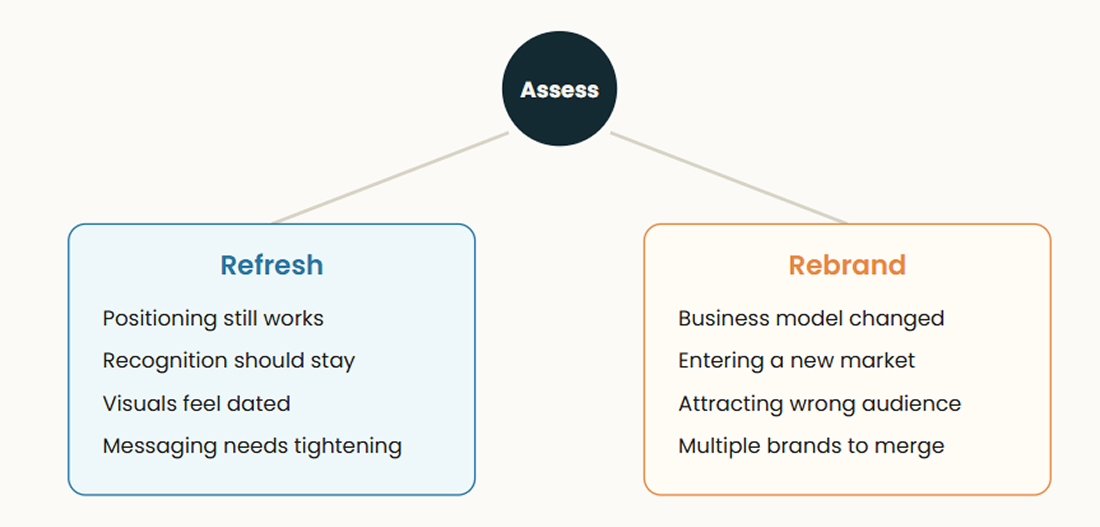
Not every branding problem needs the same solution, and treating them as interchangeable is how businesses end up either overspending on a rebrand they didn’t need or underinvesting in one they did. A brand refresh updates the surface of a brand – visuals, messaging, digital touchpoints – while keeping its underlying positioning intact. A rebrand replaces the positioning itself, usually because the business, market, or audience it was built for no longer exists in the same form. Knowing which one you’re actually facing is the difference between a two-week update and a two-quarter overhaul.
When a Brand Refresh Is Enough
A refresh works when the underlying positioning is still right but the surface of the brand hasn’t kept up – dated visuals, messaging that needs tightening, or digital touchpoints that feel a step behind. Existing recognition is an asset worth preserving here, not something to throw away.
When a Complete Rebrand Is Necessary
A rebrand is worth the investment when the business model has genuinely changed, the company is entering a new market, current positioning is capping growth, or the brand is attracting the wrong audience entirely. It’s a bigger decision, and it should be treated like one.
Why an Assessment Should Come Before Execution
The mistake most businesses make isn’t choosing wrong – it’s skipping the assessment and guessing. A proper brand assessment protects existing brand equity and keeps investment matched to the actual problem, instead of the more expensive one.
How Do Branding Services Support Business Growth
Branding services support business growth by strengthening market differentiation, building buying confidence, improving marketing and sales performance, and making expansion into new markets faster and less risky. The connection isn’t abstract – each of these shows up as a measurable outcome, not just a perception shift.
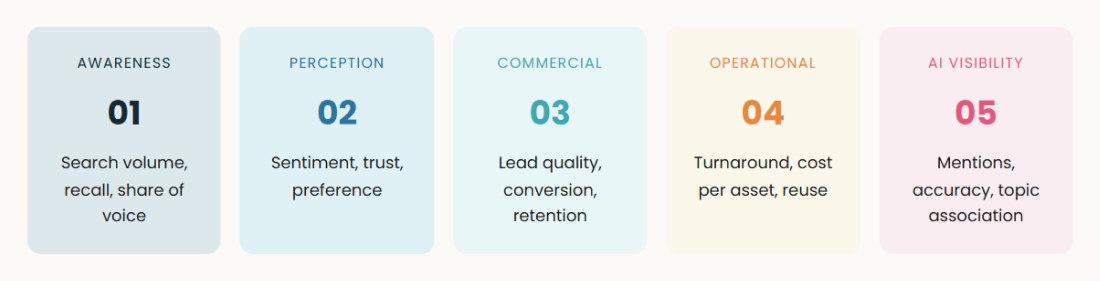
- Stronger market differentiation
- Greater trust and buying confidence
- Better marketing and campaign performance
- More effective sales enablement
- Improved customer experience and retention
- Easier expansion into new markets
- Greater creative and operational efficiency
For agencies, this same growth compounds differently: a stronger branding capability means more of an existing client’s budget stays in-house instead of walking out the door to a specialist competitor.
How Much Do Branding Services Cost Globally
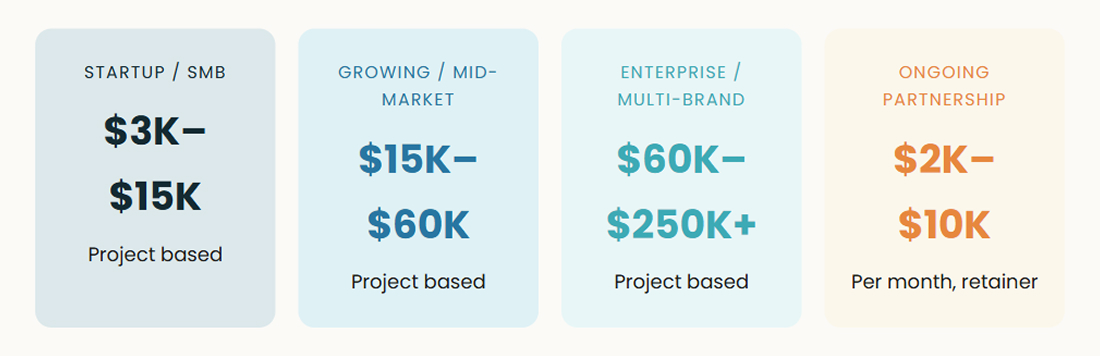
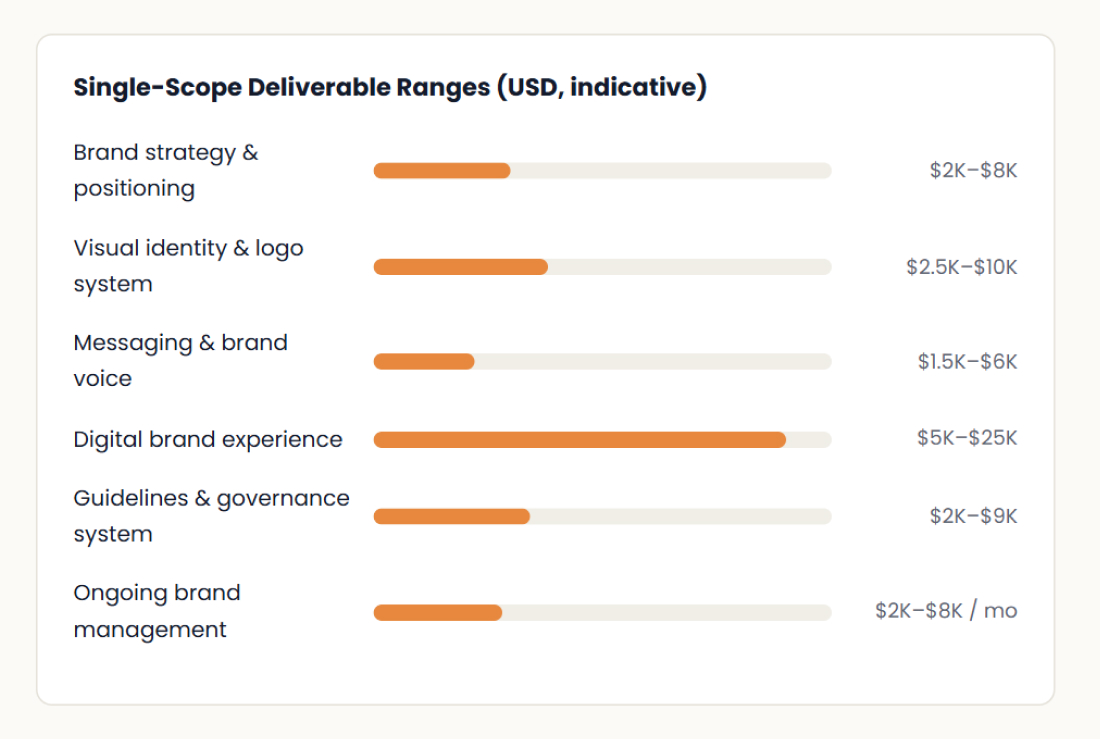
Cost is the question every business and agency eventually asks, and it’s also the one with the least honest answers online. Branding services typically range from a few thousand dollars for a single deliverable, like a logo or messaging document, to well over a hundred thousand for a full enterprise brand system covering strategy, identity, digital experience, and governance together. Ongoing brand management is usually billed separately, as a monthly retainer rather than a one-time project fee.
The ranges below are general industry indicators to help you budget a conversation – not a quote. Actual cost depends on scope, market, brand complexity, and how much of the five-category system in Section 1 you’re commissioning at once. A business buying a logo and a business buying a full brand system are, in practice, buying two entirely different things, even if both call it “branding.”
Typical Investment by Engagement Type

Typical Cost by Deliverable
Approximate Cost by Currency and Region
For businesses and agencies budgeting outside the US, here’s roughly how a mid-market project-based engagement (around $15K-$60K) translates elsewhere. Rates fluctuate constantly – treat these as rounded, directional figures, not fixed conversions.
| Region | Approx. Range |
| United States | $15,000 – $60,000 |
| United Kingdom | £12,000 – £47,000 |
| European Unions | €14,000 – €55,000 |
| India | ₹12,50,000 – ₹49,00,000 |
| UAE | AED 55,000 – AED 220,000 |
| Canada | C$20,000 – C$81,000 |
| Australia | A$23,000 – A$91,000 |
Why this varies so much: local design and strategy talent costs, market maturity, and whether the engagement is retainer-based or project-based all shift the number significantly. A white-label partner delivering across multiple currencies should be able to explain their basis for pricing clearly, not just hand over a number
Request a Scope Estimate for Your Brand
Get a Real Number
What Should Businesses and Agencies Look for in a Branding Partner?
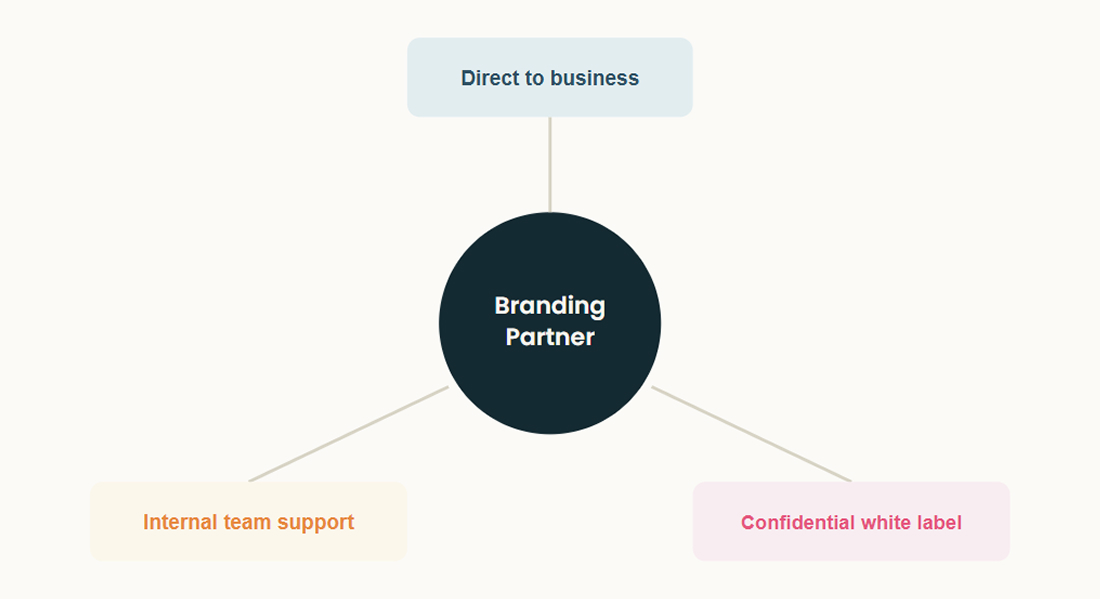
The right branding partner combines strategic thinking, end-to-end capability, a scalable system built for future growth, and transparent use of AI with clear human oversight. The right criteria are almost identical whether you’re a business hiring your first branding partner or an agency adding white-label capacity – what’s at stake is just different.
Strategic Thinking Beyond Visual Design
A partner should understand your business model, audience, and competitive landscape – not just be good with a design tool. If the first questions they ask are about color preferences instead of your customers, that’s usually a sign of what the rest of the engagement will look like.
End-to-End Branding Expertise
Research, strategy, messaging, visual identity, digital applications, and governance – under one roof, not stitched together from three vendors. Every handoff between vendors is a place where the brand’s original intent gets slightly reinterpreted, and those small losses add up fast.
A Scalable System, Not Isolated Deliverables
The work should hold up for future campaigns, markets, and clients – not just the brief in front of you today. A good partner builds for the version of your business that exists in eighteen months, not just the one signing the contract.
AI-Assisted Efficiency With Human Oversight
Ask directly how AI is used, how outputs are reviewed, and how originality and confidentiality are protected. A trustworthy partner will have a clear, specific answer. A vague one – “we use AI where it helps” – usually means no one has actually thought it through.
Reliable Quality Assurance
Strategic review, creative review, brand compliance, and a final human approval step – every time, not just on the first project.
Clear Ownership and Delivery Processes
Deliverables, file ownership, intellectual property, and communication structure should be defined before work starts, not negotiated after.
None of these four hold up much on their own. Strategic thinking without scalable systems produces a brilliant one-off that has to be rebuilt from scratch next year. End-to-end capability without human oversight of AI just moves the risk instead of removing it. What separates a real branding partner from a vendor is whether all four show up together, every time, not just on the pitch.
When Should a Business or Agency Hire a Branding Partner?
A business should hire a branding partner when positioning is unclear, customer perception has drifted from reality, or growth and expansion have outpaced the brand’s ability to keep up. An agency should bring one in when internal capacity, expertise, or workload consistency can’t keep pace with client demand. Both situations point to the same underlying problem – a gap between where the brand needs to be and what the current team can realistically deliver.
When Businesses Need Branding Support
- Positioning is unclear
- Customers misunderstand the offering
- The brand no longer reflects the company
- Marketing assets feel disconnected
- The business is entering a new market
- Internal teams cannot maintain consistency
- The company is preparing for expansion, investment, or acquisition
When Agencies Need Branding Support
- Internal creative teams are at capacity
- Branding requirements fall outside existing expertise
- Client deadlines are becoming difficult to manage
- The agency wants to expand its service offering
- Workloads fluctuate significantly
- Confidential white-label execution is required
- Permanent hiring is not commercially practical
None of these signals show up in isolation, and none of them fix themselves with time. A business that waits until positioning is unclear and the brand no longer reflects the company has usually waited too long already. The same is true for agencies – capacity problems and expertise gaps rarely resolve on their own; they just get handed to whichever client complains first. The right time to hire a branding partner isn’t when everything breaks at once. It’s the moment the first item on either list starts sounding familiar.
Use Case: Building a Scalable Brand System for a Growing Business
The categories, systems, and criteria covered so far are easier to trust once you see them applied to an actual business instead of described in the abstract. Here’s what a scalable brand system engagement looks like in practice, from the problem it started with to the outcome it produced.
- The Situation
A growing B2B business had expanded its services, audience, and digital presence – but its identity and messaging hadn’t kept up. Different teams described the company differently, and every new campaign started from a blank page.
- The Approach
Audience and competitor research came first, followed by refined positioning, a new messaging architecture, a modernized visual identity, and modular templates – all wrapped in brand guidelines with AI-assisted content workflows built in from day one.
- The Outcome
More consistent communication across teams, faster campaign execution, tighter sales-and-marketing alignment, and a brand system ready for the next round of growth instead of another rebuild.
The Future of Branding Is Intelligent, Scalable, and Human-Led
AI will keep improving research, personalization, and creative exploration. Automation will keep eating repetitive production work. Brand systems will keep getting more adaptive, and AI visibility will keep shaping how brands get discovered in the first place. None of that replaces the part that’s always mattered most: a person deciding what a brand actually stands for, and defending that decision when it’s inconvenient. Every business and agency serious about branding services in 2026 is building toward the same thing – a system intelligent enough to move fast, and human enough to still mean something.
Conclusion
Every section of this guide points back to the same idea: branding in 2026 isn’t a deliverable anymore, it’s a discipline. The businesses and agencies pulling ahead aren’t the ones with the most polished logo or the biggest AI budget – they’re the ones who’ve built a system disciplined enough to stay consistent, flexible enough to keep up, and human enough to still mean something when a machine could have done it faster.
That’s the standard we hold ourselves to at ZealousWeb, on every engagement, regardless of who it’s for or what it’s called on the invoice. The brief changes. The discipline doesn’t.
If any part of this guide sounded familiar – a brand that’s drifted, a system that can’t scale, a partner question you don’t have a clean answer to yet – that’s usually the signal worth acting on before it gets more expensive to fix.
Build a brand designed to grow with your business
Get Started
FAQs
How much do you charge for branding services?
Depends on scope - but you get a fixed price before work starts, based on which categories from our system you need. No hourly guessing, no surprises.
Are there any hidden charges once we start?
No. Your quote covers agreed deliverables and revisions in writing. Anything beyond scope gets flagged and approved by you first, never billed after the fact.
How long does a typical branding project take?
A refresh usually runs 3 to 5 weeks. A full brand system typically takes 6 to 10 weeks. You get a stage-by-stage timeline at kickoff, not just an end date.
Will we work directly with your team, or through account managers?
Direct access to the strategists and designers on your project - no relay through account management. For agencies, we follow your communication process exactly.
How do you handle our data and confidentiality?
Every engagement runs under an NDA by default. Brand assets and client data stay restricted to your project team and are never reused or referenced elsewhere.