

That is the uncomfortable truth about how AI search has changed the game. Traditional search engines told you where you ranked. Generative AI systems do not rank you at all — they either include your business in the answer they build from scratch, or they don’t. There is no page two to fall back on.
This guide is not about chasing another algorithm update. It is about understanding how does generative engine optimization work — a genuinely different system that decides what it knows, what it trusts, and what gets generated into the answers your audience is reading right now. Understanding why is generative engine optimization important is the first step. Knowing what it actually takes to build that kind of presence — through the right content structure, entity signals, and generative engine optimization best practices — is what the rest of this guide covers.
Your business might be completely invisible in AI-generated answers right now — and you would not even know it. No ranking drop. No traffic alert. No warning of any kind. The audience just stopped seeing you.
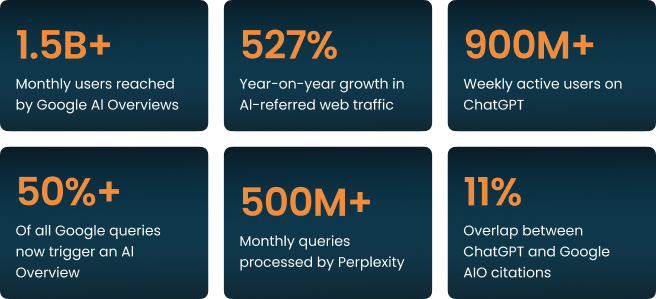
Read those numbers again. These are not projections — they are the current state. And they point to one conclusion: the businesses that understand generative engine optimization today are building a lead that will be very hard to close later.
What Is Generative Engine Optimization — And Why Most Businesses Do Not Know They Need It Yet
Most marketers have heard the acronym. Far fewer can explain what actually changes when optimization shifts from a traditional search engine to a generative one. That gap matters — because the two systems reward entirely different things.
What is generative engine optimization in AI — and how is it different from everything that came before it? At its core, it is the practice of making a business understandable, trustworthy, and reference-worthy to the AI systems that are now generating the answers your audience reads. Not ranking for them. Generating them.
SEO helps businesses compete for rankings. GEO helps businesses compete for inclusion. As more users turn to generative platforms to research, compare, and decide — being discoverable is no longer sufficient. The system generating the answer must also recognize the business as credible, topically authoritative, and cite-worthy before it will include it in a response.
That is the shift most businesses have not yet accounted for. And it is the shift this guide is built to address.
What Generative Engines Actually Do—and Why Rankings Don't Matter
A traditional search engine crawls the web, indexes pages, and ranks them against a query. When someone searches, they get a list of links and decide which one to click. The engine’s job is to surface the most relevant pages. Your job is to rank on page one.
A generative engine does something fundamentally different. It does not retrieve links. It synthesizes an answer. When someone asks ChatGPT, Perplexity, Google Gemini, or Claude a question, the system pulls from everything it has learned — training data, live retrieval, indexed content — and constructs a response. The user reads that response. They often don’t click anything at all.
This is the shift that changes everything. There is no rank. There is no page one. There is only: does your business exist meaningfully enough in the AI’s understanding of your topic that it gets woven into the answer? That is what generative engine optimization is designed to address.
The simplest definition of GEO: Generative Engine Optimization is the practice of structuring your content, authority signals, and entity presence so that AI systems recognize your business as credible, cite-worthy, and topically relevant — and include you in the answers they generate for your audience
The Difference Between SEO, AEO, and GEO — and Why Confusing Them Is Costing Businesses Visibility
These three disciplines are related but not interchangeable. Treating them as the same thing is one of the most expensive mistakes a marketing team can make right now.
SEO helps users find your content. AEO helps answer engines surface your content. GEO helps generative systems understand, trust, and reference your content within AI-generated responses. As discovery moves beyond search results and into conversational interfaces, understanding the distinction is becoming a strategic necessity rather than a technical nuance.
SEO vs AEO vs GEO — The Core Distinctions
| Dimension | SEO | AEO | GEO |
| Primary goal | Rank on page one of search results | Get selected for featured snippets and direct answers | Get included in AI-generated responses |
| Target systems | Google, Bing search index | Google featured snippets, voice search | ChatGPT, Gemini, Perplexity, Claude, AI Overviews |
| Output type | Ranked link list | Direct extracted answers | Synthesized generated response |
| Key signal | Backlinks, on-page SEO, Core Web Vitals | Structured data, passage, clarity, featured snippet eligibility | Entity authority, topical depth, citation trustworthiness |
| User behavior | User clicks a link | User reads a direct answer, may click | User reads generated response, often does not click |
| Visibility metrics | SERP position, organic clicks | Featured snippet ownership | Citation frequency in AI-generated answers |
Are they compatible? Yes — SEO and GEO work best together. SEO strengthens your digital presence, while GEO helps extend that presence into AI-driven discovery experiences.
SEO remains a critical part of digital visibility. As search behavior evolves, businesses can strengthen their reach by combining SEO with GEO and broader brand visibility strategies, creating a presence that performs across traditional search engines and AI-powered discovery experiences.
Is Your Business Showing Up in AI Answers — and If Not, Where to Start
Before building a GEO strategy, you need to know your current position. The good news: this takes about twenty minutes and requires nothing more than the tools your audience already uses.
GEO Baseline Audit — Run This Before Anything Else
| . | |
| 1 | Test your brand directly Ask ChatGPT, Perplexity, and Google Gemini: “What is [your company name]?” and “Who are the leading [your category] companies?” Note whether you appear, what is said, and whether it’s accurate. |
| 2 | Test your core topic questions Ask the questions your audience actually asks: “What is the best [your solution category]?”, “How do I [core problem you solve]?”, “Which [your service] companies are worth considering?” Record every citation that appears instead of yours. |
| 3 | Check for inaccurate representations When AI does mention your business, is the description accurate? Wrong founding year, wrong services, outdated positioning — all of these are GEO problems, not just brand problems. |
| 4 | Audit your AI crawler accessibility Check your robots.txt for GPTBot, ClaudeBot, PerplexityBot, and OAI-SearchBot. If any are blocked, you have an immediate technical fix to make — AI cannot cite what it cannot crawl. |
| 5 | Map the competitor gap List every competitor that appeared in AI answers where you did not. This is your GEO gap map — it tells you exactly which topics and entity signals to prioritize first. |
If you run this audit and find your business is absent, inconsistently described, or only mentioned in passing — that is not a niche problem. It is a systematic visibility gap that compounds every month you leave it unaddressed.
Is Your Business Invisible in AI conversations?
Get Your AI Visibility Score Today
Why Generative Engine Optimization Is Important: What Most Marketers Are Missing
The urgency around GEO is not about hype. It is about pipeline. Specifically, whose pipeline gets filled when your audience asks AI a question that your business should be answering.
For years, marketers focused on winning visibility in search results. Today, a growing share of discovery is happening inside generative platforms that synthesize information, recommend solutions, and shape buyer perceptions before a prospect ever visits a website. If your brand is absent from those responses, you may be losing consideration long before traditional analytics can detect it.
What many marketers are missing is that generative visibility is becoming a competitive advantage. The brands that are consistently understood, trusted, and referenced by AI systems are more likely to influence research, shortlist decisions, and purchase conversations. GEO is not simply about adapting to a new channel—it is about ensuring your expertise remains visible wherever decisions are being informed.
What Your Pipeline Loses When AI Answers Your Audience Without Mentioning You
Think about how a buyer behaves today. They have a problem. They open ChatGPT or Perplexity. They ask a question. They get a thorough, confident answer that names three companies worth considering. They do not go back to Google to search again. They click one of the companies in the AI’s answer.
If your business is not in that answer, you do not lose a click. You lose the conversation entirely. The buyer never knew you were an option. This is a qualitatively different problem from dropping a few positions in organic search. It is not about being ranked lower — it is about not existing in the decision-making process at all.
Why Being Absent from AI-Generated Answers Is a Compounding Problem — Not a One-Time Miss
Every time AI generates an answer that mentions your competitor and not you, several things happen simultaneously. The user forms an impression. The AI system reinforces the association between that competitor and the topic. And your business falls further behind in the implicit trust hierarchy these systems build over time.
GEO authority compounds in both directions. The businesses showing up consistently get cited more, which trains the models further, which leads to more citations. The businesses absent today become harder to surface tomorrow — not because the rules changed, but because the gap widens.
The compounding cost of waiting: A business that starts building GEO signals today has a 6–12 month head start over one that starts next year. In a domain where authority compounds, that gap is structural — not cosmetic.
What Businesses Showing Up in Generative Answers Did to Get There
The businesses consistently appearing in AI-generated answers across their categories did not stumble into that position. They built it — usually before GEO was even widely discussed as a discipline.
What they have in common is not a massive content team or an enterprise budget. They built genuine topical depth on a narrow set of questions. They structured their content so AI could extract clear, confident answers from it. They built external mentions across sources AI systems trust — Reddit, YouTube, industry publications, Wikipedia. And critically, they made sure their entity was described consistently across every platform their brand touched.
What GEO-Winning Businesses Did Differently
| What They Did | Why It Matters for GEO | When Most Businesses Start |
| Built deep content on a narrow topic cluster | AI systems recognize topical authority through density, not breadth | Too late — after competitors already own it |
| Structured content for passage extraction | AI retrieves passages, not pages — structure determines citability | After a visibility drop triggers concern |
| Built entity consistency across platforms | Inconsistent brand descriptions create entity ambiguity AI avoids | Rarely — this is the most overlooked signal |
| Earned mentions in high-trust external sources | Brand mentions in Reddit, YouTube, and Wikipedia are stronger AI trust signals than backlinks | Only when explicitly guided by a GEO strategy |
| Allowed AI crawlers in robots.txt | Blocked crawlers cannot index content for AI retrieval — an invisible but critical blocker | Quick fix once identified |
How AI Decides Which Content Appears in Generated Answers
Most people treat GEO as a content strategy problem. It is partly that. But before content strategy comes something more fundamental — understanding how generative AI actually constructs its answers, and where your content either feeds that process or gets filtered out.
Unlike traditional search engines that rank pages, generative engines evaluate and synthesize information from multiple sources to create a direct response. In that process, they look for signals such as relevance, authority, clarity, consistency, and contextual depth.
This is why GEO is not about publishing more content. It is about making your expertise easy for AI systems to understand, trust, and reference. The brands that provide clear, well-structured, and authoritative information are more likely to appear in generated answers, while others remain invisible regardless of their search rankings.
How AI Generates Answers—and Why Some Content Gets Chosen
When a user submits a query to a generative AI system, the system does not search the web the way Google does. It runs the query through a retrieval layer — pulling relevant passages and sources — and then synthesizes those inputs into a coherent response. The critical word is synthesizes. It is not quoting. It is constructing.
For your content to feed that process, it needs to pass two filters: retrievability and trustworthiness. Retrievability means the AI crawler can access it, extract it, and understand it structurally. Trustworthiness means the AI has enough corroborating signals — from your own content architecture and from external sources — to treat your business as an authoritative voice on the topic.
How a Generative AI Builds an Answer — The Retrieval and Synthesis Process
| . | |
| 1 | Query interpretation The AI parses the user’s question for intent, entities, and context. It is not just matching keywords — it is understanding what kind of answer is needed and which entities are relevant to it. |
| 2 | Retrieval layer activation For live-retrieval systems (Perplexity, ChatGPT Search, Google AI Overviews), the system crawls indexed sources to find relevant passages. For base LLM responses, it draws from training data — content it absorbed during model training. |
| 3 | Passage-level extraction The AI does not read full pages. It extracts passages — typically 134 to 167 words — that directly answer the query. Content that buries its answer in long intros or generic framing gets skipped. Content with a direct answer in the first 40 words gets extracted. |
| 4 | Trust and authority scoring The AI weights sources by entity confidence — how consistently this source is described and referenced across the web — and by topical depth. A source with shallow coverage across many topics loses to a source with deep coverage on a few. |
| 5 | Response synthesis and citation The AI assembles its answer from the highest-confidence passages and, in live-retrieval systems, cites the sources it used. If your content was not extractable, not trustworthy, or not accessible — it is not in the answer. |
How Topical Authority Helps AI Recognize Your Business
Topical authority is a concept most SEOs know. In the context of GEO, it works differently — and the distinction matters.
In traditional SEO, you build authority by earning links from relevant pages and creating content that covers a topic broadly enough to signal relevance across a range of searches. In GEO, topical authority means something more specific: the AI has encountered your business enough times, in enough credible contexts, discussing a specific set of topics, that it has built internal confidence in your relevance to those topics.
Broad presence does not build that confidence. Depth does.
| . | |
| ❌ Broad but Shallow
Topic A — AI Visibility Topic B — Automation Topic C — Analytics Topic D — Strategy Topic E — Content AI confidence: Low — no clear authority signal on any topic |
✓ Narrow but Deep
Topic A — GEO / AI Visibility Topic B — Entity Architecture Topic C — Content Citability Topic D — (Not targeted) Topic E — (Not targeted) AI confidence: High — recognized as authoritative on core topics |
How Prompt-Response Alignment Influences Whether AI Uses Your Content
Generative AI processes language the way a conversation partner does, not the way a search engine does. This means content written purely for keyword density — stuffed with target phrases but lacking natural, contextually rich language — performs worse in generative retrieval than well-written content that never explicitly mentions the keyword but answers the intent completely.
Prompt-response alignment is the practice of structuring your content to mirror how users actually phrase questions to AI, and ensuring your content provides the kind of answer the AI would want to synthesize. That means leading with definitions, citing specifics, structuring logic clearly, and writing in a way that makes every passage extractable as a standalone answer.
Why ChatGPT, Gemini, Perplexity, and Claude Generate Different Answers from the Same Query
Each platform has a different retrieval architecture, training data mix, and authority weighting system. The practical consequence: you cannot optimize for one and assume it covers the others. An 11% overlap in citations between ChatGPT and Google AI Overviews tells you these systems are drawing from substantially different authority pools.
Platform-by-platform GEO Differences
| Platform | Primary Retrieval Method | Top Authority Signal | Key Optimization Lever |
| Google AI Overviews | Live web retrieval + Google index | E-E-A-T signals, passage quality, structured data | Passage-level optimization, FAQPage schema, author attribution |
| ChatGPT / GPT-4o | Training data + live browsing (ChatGPT Search) | Entity consistency, external brand mentions, knowledge graph recognition | Entity architecture, Wikipedia presence, consistent sameAs markup |
| Perplexity | Live web retrieval with heavy Reddit and community weighting | Community trust, technical documentation, Reddit mentions | Reddit presence, technical depth, citation-ready research content |
| Google Gemini | Deep Google ecosystem integration | Google Business Profile, structured data, YouTube authority | YouTube presence, Google-native schema, local/product entity signals |
| Claude (Anthropic) | Training data + document analysis | Technical accessibility, content clarity, structured documentation | llms.txt implementation, clean site architecture, AI crawler access |
Why Some Businesses Appear in AI-Generated Answers, and Others Don't
The businesses showing up consistently in AI-generated answers and those absent from them are often not that different in size, budget, or marketing investment. The difference is almost always in a specific set of signals that most marketing teams have never been asked to think about.
Generative engines are designed to prioritize information they can confidently understand, verify, and connect to a topic. That confidence is built through signals such as topical authority, content depth, source credibility, consistency across the web, and clear demonstrations of expertise.
As a result, visibility in AI-generated answers is less about who publishes the most content and more about who provides the most trustworthy and context-rich information. Businesses that understand and strengthen these signals are far more likely to be referenced, while those relying solely on traditional SEO tactics may find themselves increasingly overlooked.
How AI Decides What to Trust—and What to Ignore
Generative AI builds its understanding of a business not from any single source, but from the aggregate of everything it has encountered about that entity across the web. If that aggregate is thin, inconsistent, or contradictory — the AI treats the entity as low-confidence and avoids including it in answers where accuracy matters.
Most business websites produce content about themselves in isolation. They publish blog posts, optimize landing pages, and build backlinks. But they rarely think about how their business is described outside their own properties — in directories, forums, podcasts, YouTube videos, industry publications, and the hundreds of other places where AI systems form their understanding of what a business actually is and what it stands for.
The Difference Between Web Visibility and AI Visibility
Existing on the web means you have a website, a Google index presence, and some links pointing at you. Existing in AI’s understanding of the world means something more: the AI has encountered your business name in enough different authoritative contexts that it has formed a coherent, confident picture of what you are, what you do, and why you matter in your space.
This distinction is what the entity layer is about. AI systems do not just retrieve pages — they retrieve entities. Your business needs to be a well-defined entity with consistent attributes across every platform that contributes to AI training and retrieval.
External Signal Sources – How AI Weights Them
| Platform/Source | AI Trust Weight | Why It Matters |
| YouTube Mentions | Very High | Video content and transcripts are heavily weighted in training data and live retrieval |
| Reddit Discussions | High | Community-validated opinions — especially strong for Perplexity’s retrieval system |
| Wikipedia Presence | High | Wikipedia is treated as ground truth for entity attributes across most AI systems |
| Industry Publication Mentions | High | Third-party editorial coverage builds the corroboration layer AI systems look for |
| LinkedIn Entity Consistency | Moderate | Professional identity signals; critical for B2B entity disambiguation |
| Podcasts Mentions | Moderate | Transcripts increasingly indexed — expert commentary builds authority signals |
| Traditional Backlinks | Weak to Moderate | Still matter for SEO; much weaker signal for generative AI retrieval than brand mentions |
| Own website content only | Low in Isolation | Self-published content without external corroboration is treated as low-confidence |
How Niche Authority Helps You Outrank Larger Competitors
One of the most counterintuitive findings in GEO is that smaller, more focused businesses often outperform larger ones in AI-generated answers on specific topics. The reason is topical depth. A business that has built 30 high-quality, interconnected pieces of content on a very specific topic — with clear definitions, supporting evidence, expert attribution, and consistent external mentions will be cited more reliably than a large business with 300 pieces of content spread thinly across dozens of topics.
AI systems are not impressed by volume. They are looking for concentrated authority clear evidence that this source really understands this specific thing. That is a race smaller, focused businesses can win.
How the Conversations Happening About Your Business Shape What AI Believes You Are
Your owned content tells AI what you want to be known for. The conversations happening about you across Reddit, YouTube, forums, review platforms, and publications tell AI what you actually are at least from the perspective of the people who have encountered you.
This is why brand narrative management is a core part of GEO strategy, not just a PR concern. If the external conversations about your business use different language than your website, describe your services differently, or associate you with attributes you do not claim — the AI builds a composite picture that may not serve your positioning at all.
How to Do Generative Engine Optimization — Building the Presence AI Engines Cannot Ignore
GEO is not a single tactic. It is a system of interconnected signals — content architecture, entity presence, external authority, and technical accessibility — that work together to make your business a confident, reliable citation for AI systems. Here is how each layer works in practice.
How to Build the Topical Authority AI Recognizes
Start by identifying the three to five topics your business genuinely needs to own not broadly, but specifically. Not “digital marketing” but “AI search visibility for B2B SaaS.” Not “content strategy” but “generative engine optimization for agencies.” The narrower the topic cluster, the faster you can build the depth AI systems need to form a confident association.
Once you have your topic clusters, the goal is complete coverage: definition content, mechanism content (how it works), application content (how to do it), comparison content (X vs Y), and case-driven content. Each piece should interlink with others in the cluster, reinforcing the topical relationship for both AI systems and human readers.
Why Writing for AI Matters More Than Writing for Search
The most important structural shift in GEO content is moving from keyword-driven writing to intent-driven writing. AI systems do not match keywords they interpret meaning. Content that answers a question completely, in plain language, with a clear structure, will outperform keyword-optimized content that buries its point in the third paragraph.
Practically, this means: lead with your answer, not your context. Use question-based headings. Put the most important sentence first in every paragraph. Write passages that can be read independently and still make complete sense — because AI may extract just that one passage and use it as the basis for its answer.
GEO Content Audit Checklist – Run This On Every Key Page
✅ Does the page have a clear, direct answer within the first 40 words of the main body? AI extracts early — buried answers get skipped
✅ Are headings written as questions that mirror how users phrase queries to AI?
e.g. “How does X work?” not “Overview of X”
✅ Are paragraphs 134–167 words and self-contained enough to be extracted independently? This is the optimal passage length for AI citability
✅ Does the page cite specific statistics, named sources, or expert perspectives? Evidence density is a trust signal for AI retrieval systems
☐ Is there a clear entity definition — who you are, what you do, your specific expertise? AI needs to know what entity it is dealing with before citing it
☐ Does the page have relevant structured data (Article, FAQPage, Organization schema)? Schema markup is how you communicate directly with the AI retrieval layer
☐ Are AI crawlers (GPTBot, ClaudeBot, PerplexityBot) allowed in robots.txt?
Critical blocker — blocked crawlers cannot retrieve your content at all
☐ Is there an llms.txt file on the domain describing your key pages and entity attributes?
☐ An emerging but high-impact GEO signal — most businesses have not implemented this yet
☐ Does the page interlink to at least two other pages in the same topic cluster? Internal linking reinforces topical depth for AI retrieval systems
☐ Are there external sources — Reddit, YouTube, publications — that mention this topic and your brand together? External corroboration is the trust signal most GEO strategies overlook entirely
How to Get Your Business Mentioned Where AI Actually Looks
This is the layer of GEO most businesses skip — because it looks like PR rather than SEO, and most marketing teams are not structured to execute it. But it is the layer that determines whether AI has the corroboration it needs to cite you with confidence.
The practical approach: identify which external platforms AI systems weight most heavily for your category, and build a deliberate presence there. For most B2B businesses, that means structured LinkedIn content that builds entity consistency, participation in relevant Reddit communities (not promotional — genuinely helpful), YouTube content or podcast appearances that generate transcribed mentions, and pursuit of industry publication coverage that builds the third-party editorial layer AI systems treat as high-trust.
GEO Content Audits: Finding Your Most AI-Ready Pages
A GEO content audit is not the same as a standard SEO content audit. You are not looking for keyword gaps or thin pages to beef up. You are looking for pages that are closest to being citation-ready — and identifying exactly what is keeping them from crossing that threshold.
The pages closest to being generated typically have strong topical relevance, reasonable external authority, but weak passage structure or missing schema. These are high-priority quick wins small structural changes can push them over the threshold without starting from scratch.
Generative Engine Optimization Tools — What Actually Moves AI Citation Frequency and Where Human Strategy Still Wins
The market for AI-search tools has expanded rapidly through 2025 and into 2026. Some are built specifically for GEO tracking AI citation frequency, auditing entity presence, and identifying which content is being pulled into AI-native platform responses. Others are rebranded SEO dashboards with an AI optimization label applied to metrics that were never designed to measure generative visibility in the first place.
The distinction matters. Investing in the wrong toolset does not just waste budget — it produces a false picture of how a business is actually performing across generative search. A tool that tracks keyword rankings tells you nothing about whether your content is being cited by Perplexity. A tool that measures backlink growth tells you nothing about whether ChatGPT recognizes your business as an authoritative entity on your core topic.
What the right AI-search tools actually do is narrower and more specific: they monitor whether a business is being mentioned in AI-generated answers, track AI citation frequency across platforms over time, flag inaccurate entity descriptions, and identify which competitor content is being pulled into AI-native platform responses instead of yours. That is the layer of visibility that GEO content production decisions should be built on.
Where every tool hits its ceiling is strategy. No platform currently tells you why a competitor is being cited, and you are not — or which combination of topical depth, external authority, and structural AI optimization would close that gap fastest. That judgment remains firmly in human hands.
How to Know If Your Business Is Showing Up in AI-Generated Answers — Tools That Track Generative Visibility
The first category of GEO tools is monitoring — tracking whether and how your business appears in AI-generated answers. These tools work by systematically querying AI platforms with your target questions and recording the responses, citations, and entity mentions over time.
The most useful monitoring tools track citation frequency across multiple platforms, flag inaccurate descriptions of your business, and benchmark you against competitors for the same queries. Without this baseline, you are optimizing blind.
The Best AI Tools for Generative Engine Optimization — What Each One Is Actually Good For
GEO Tools Comparison – What Each One Actually Does
| Tool | Primary Use | GEO Strength | Limitation |
| Profound | AI answer monitoring | Tracks brand mentions across ChatGPT, Perplexity, Gemini. Market share of voice in AI answers. | Monitoring only — does not tell you what to fix |
| Otterly.ai | AI citation tracking | Tracks citation frequency and competitor mentions across AI platforms | Early-stage data reliability; limited historical data |
| Semrush AI Toolkit | AI overview visibility | Tracks Identifies which pages are being cited in AI Overviews; competitor content gap analysis Google AI Overview appearances for target keywords | Google-only; does not cover ChatGPT or Perplexity |
| Ahrefs | Entity and content analysis | Identifies which pages are being cited in AI Overviews; competitor content gap analysis | Traditional SEO platform — GEO features are addons, not core |
| Brand Mentions | External mention monitoring | Tracks brand mentions across Reddit, YouTube, forums, publications — the external trust layer GEO depends on | Does not connect mentions directly to AI citation outcomes |
| Schema Markup Validator | Content gap and entity mapping | Free. Validates every schema type AI systems use to understand your entities | Diagnostic only — implementation still requires a developer or strategist |
| Infra Nodus | LIVE GEO testing | Identifies semantic gaps in topic clusters — shows which entity relationships are missing from your content | Steep learning curve; output requires expert interpretation |
| Perplexity (manual) | Live GEO testing | Free. Direct query testing for your brand and topics — the most honest real-world GEO audit available | Manual — not scalable for large-scale monitoring |
How Content Intelligence Platforms Help Content Get Included by AI
A newer category of tool focuses on pre-publication optimization — analyzing a draft against GEO criteria before it goes live. These tools evaluate passage structure, answer clarity, entity density, and schema readiness. They cannot replace strategic judgment, but they can catch the most common structural mistakes before they become visibility problems.
The most useful pre-publication checks are: does the first paragraph contain a direct, citable answer? Are headings question-based? Are passages self-contained? Is the content topically consistent with the entity’s broader cluster? These are human editorial judgments that tools can flag but rarely resolve on their own.
What No Tool Can Do—and Why Strategy Still Needs Human Expertise
Every GEO tool tells you what is happening. None of them tells you why, and none of them builds the strategy to change it. Monitoring a competitor’s citation frequency in AI answers is useful. Understanding that they earned it through three years of consistent Reddit participation, a Wikipedia presence, and twenty deeply structured topic cluster pages and building a plan to close that gap that requires judgment no tool currently provides.
The businesses making the most progress on GEO are using tools for visibility and diagnosis, and human expertise for prioritization, content strategy, entity architecture, and execution. That combination is what actually moves the needle.
GEO Challenges Every Business Will Encounter — And What Separates Those Who Overcome Them
GEO is not a set-and-forget strategy. The systems you are optimizing for update constantly, the competitive landscape shifts, and the signals that drive AI citations today may be weighted differently next quarter. Here is what to expect — and how to stay ahead of it.
When AI Generates Your Competitor as the Expert Instead of You — What That Signals and Where to Start
When you run the baseline audit and find a competitor consistently in AI answers where you should be — resist the temptation to immediately start producing more content. First, understand why they are there.
In most cases, it is one of three things: they have deeper topical coverage on a specific cluster, they have stronger external corroboration (more credible sources mentioning them in the right context), or their content is structurally more extractable than yours. Each requires a different fix. Producing more content solves the first. Building external presence solves the second. Restructuring existing pages solves the third.
GEO Challenges – Diagnosis & Response
| . | ||
| Competitor cited instead of you | Topic depth gap, external authority gap, or structural extractability gap | Audit competitor’s content cluster and external mentions to identify which gap is largest |
| Your business described inaccurately by AI | Entity inconsistency across platforms; conflicting signals in external sources | Audit brand descriptions across Wikipedia, LinkedIn, directory listings, and major external mentions — align them all |
| Cited occasionally but not consistently | Borderline entity confidence — you exist in the AI’s understanding but not strongly enough to cite reliably | Build external corroboration layer and deepen one topic cluster to push entity confidence past the threshold |
| Visible on one platform but not others | Platform-specific signal gaps — e.g. strong for Google AIO but absent on Perplexity | Platform-specific optimization: Reddit/community presence for Perplexity; YouTube for Gemini; entity schema for ChatGPT |
| AI crawlers blocked | Technical accessibility failure — your content is invisible to AI retrieval regardless of quality | Immediate robots.txt fix — this is the highest-priority technical GEO action, and the quickest win |
| Citations dropped after a model update | Algorithm or weighting shift in the AI platform | Re-test your target queries, identify which platform changed, re-audit that platform’s specific authority signals |
Why Generative Models Keep Changing What They Know — and How to Stay Relevant as They Do
Generative AI models are updated continuously. Training data refreshes, retrieval algorithms change, and the weighting of different authority signals shifts over time. A business that earned strong GEO visibility in one model version does not have it guaranteed in the next.
The defense against this is not to chase every update — it is to build the signals that have proven durable across model changes: genuine topical depth, consistent entity presence across credible external sources, and well-structured content that answers questions clearly. These signals have remained valuable across every significant update to date.
What to Do When AI Gets Your Business Wrong — Inaccurate Descriptions, Wrong Attributes, Missed Context
AI inaccuracies about your business are not random. They almost always trace back to either an inconsistency in how your business is described across platforms, or a dominant external source that describes you incorrectly. Finding and fixing that source is more effective than any amount of publishing on your own site.
The process: identify which external sources AI platforms weight most heavily for your category. Check how those sources describe your business. If Wikipedia does not have an entry for you, consider whether you qualify for one. If a major directory has outdated information, update it. If a prominent Reddit thread describes your company inaccurately, the right response is to engage genuinely — not to try to manipulate the platform.
Why Most Businesses Cannot Navigate These Challenges Alone — and What Changes When the Right GEO Expertise Is in Your Corner
GEO requires a combination of skills that does not naturally exist within most marketing teams: entity architecture, structured data implementation, content strategy for AI retrieval, external authority building, and platform-specific optimization across systems that each work differently. Most marketing teams have one or two of these. Very few have all of them.
The businesses making the fastest GEO progress are the ones working with specialists who have built this capability specifically — not repurposed SEO agencies with a GEO slide deck, but practitioners who understand the retrieval mechanics of each platform and have a track record of moving the citation needle.
From SEO Thinking to Generative Thinking — The Mindset Shift Every Marketer Needs to Embrace for GEO Success
The technical work of GEO is learnable. The harder shift is mental — letting go of the frameworks that built your SEO results and replacing them with a fundamentally different way of thinking about visibility, authority, and what it means to be found.
Why the Metrics, Goals, and Tactics That Built Your SEO Results Will Not Build Your GEO Results
The SEO playbook that most marketing teams run on was built for a world where users see a list of links and choose one. That world still exists — but it is no longer the only world, and for a growing segment of search behavior it is not even the primary one.
The metrics that matter in SEO organic traffic, keyword rankings, backlink count — are essentially invisible in GEO. You cannot rank your way into an AI-generated answer. You cannot buy the links that make AI trust you more. The signals that move the GEO needle are different in kind, not just in degree.
| . | |
| SEO Thinking
❌Optimize for keyword rankings ❌Build backlinks for authority ❌Track organic traffic as the primary KPI ❌Write content to capture specific search queries ❌Win page one and defend position ❌Content volume signals authority ❌Your website is the primary visibility surface ❌Success = clicks to your domain |
Generative Thinking
✓ Build entity authority on specific topics ✓ Build brand mentions in trusted external sources ✓Track AI citation frequency across platforms ✓Structure content for AI passage extraction ✓Own a topic cluster deeply, consistently ✓Content depth and citability signal authority ✓External sources shape what AI believes about you ✓Success = being in the answer your audience receives |
The metrics that matter in SEO organic traffic, keyword rankings, backlink count are essentially invisible in GEO. You cannot rank your way into an AI-generated answer. You cannot buy the links that make AI trust you more. The signals that move the GEO needle are different in kind, not just in degree.
How Marketers Who Have Made This Shift Are Thinking About Content, Authority, and Visibility Differently
The marketers getting the most out of GEO have stopped asking “how do I rank for this keyword?” and started asking “what question does my audience ask AI — and is my business the most credible, clearly structured answer to that question?”
That reframe changes everything: which content to create, how to structure it, where to build presence, and how to measure whether it is working. It also changes the timeline expectations — GEO authority builds over months, not weeks, and the compounding nature of it means early investment pays disproportionate returns.
Why GEO Is Not a Replacement for SEO — and How the Two Work Together When Done Right
GEO and SEO are not competing strategies. SEO builds the technical foundation crawlable pages, structured data, domain authority — that GEO builds on top of. The businesses winning in AI search are typically the ones who have strong SEO fundamentals and have extended those fundamentals into the additional signals that AI retrieval systems require.
Think of it as layers: SEO makes you discoverable and technically sound. GEO makes you citable, authoritative, and entity-recognized. Both layers are necessary. Neither alone is sufficient for the search landscape of 2026 and beyond.
Why Winning at GEO Is Not a Solo Game — and Where an Agency Changes Everything
Building GEO capability internally is possible — but it is slow, expensive to staff, and requires significant trial-and-error before yielding consistent results. The businesses closing the GEO gap fastest are working with agencies that have already solved the pattern recognition problem: they know which signals move which platforms, what a citation-ready page looks like in practice, and how to build the external authority layer without the 18-month learning curve of building it from scratch.
Why Businesses Appearing in AI Answers Rely on Specialist Support
Every business we have analyzed that shows up consistently in AI-generated answers across their category has three things in common: a focused topic cluster with genuine depth, a consistent and well-defined entity presence across credible external platforms, and content structured specifically for AI passage extraction — not just for traditional search. None of them built all three of those layers through general marketing effort alone. All of them had specialist support for the pieces their internal teams were not equipped to execute.
What a Generative Engine Optimization Agency Actually Does
A real GEO engagement is not a report. It is a system. At ZealousWeb, a GEO engagement starts with a structured audit: AI crawler accessibility, passage-level citability analysis, entity architecture review, platform-specific visibility testing, and a competitor GEO benchmark. From that baseline, we build a prioritized execution roadmap — organized by impact and effort, so the highest-leverage actions happen first.
Execution covers content restructuring for passage citability, topic cluster development, schema implementation, external authority building across the platforms AI systems weight most heavily, entity consistency work, and ongoing monitoring of citation frequency across ChatGPT, Perplexity, Gemini, and Google AI Overviews.
When Your Business Is Ready for a GEO Agency—and What to Expect
You are ready to work with a GEO agency when you have confirmed that your audience is using AI search to find answers your business should be providing — and when those AI answers are not consistently including you. That confirmation takes about twenty minutes with the baseline audit process described earlier in this guide.
In the first 90 days of a GEO engagement, expect: a clear picture of where you stand across every AI platform, immediate technical fixes that remove the most obvious blockers, and the first content restructuring work that begins moving your highest-potential pages toward citability. You will not see dramatic citation increases in 90 days — GEO is a compounding discipline. But you will have a system in place that is building the signals that generate those citations over the months that follow.
The Benefits of Partnering with ZealousWeb for Generative Engine Optimization
GEO is not a content project. It is an infrastructure build — and it requires a different kind of partnership than most agencies offer. ZealousWeb is built specifically for digital and performance agencies and SaaS businesses that have real content assets, an existing audience, and pipeline at stake.
What is delivered is not a strategy deck. It is a working system — one that integrates with existing SEO, content, and brand infrastructure so every GEO signal built reinforces what is already in place.
What Sets ZealousWeb Apart
- GEO is treated as a system, not a standalone service — entity architecture, content citability, schema, and external authority are all built as interconnected layers, not isolated tactics
- Every engagement starts with a structured audit — no assumptions, no generic recommendations, no wasted execution budget
- Platform-specific optimization is built in — ChatGPT, Perplexity, Gemini, and Google AI Overviews each require different signals, and all four are addressed
- External authority building is included — the Reddit, YouTube, and publication presence most agencies skip entirely
- Progress is measured against citation frequency, not vanity metrics that have no relevance to AI visibility
Conclusion
Generative engine optimization is not a trend to monitor. It is a structural shift in how audiences find information and in many categories, how decisions are made before a single sales conversation ever begins.
The businesses building GEO signals today are compounding an advantage that will be very difficult to close for anyone who starts later. Most competitors have not started yet. That window is open, but it does not stay open indefinitely.
At ZealousWeb’s team isn’t just observing this shift. We are practitioners inside it — working at the intersection of AI search visibility, content architecture, and entity authority for digital and performance agencies and SaaS businesses that have real pipeline at stake.
As a GEO-focused agency built in India and operating globally, we deliver what the best generative engine optimization requires: content structured for AI passage extraction, entity presence built across every platform that matters, and platform-specific optimization across ChatGPT, Google AI Overviews, Perplexity, Gemini, and Claude not as separate efforts, but as one integrated system.
GEO is not complicated. But it is systematic. The right audit reveals where the gaps are. The right strategy determines which ones to close first. The right execution builds the presence that gets a business into the answers its audience is already reading.
That is what this guide has laid out. And that is exactly what working with ZealousWeb delivers.
Ready to Find Out Where Your Business Stands in AI-Generated Answers?
Talk To Our GEO Strategist
FAQs
Which AI platforms does ZealousWeb optimize for?
Optimization is built across all five platforms where generative search decisions are being made — ChatGPT, Perplexity, Google AI Overviews, Gemini, and Claude. Each platform operates on different retrieval signals and authority weights. All five are addressed as part of a single integrated system, not treated as separate engagements.
How long before results are visible?
Technical fixes — crawler accessibility, schema, passage restructuring — typically show measurable citation movement within 4 to 8 weeks. Topical authority and external corroboration build over 3 to 6 months. Businesses that have been absent from AI-generated answers for an extended period should plan for a 6-month horizon before consistent citation presence is established across all platforms.
What return can be expected from a GEO engagement?
Pipeline, not pageviews. Consistent AI citation presence brings in buyers who are already informed and further along in their decision. And because GEO compounds, citation presence earned today keeps delivering without additional spend to maintain it.
Is client information kept confidential?
All engagements are covered by a mutual NDA before any audit, strategy, or execution work begins. Content, business data, competitive intelligence, and audit findings remain strictly confidential throughout and after the engagement.
What does a GEO engagement cost?
Investment is scoped after the initial audit — defined by actual gaps, not fixed packages. Every recommendation is data-backed. And as an India-based agency, senior specialist execution is delivered at a cost that is typically a fraction of equivalent US or UK engagements — without the quality trade-off.